Conquering Challenging Terrain: When Standard Excavation Falls Short
Standard excavation methods often rely on open, flat spaces and readily accessible machinery. However, many properties, particularly in regions like the Blue Mountains and surrounding areas, present significant topographical challenges. Steep slopes, dense vegetation, rocky outcrops, and confined boundaries can render conventional techniques impractical, potentially leading to project delays, increased costs, and subpar results. Specialised difficult access excavation is not merely an alternative; it’s a necessity when standard approaches simply won’t do, ensuring your project proceeds efficiently and safely despite these obstacles.
When the terrain is unforgiving, the choice of excavation strategy becomes paramount. Ignoring the complexities of a site can lead to costly mistakes, including damage to existing structures, uncontrolled soil displacement, and inadequate preparation for concrete foundations. This is where expertise in difficult access excavation becomes invaluable, offering tailored solutions that respect the site’s unique characteristics while achieving the precise groundwork required for quality concrete outcomes.
Identifying Sites That Demand Specialist Difficult Access Excavation
Determining if your site necessitates specialist excavation requires a keen assessment of several factors beyond just the presence of a slope. Obvious indicators include extremely steep gradients that pose safety risks for operators and machinery, or areas where access for larger equipment is severely restricted. Consider properties with significant rock content that would impede standard digging, or sites covered by mature trees and dense undergrowth that require careful removal without damaging the surrounding environment. For homeowners in the Penrith, Blue Mountains, and Central West regions, understanding these limitations is the first step towards a successful project.
Beyond the physical terrain, the proximity to existing structures, underground services, and property boundaries plays a crucial role. Excavating near foundations, retaining walls, or established landscaping demands a level of precision and control that standard methods may not offer. Similarly, if your project involves tight clearances, such as working between houses or within narrow laneways, the need for specialised equipment and techniques becomes evident. Recognizing these constraints early can prevent costly rework and ensure the integrity of adjacent features. For an in-depth look at how challenging sites are managed, explore excavation solutions for preparing difficult sites for concrete.
Another critical consideration is the type of soil and rock present. Highly compacted clay, large boulders, or layered sedimentary rock can significantly slow down or halt conventional excavation. If a geotechnical report indicates challenging subsurface conditions, or if visual inspection reveals extensive rock formations, it’s a strong signal that specialist equipment and experienced operators are required. This is particularly relevant for properties in the Blue Mountains, known for its varied geological makeup. Understanding these subsurface complexities is vital for choosing the appropriate excavation strategy and ensuring the long-term stability of any concrete structures built upon the prepared ground. If you’re in Penrith and facing such challenges, understanding the nuances of Penrith concrete driveways built to last often starts with the right groundwork.
Finally, the intended purpose of the excavation also informs the decision. Preparing a site for a simple shed slab on a relatively flat block is different from excavating for a multi-tiered concrete staircase on a steep slope or laying the foundation for a house extension in a confined urban setting. Projects requiring deep trenches, extensive retaining wall preparation, or intricate grading for drainage demand a higher degree of accuracy and control. The goal is always to create a stable, well-prepared base for durable concrete work, and this often means investing in specialist capabilities for complex requirements.
The Right Gear for Tight Spots: Mini Excavators and Beyond
When standard excavators are too large or cumbersome to navigate difficult access sites, smaller, more agile machinery becomes indispensable. Mini excavators, also known as compact excavators, are the workhorses of confined space excavation. Weighing typically between 1 and 9 tonnes, these machines offer a powerful solution without the extensive footprint of their larger counterparts. Their ability to manoeuvre through narrow gates, tight corners, and uneven terrain makes them ideal for residential projects in built-up areas or on challenging residential blocks, such as those found in the Blue Mountains.
The versatility of mini excavators extends beyond their compact size. They can be fitted with a range of attachments, including various bucket sizes, augers, breakers, and hydraulic thumbs, allowing them to perform diverse tasks such as digging trenches, breaking up rock, drilling post holes, and even minor demolition. This adaptability ensures that even on intricate sites, the necessary earthmoving can be completed efficiently and precisely. For example, a mini excavator equipped with a narrow bucket can carefully excavate for the foundations of your property’s concrete stairs on a sloped block, minimising disruption to the surrounding landscape.
While mini excavators are a primary solution, other specialised equipment may also be deployed depending on the specific site conditions and project requirements. This can include walk-behind excavators for extremely confined spaces or indoor work, which offer unparalleled maneuverability. For sites with significant rock, dedicated rock breakers or smaller, more controlled blasting techniques might be employed by experienced professionals. In cases where even mini excavators have limited access, manual labour with specialised tools may be supplemented, though this is generally reserved for very small-scale tasks or final detailed finishing. The key is selecting the right tool for the job to ensure precision excavation and minimal environmental impact.
Choosing the appropriate machinery also depends on the depth and volume of material to be removed. A mini excavator might be perfect for digging shallow footings or preparing a base for a small patio, but for deeper excavations or larger earthmoving requirements, a slightly larger compact excavator or even a midi-excavator might be considered, provided access allows. The decision is always guided by a thorough site assessment and a commitment to efficient, safe, and effective excavation. Understanding the interplay between terrain and machinery is central to successful groundwork, especially when preparing for projects in areas like the Central West where land can vary dramatically.
Precision Excavation in Steep or Rocky Country: A Blueprint for Success
Excavating on steep slopes or in rocky terrain demands a methodical approach that prioritises safety, accuracy, and environmental consideration. The first step is always a comprehensive site survey and risk assessment. This involves identifying the exact gradient, the nature of the rock formations (e.g., solid bedrock, loose boulders, fractured rock), potential slip hazards, and the location of any existing services or structures. For sites in the Blue Mountains, understanding the local geology is particularly crucial for developing an effective excavation plan.
Once the site is understood, the strategy often involves staged excavation and the use of specialised attachments. On steep slopes, machinery might operate with precise angle adjustments, and operators may use tiltrotator attachments to achieve greater control and reach without constant repositioning. Minimising soil disturbance is paramount to prevent erosion and maintain the integrity of the surrounding land. Where rock is encountered, methods range from using heavy-duty breaker attachments on excavators to carefully controlled mechanical removal of individual boulders. Exploring expert advice on excavation and concrete solutions for rocky Blue Mountains sites can provide further insight.
Safety protocols are non-negotiable in these conditions. This includes ensuring machinery is stabilised, using anchoring systems where necessary, and implementing strict communication procedures between the operator and ground crew. For very steep or unstable areas, consider the use of smaller, remote-controlled excavators or even manual labour combined with specialised hand tools for precise work. Effective planning also includes planning for spoil removal, ensuring that excavated material is managed responsibly to avoid creating further access issues or environmental damage. This careful management is essential for projects in the Central West, where properties can be extensive and varied.
Furthermore, the preparation for concrete must be meticulous. Even after excavation, the base may require compacting, grading, and reinforcing to ensure it can support the intended concrete structure. On rocky sites, ensuring a smooth, level base for concrete can involve filling voids with appropriate aggregate or using specialised levelling compounds. For slopes, creating a stable, tiered foundation might be necessary. The ultimate goal is to provide a stable, precise base that guarantees the longevity and structural integrity of the finished concrete work, whether it’s a driveway in Penrith or a foundation for a new build.
Mitigating Risks: Safety Protocols for Difficult Access Jobs in Penrith and the Blue Mountains
Working in challenging terrains like those found in Penrith and the Blue Mountains demands a heightened focus on safety. Difficult access excavation presents unique hazards, from unstable ground and steep slopes to confined spaces and potential falling objects. Our approach prioritises comprehensive risk assessment before any work commences. This involves identifying potential hazards specific to the site, such as proximity to existing structures, underground utilities, and pedestrian or vehicle traffic. We then implement a robust set of safety protocols designed to mitigate these risks effectively. This includes establishing clear work zones, employing appropriate personal protective equipment (PPE) for all personnel, and ensuring adequate communication channels are maintained throughout the project.
Specialised equipment often plays a crucial role in ensuring safety on difficult access sites. For steep slopes, techniques like targeted excavation and specialised anchoring systems may be employed to prevent soil displacement and ensure machinery stability. In confined areas, ventilation and atmospheric monitoring become paramount to safeguard workers. We also utilise advanced survey techniques to precisely map underground services, preventing accidental ruptures that could lead to significant safety incidents or costly repairs. Our team receives ongoing training in hazard recognition and safe work practices, ensuring they are equipped to handle the dynamic nature of these challenging projects. For homeowners considering renovations or new builds on challenging terrain, understanding these safety measures provides confidence in the professionalism and care taken by Laser Concrete.
Emergency preparedness is another non-negotiable aspect of our safety strategy. This involves having clearly defined emergency procedures, readily accessible first-aid supplies, and designated personnel trained in emergency response. We conduct regular site inductions for all workers and any site visitors, reinforcing safety guidelines and emergency protocols. For projects involving extensive excavation on uneven ground, securing the site against unauthorised access is also vital to prevent accidents involving the public. Our commitment to rigorous safety standards extends beyond regulatory compliance; it’s ingrained in our company culture, ensuring that every difficult access project in Penrith and the Blue Mountains is completed with the utmost regard for the well-being of our team and the surrounding environment.
When Every Millimetre Counts: Site Preparation for Concrete in Confined Areas
Site preparation is the bedrock of any successful concrete project, but in confined areas, it requires an elevated level of precision and strategic planning. For Laser Concrete, this phase is about meticulously transforming a challenging space into a workable canvas for high-quality concrete. Our process begins with a thorough site analysis, often involving detailed measurements and 3D scanning where necessary, to understand the exact dimensions and any existing constraints. This is particularly crucial when preparing areas for concrete stairs or tight-access footpaths, where even minor miscalculations can impact the final outcome. We focus on efficient debris removal and ground levelling, employing smaller, specialised equipment that can navigate narrow passages without causing damage to surrounding property.
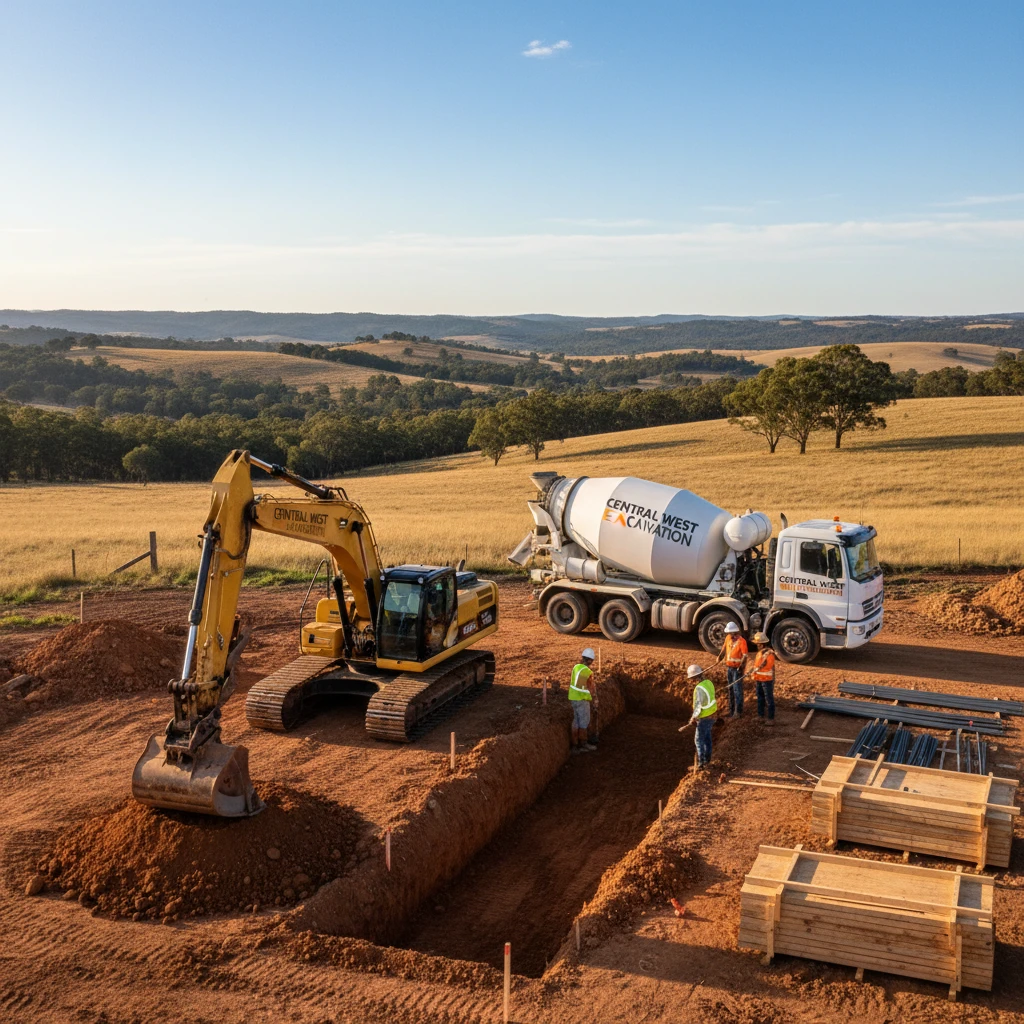
The careful selection of excavation machinery is paramount. For confined spaces, we frequently opt for mini excavators or specialised trenchers that offer greater manoeuvrability and a smaller footprint compared to traditional plant machinery. This allows us to work effectively in backyards, between existing structures, or on steep inclines where larger equipment simply cannot operate. Our team’s expertise in precision excavation ensures that the ground is prepared to the exact specifications required for the concrete pour, including correct gradients for drainage and adequate depth for reinforcement. We pay close attention to the stability of the excavated area, implementing temporary support systems if needed to prevent collapses, especially in loose soil conditions.
Effective planning also involves anticipating potential access issues for concrete delivery and pouring. In extremely confined spaces, we may recommend alternative concrete mixes that are designed for pump delivery, ensuring the wet concrete can be transported precisely to its final position without the need for extensive manual labour or disruptive equipment access. Our goal is to minimise site disruption while maximising efficiency and quality. This meticulous site preparation, from initial assessment to final grading, sets the stage for a flawless concrete finish, even in the most restrictive environments across Penrith and the Blue Mountains.
Pouring Perfection: Concrete Solutions Tailored for Restricted Access Sites
Delivering exceptional concrete results in restricted access areas is an art that requires specialised knowledge, equipment, and a methodical approach. At Laser Concrete, we understand that standard concreting methods are often impractical or impossible in these challenging locations. Our solutions are engineered to overcome these limitations, ensuring the integrity and aesthetic appeal of the final concrete pour. For areas with limited access, such as narrow backyards or sites with steep inclines, we frequently employ concrete pumping technology. This allows us to deliver concrete precisely where it’s needed, bypassing physical obstacles and reducing the need for heavy machinery to traverse sensitive areas.
The choice of concrete mix is also critical. We often utilise high-flow or self-compacting concrete formulations that are designed to fill voids and consolidate effectively, even in intricate formwork or complex shapes found in restricted spaces. This not only ensures a superior finish but also minimises the labour required for vibration and compaction, which can be difficult or impossible in tight quarters. Furthermore, our team’s expertise in managing the timing and temperature of these specialised mixes is essential for achieving optimal strength and durability. This attention to detail prevents common issues like cold joints or inadequate consolidation.
Beyond the pour itself, the finishing techniques are adapted to the site’s constraints. This might involve using smaller, more agile finishing tools or employing techniques that require less working space. For projects like driveways or shed slabs in difficult-to-reach locations, we ensure that the groundwork and reinforcement are meticulously prepared, as any deficiencies will be magnified by the challenges of the pour. Our commitment is to provide durable, high-quality concrete that meets the specific demands of restricted access sites across the Central West and surrounding regions. Whether it’s a small extension, a complex set of concrete stairs, or a slab in a tight backyard, our tailored solutions ensure a professional outcome.
Case Study: Transforming a Steep Slope in the Central West with Expert Excavation
Example: The Orchard Residence Upgrade
The owners of a property in the Central West region of New South Wales faced a significant challenge: their residence was situated on a steep, metre-high slope that severely limited usable outdoor space and access to the lower part of their garden. They envisioned a new, durable concrete entertaining area and a more accessible pathway connecting different levels of their property. However, traditional excavation methods were impractical due to the gradient and the presence of mature trees that needed preservation. The project required careful planning and specialised execution to integrate the new concrete structures seamlessly into the existing landscape without compromising its natural beauty or structural integrity.
Laser Concrete was engaged to provide an expert solution. Our initial assessment involved a detailed topographical survey and consultation with the homeowners to understand their vision. We identified that a combination of targeted excavation and concrete services for sloped blocks was the most viable approach. To manage the steep gradient and minimise impact on the surrounding soil and vegetation, we employed advanced techniques using a compact excavator equipped with specialised attachments. This allowed for precise removal of soil and rock, creating stable, level platforms for the new concrete slab and pathway. Safety was paramount, with extensive use of stabilising measures and secure working zones established throughout the excavation process.
Following the successful excavation, we proceeded with the concrete work. For the entertaining area, a reinforced concrete slab was poured, designed to withstand the unique load-bearing requirements of a sloped site. For the pathway, we constructed a series of tiered concrete steps, carefully integrated into the slope to provide safe and easy access. The finishing was executed with a non-slip texture to enhance safety, particularly on the gradient. The project resulted in a transformed outdoor living space that not only met the homeowners’ functional needs but also significantly enhanced the property’s aesthetic appeal and value. This case demonstrates our capability in tackling complex excavation and concrete projects on sloped sites, delivering quality results even in the most demanding environments across the Central West.
Beyond Foundations: Difficult Access Excavation for Driveways and Retaining Walls
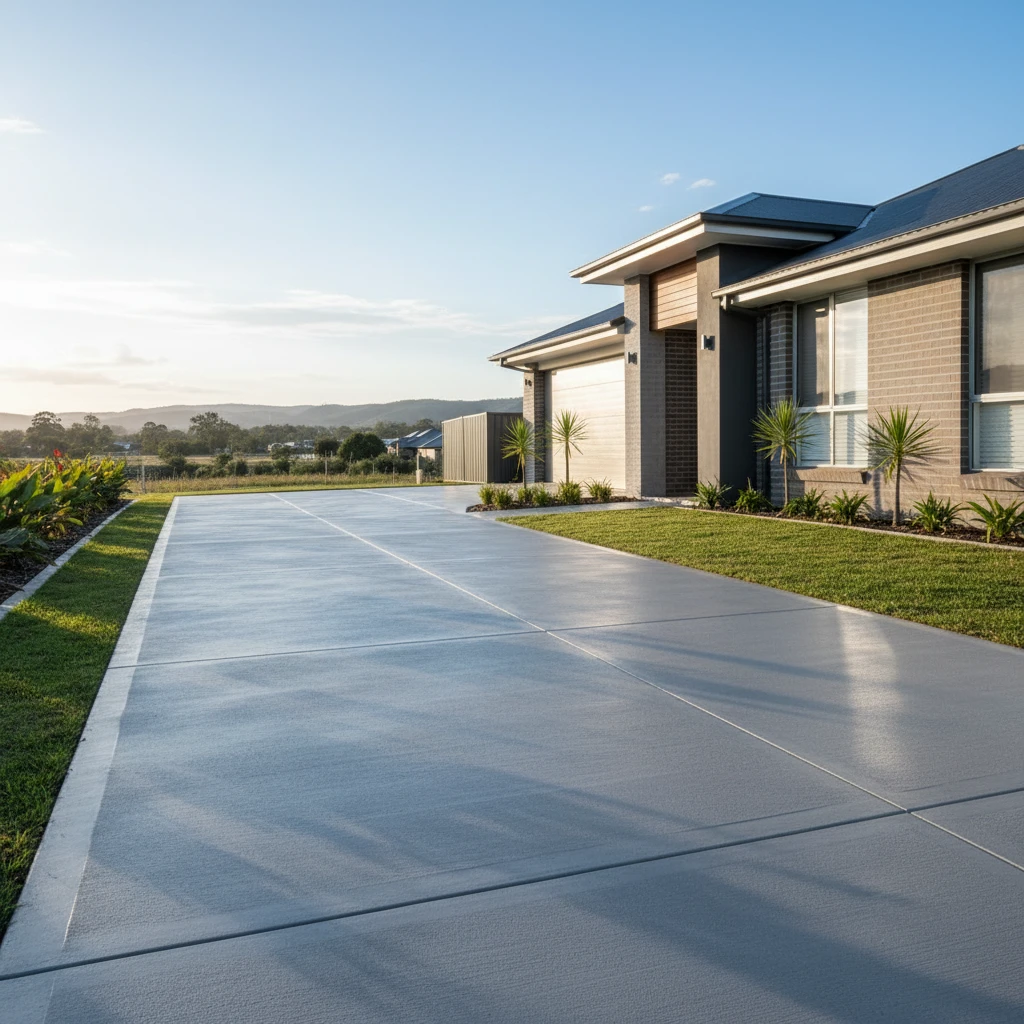
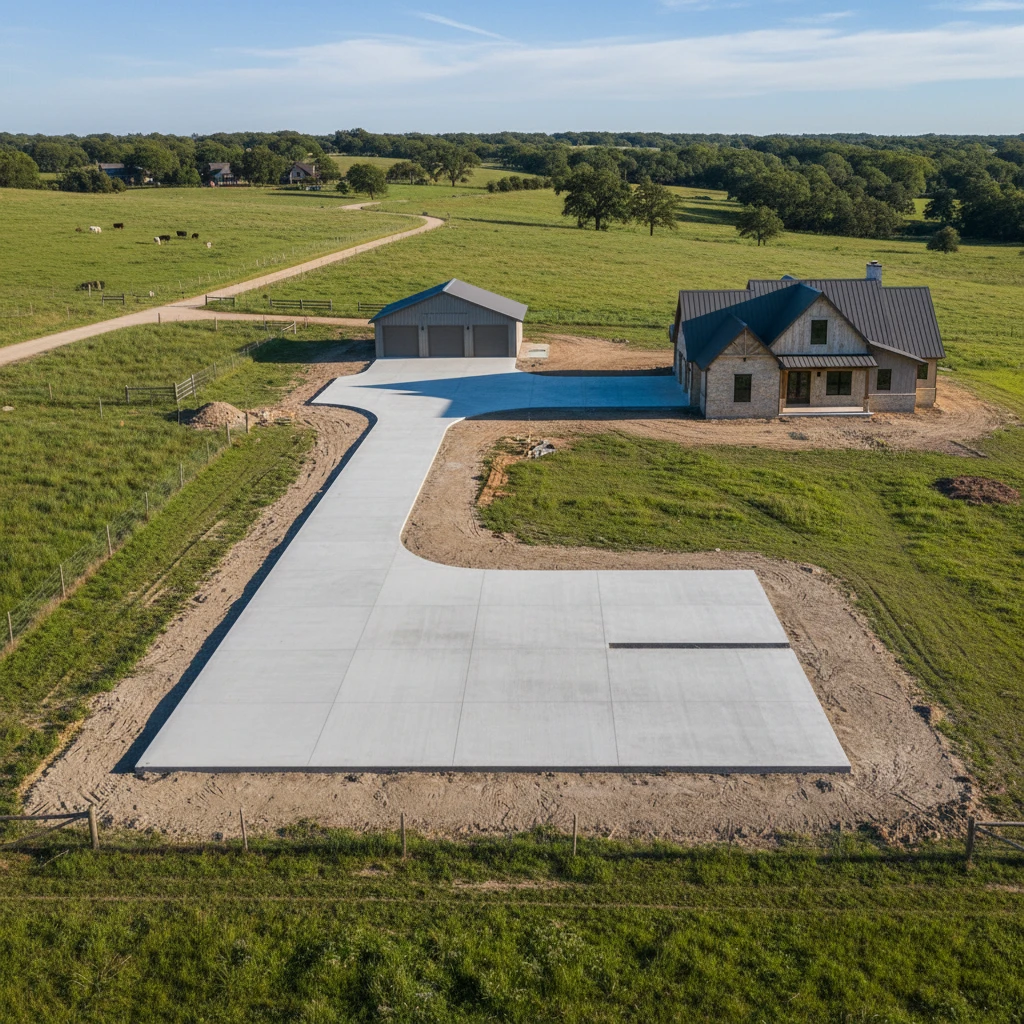
When thinking about concrete projects, driveways and retaining walls often come to mind. However, their successful execution hinges significantly on the groundwork – especially when accessing the site presents challenges. Difficult access excavation isn’t merely about digging; it’s a strategic process that requires specialised equipment and a meticulous approach. For driveways, especially those on sloped or confined properties common in areas like the Blue Mountains, inadequate excavation can lead to drainage issues, uneven surfaces, and a shorter lifespan for the finished product. We utilise compact machinery and advanced planning to navigate tight spaces, ensuring the sub-base is properly prepared for optimal concrete pour and longevity. Similarly, retaining walls, crucial for managing slopes and preventing erosion, demand precise excavation to establish stable foundations. Failure here can compromise structural integrity and lead to costly repairs. Our expertise in handling rocky terrain and steep gradients ensures that even the most challenging sites are made ready for robust, reliable concrete structures.
Several decision criteria guide our approach to these projects. Firstly, site accessibility analysis is paramount. We assess not just the entry point but also the manoeuvre space for machinery and material delivery. Understanding the soil composition, potential underground utilities, and existing landscape features informs our excavation plan. For instance, encountering unexpected rock formations might necessitate different tools or techniques than soft soil. Secondly, project scope and desired outcome dictate the level of excavation. A simple garden path requires less intensive preparation than a heavy-duty driveway designed for multiple vehicles. Thirdly, environmental considerations play a role, particularly in sensitive areas. Minimising disruption to surrounding flora and fauna, and managing water runoff during and after the project are integral to responsible excavation. The goal is always to create a perfectly prepared canvas for the concrete work, ensuring it integrates seamlessly and serves its intended purpose effectively for years to come.
Common pitfalls in difficult access excavation include underestimating the complexity of the site, leading to unexpected delays and increased costs. This can also result in damage to existing property structures or landscaping. Another pitfall is using inappropriate equipment; attempting to force larger machinery into confined spaces can be inefficient and dangerous. Furthermore, neglecting proper soil compaction or drainage preparation during excavation can lead to premature concrete failure, such as cracking or sinking. For example, a residential driveway on a steep block in Penrith that wasn’t excavated with adequate fall might suffer from water pooling and eventual surface degradation. Conversely, a well-executed project, like the installation of a sturdy retaining wall on a sloped property, demonstrates the value of expert planning and execution. This involves carefully removing the correct amount of soil, stabilising the area, and ensuring proper drainage channels are established before any concrete is poured, safeguarding the investment.
Why Experience Matters: Choosing the Right Contractor for Your Difficult Access Project
When facing the complexities of difficult access excavation, the experience of your chosen contractor becomes a critical differentiating factor. This isn’t a task for a generalist; it requires a team with a proven track record in navigating challenging terrains and specialised machinery operation. An experienced contractor brings an invaluable understanding of potential site-specific issues, from subterranean rock layers to narrow access points common in established neighbourhoods or rural properties. They can anticipate problems before they arise, developing proactive solutions rather than reactive fixes. This foresight saves time, reduces stress, and ultimately preserves the integrity of the project. For instance, a contractor familiar with the unique geological conditions of the Central West can better prepare for excavation on undulating farmland or rocky outcrops, ensuring a solid foundation for any concrete work, whether it’s a shed slab or an equipment pad. Their ability to precisely assess the site’s limitations and opportunities is what transforms a potentially arduous undertaking into a smooth, efficient process.
The selection process should focus on specific expertise and demonstrable results. Look for contractors who can showcase projects similar to yours, particularly those involving confined spaces, steep gradients, or intricate site preparations. Ask about their equipment – do they have access to specialised, compact machinery designed for difficult terrain? Can they provide examples of their planning and problem-solving methodologies? A contractor with a strong portfolio in areas like the Blue Mountains, known for its challenging topography, will likely possess the necessary skills and experience. Furthermore, transparent communication is key. The right contractor will clearly outline the excavation plan, potential challenges, and how they intend to mitigate them. They should be able to explain the process in terms understandable to a homeowner, avoiding jargon while conveying confidence and competence. References from previous clients, especially those with similar site challenges, can provide valuable insights into their reliability and quality of work.
Pitfalls to avoid when choosing a contractor include opting for the lowest quote without scrutinising experience, which can lead to substandard workmanship and unforeseen expenses down the line. General contractors may lack the specialised knowledge or equipment required for truly difficult access sites, potentially causing damage or delays. A lack of transparency regarding methods or a reluctance to discuss site-specific challenges can also be red flags. For example, a project in a tight suburban block in Penrith might require meticulous planning to avoid damaging neighbouring properties during excavation for a new driveway. A contractor who doesn’t detail their approach to this could be a risky choice. Conversely, a specialist will detail their methods, such as using mini-excavators and carefully coordinating material removal and delivery. Prioritising demonstrable expertise over expediency ensures that your difficult access project is handled professionally, resulting in a durable and aesthetically pleasing outcome that meets your needs.
The Long-Term Value of Professional Difficult Access Concrete Work
Investing in professional concrete services, particularly for difficult access projects, yields significant long-term value that extends far beyond the initial installation. When excavation and concrete placement are handled expertly, even on challenging sites, the resulting structures – be it a driveway, retaining wall, or shed slab – are built for endurance. This means fewer repairs, less susceptibility to environmental factors like erosion or water damage, and a maintained aesthetic appeal. For instance, a properly excavated and laid concrete driveway on a property with a steep incline, like those found in parts of the Blue Mountains, will resist cracking and settlement far better than one done with inadequate preparation. This resilience translates directly into cost savings over the property’s lifespan, avoiding the recurring expenses associated with fixing poorly constructed elements. Professional work establishes a robust foundation and a superior finish that stands the test of time and use.
The tangible benefits include enhanced property functionality and usability. A well-executed concrete driveway on a difficult site provides reliable access for vehicles, improving convenience and potentially property value. Similarly, effective retaining walls can reclaim usable land on sloped properties, creating level areas for gardens or extensions. Precision excavation and concrete application ensure that these functional improvements are also safe and structurally sound. Consider the example of a rural property in the Central West needing a new shed slab on uneven ground; professional work ensures the slab is perfectly level and stable, protecting expensive equipment stored within. Over the years, the durability and low maintenance requirements of quality concrete work represent a sound financial decision, avoiding the cycle of short-term fixes and replacements that often plague poorly executed projects. This commitment to quality ultimately supports the integrity and value of your entire property.
Conversely, opting for less experienced services or DIY approaches on difficult sites often leads to hidden long-term costs and diminished value. Issues like cracking, sinking, poor drainage, or structural failure can emerge years down the line, necessitating expensive repairs or complete replacement. For example, a poorly prepared excavation for a concrete path on a rocky slope might lead to the path lifting or crumbling due to ground movement, requiring costly remediation. Such failures not only drain financial resources but also detract from the property’s overall appeal and functionality. Engaging experts like those at Laser Concrete, who understand the nuances of sloped site excavation and concrete solutions, ensures that your investment is protected. Their focus on quality craftsmanship and appropriate techniques establishes a durable, reliable concrete structure that enhances your property’s value and your enjoyment of it for many years to come.