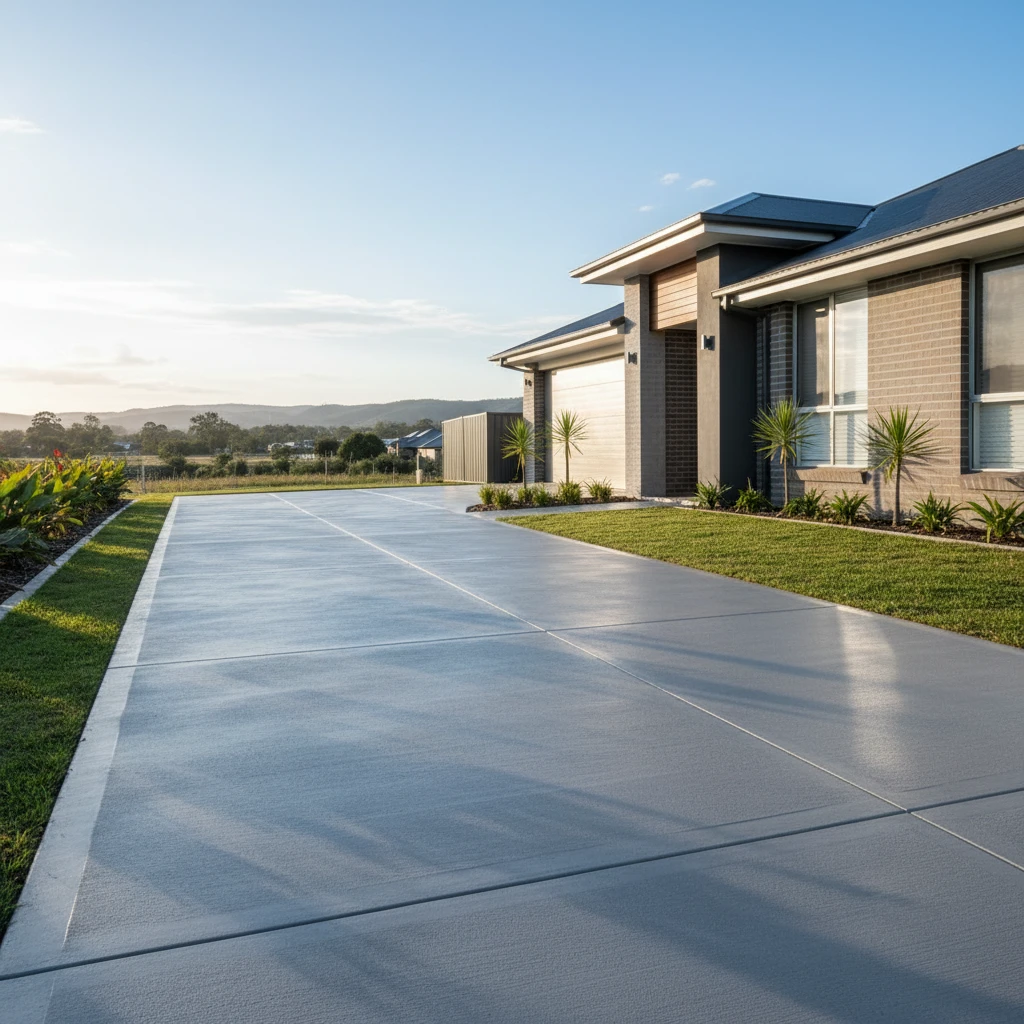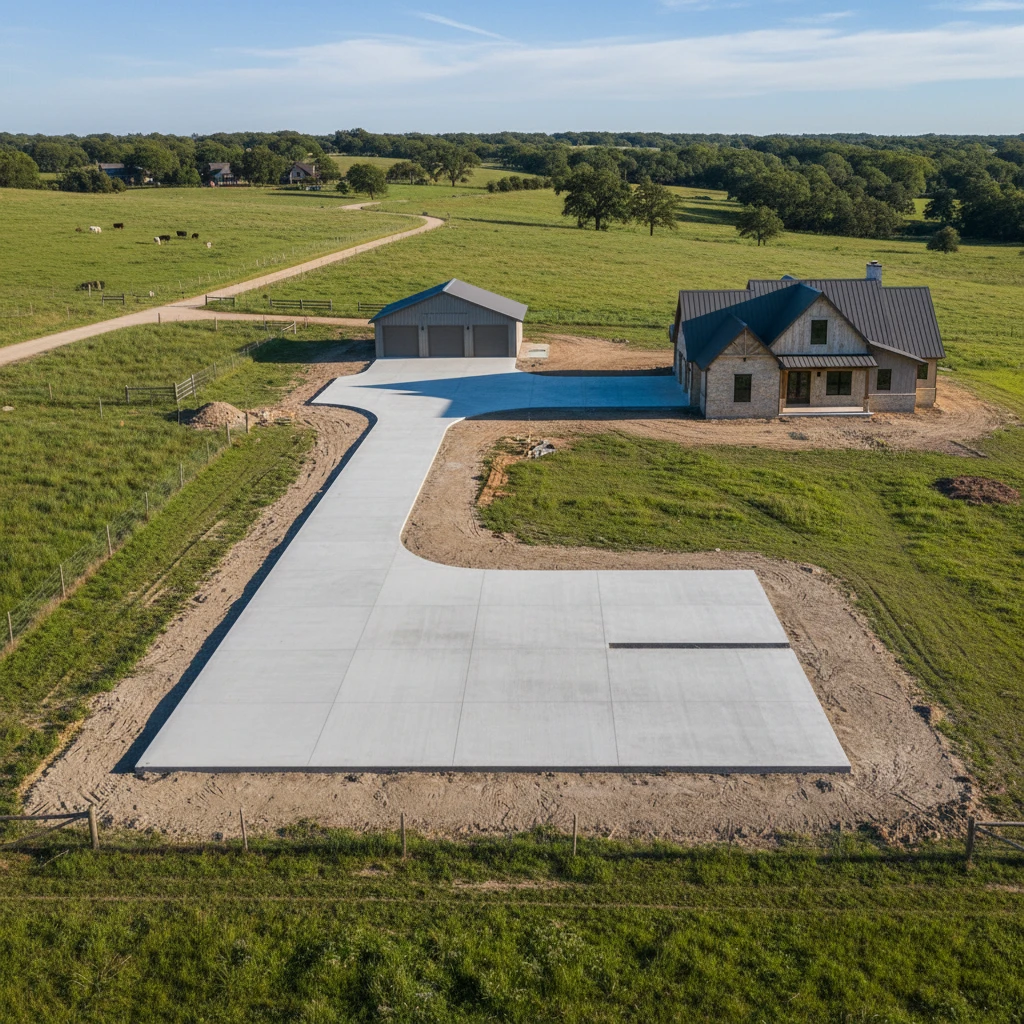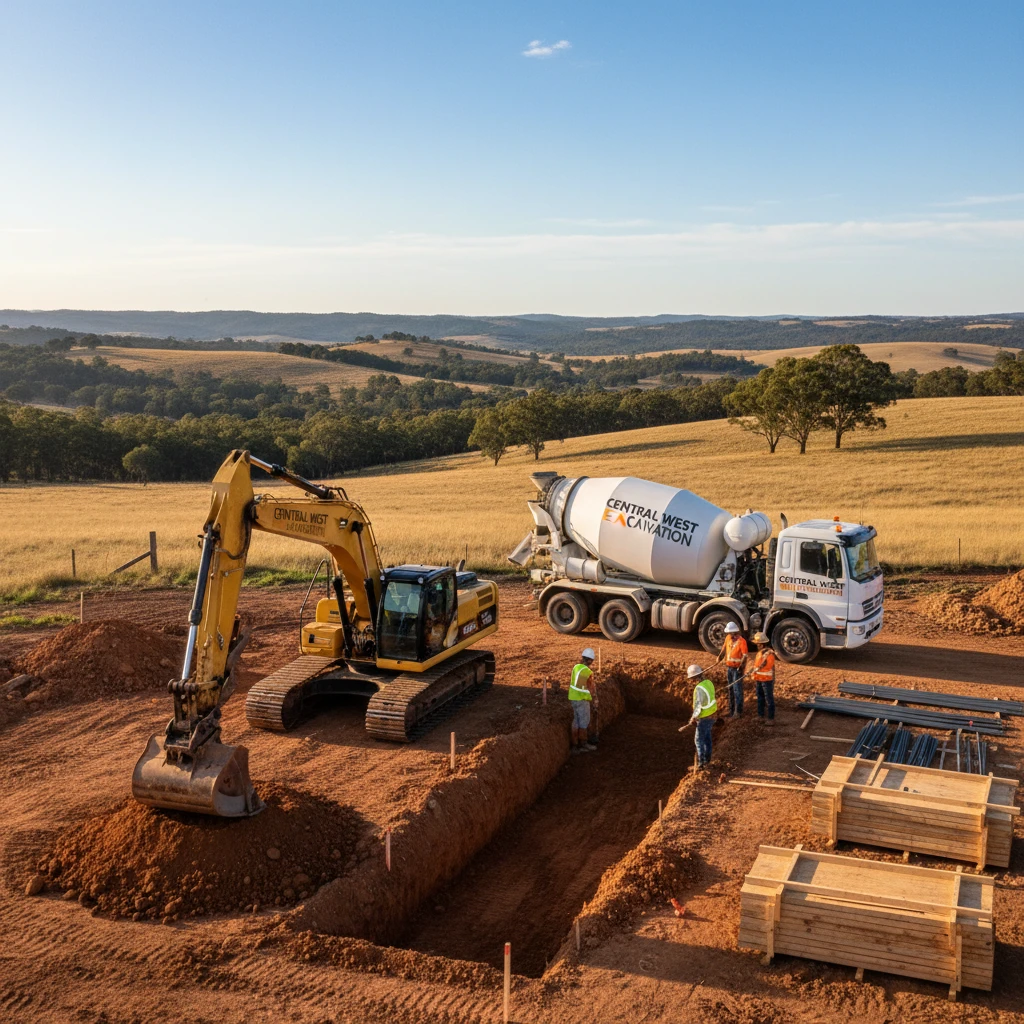
The longevity and appearance of any concrete project, from a simple footpath to a large shed slab, hinges dramatically on the quality of the initial excavation. It’s a stage often overlooked, but a flawless concrete finish begins long before the first pour. The precision and care taken during excavation are critical for the structural integrity and visual appeal of the final result.
This article delves into the critical aspects of precision excavation, revealing its profound impact on concrete projects. We’ll explore how understanding soil types, employing advanced techniques, and expertly navigating challenging site conditions are vital for achieving exceptional and long-lasting concrete results, particularly in regions like Penrith, the Blue Mountains, and the Central West.
Why Proper Excavation is the Unsung Hero of Flawless Concrete
The unseen foundation: How excavation impacts the visible concrete finish
The excavation phase provides the essential foundation for all subsequent concreting work. Imperfections in excavation directly translate into problems with the concrete itself. For instance, an uneven base will lead to inconsistent concrete thickness, which in turn creates weak points susceptible to cracking. A poorly prepared subgrade affects the concrete’s ability to cure correctly, impacting its strength and durability. Essentially, the visible concrete finish is only as good as the unseen foundation beneath it.
Achieving a perfectly level and adequately compacted base is the primary goal. This ensures the concrete has uniform support, minimising stress and preventing movement. Furthermore, proper excavation allows for the correct placement of reinforcing materials like steel mesh, crucial for distributing loads and preventing cracking, particularly in driveways or areas subject to heavy traffic. Thinking about a shed slab, excavation is crucial to ensuring a level surface ready for the concrete pour that helps prevent moisture buildup and structural failures, similar to the detail required for excavation for shed slabs.
Consider the scenario of a driveway installation. If the excavation isn’t deep enough, the concrete may be too thin, leading to premature failure under vehicle weight. Conversely, if the excavation is too deep and not backfilled correctly, settling can occur, causing the driveway to crack and become uneven over time. Therefore, precise depth control and appropriate compaction are critical for a durable and aesthetically pleasing concrete finish.
Avoiding future problems: Subsidence, cracking, and drainage issues linked to poor excavation
Inadequate excavation can lead to a host of long-term problems for concrete structures. Subsidence, or the sinking of the concrete, is a common issue caused by poorly compacted soil or inadequate removal of organic matter. This settling can result in unsightly cracks, uneven surfaces, and even structural instability, especially in larger concrete slabs. These issues highlight the need for expert excavation practices to avoid long term damages.
Drainage issues are another significant concern. Incorrectly sloped excavation can cause water to pool around the concrete, leading to erosion, staining, and even structural damage from freeze-thaw cycles (especially relevant in the Blue Mountains). Poor drainage can also contribute to the growth of mould and mildew, affecting the appearance and longevity of the concrete. Ensuring proper drainage through carefully planned excavation is a preventative measure that saves considerable money in repairs down the line. As a result, taking care during excavation is crucial for avoiding future problems.
Cracking is perhaps the most visible and common consequence of poor excavation. It not only detracts from the appearance of the concrete but also compromises its structural integrity, allowing water to penetrate and further deteriorate the material. Addressing these issues often requires costly repairs or even complete replacement, underscoring the importance of meticulous excavation from the outset. Furthermore, the repercussions of improper excavation can affect other property features, such as landscaping and adjacent structures.
Understanding Your Soil Type and Its Impact on Excavation Needs
Common soil types in Penrith, Blue Mountains, and Central West, and their challenges (e.g., clay, shale, sandy soil)
The Penrith, Blue Mountains, and Central West regions of NSW exhibit a diverse range of soil types, each presenting unique challenges for excavation. Clay soils, prevalent in some areas, are known for their high water retention and expansion/contraction properties, making them difficult to compact effectively and prone to movement. This can lead to concrete cracking and subsidence if not addressed properly. Excavating clay requires careful moisture management and specific compaction techniques.
Shale is a common bedrock material in the Blue Mountains, often found close to the surface. It can be challenging to excavate due to its layered structure and varying degrees of hardness. Excavation might require specialised equipment, and the resulting material needs careful management as it can break down easily and become unstable. Additionally, sandy soils, found in some areas of the Central West, offer good drainage but can be unstable and prone to erosion. This requires careful attention to shoring and compaction to prevent collapse during excavation and ensure a solid base for the concrete.
Understanding the specific soil composition of a site is crucial for determining the appropriate excavation methods, equipment, and compaction requirements. Ignoring these soil-specific challenges can result in significant structural problems and costly rework. In areas like the Blue Mountains, where rocky conditions are common, excavation solutions for rocky sites become essential.
The importance of soil testing and site assessments
Before commencing any excavation work, a comprehensive soil testing and site assessment is paramount. Soil testing involves collecting samples from various depths and locations across the site and sending them to a laboratory for analysis. This analysis identifies the soil type, its moisture content, density, and load-bearing capacity. Site assessments involve a visual inspection of the site, looking for potential hazards such as underground utilities, tree roots, and existing structures.
The information gleaned from soil testing and site assessments informs the entire excavation process. It helps determine the appropriate excavation depth, the type of compaction equipment needed, and the necessary drainage solutions. It can also reveal the presence of contaminants or other issues that may require special handling or remediation. Failing to conduct these assessments can lead to unexpected challenges during excavation, resulting in delays, increased costs, and potentially compromised structural integrity.
For example, if soil testing reveals a high clay content, the excavation plan will need to incorporate specific techniques for managing moisture and achieving adequate compaction. Similarly, if the site assessment identifies underground utilities, the excavation team will need to take extra precautions to avoid damaging them. Detailed planning based on accurate site data minimises risks and ensures a successful concrete project.
How soil affects compaction requirements and drainage solutions
The type of soil directly dictates the compaction requirements for a concrete project. Clay soils, as mentioned earlier, require different compaction techniques than sandy soils. Clay needs to be compacted in thin layers using specialised equipment like sheepsfoot rollers, while sand may require vibration to achieve adequate density. Achieving the correct level of compaction is essential for preventing settling and cracking of the concrete over time. For example, compaction requirements for sandy soils might need moisture adjustments to optimize particle interlocking during the compaction process.
Furthermore, the soil’s permeability, or its ability to drain water, dictates the type of drainage solutions required. Impermeable soils like clay require more extensive drainage systems to prevent water from accumulating around the concrete. This may involve installing drainage pipes, creating French drains, or sloping the ground away from the structure. Sandy soils, on the other hand, drain more readily, but may still require some drainage measures to prevent erosion and maintain stability. Adequate drainage solutions are crucial for protecting the concrete from water damage and ensuring its long-term durability.
Soil testing provides vital data for determining these compaction and drainage requirements. Ignoring this information can result in a concrete structure that is susceptible to water damage, cracking, and premature failure. Understanding the interplay between soil type, compaction, and drainage is essential for achieving superior concrete results.
Precision Excavation Techniques for Superior Concrete Results
Laser levelling: Achieving accurate grades and slopes for optimal drainage
Laser levelling is a crucial technique for achieving accurate grades and slopes during excavation, particularly essential for ensuring optimal drainage. Traditional methods rely on manual measurements and visual estimations, which are prone to error. Laser levelling, however, utilises laser transmitters and receivers to create a highly accurate reference plane. This allows the excavation team to precisely control the depth and slope of the excavation, ensuring a consistent and even surface.
Precise grading is essential for directing water away from the concrete structure, preventing water damage and erosion. For example, a driveway should have a slight slope to allow rainwater to run off and prevent puddling. Similarly, a patio or deck should have a subtle grade to ensure proper drainage. Laser levelling makes it possible to achieve these precise grades with minimal error, leading to a more durable and aesthetically pleasing concrete finish.
Laser levelling equipment can also be used to create complex slopes and contours, such as those required for landscaping or specialised drainage systems. This level of precision is particularly valuable in areas with challenging terrain or complex drainage requirements. Investing in laser levelling technology is a worthwhile investment for any excavation company aiming to deliver superior concrete results.
Compaction: Ensuring a stable base to prevent settling and cracking
Compaction is the process of densifying the soil to reduce its air voids and increase its load-bearing capacity. Proper compaction is absolutely critical for preventing settling and cracking of the concrete. An uncompacted or poorly compacted base will inevitably settle over time, causing the concrete to crack and become uneven. Effective compaction creates a stable and uniform foundation that can support the weight of the concrete and any applied loads.
The appropriate compaction method depends on the type of soil being compacted. For clay soils, sheepsfoot rollers are often used to knead the soil and break up clods. For sandy soils, vibratory rollers are more effective at densifying the material. The key is to achieve the required density as determined by soil testing. This is typically measured using a device called a density gauge, which indicates the percentage of compaction achieved. If proper compaction isn’t reached, the concrete becomes vulnerable to future damages.
Compaction should be performed in layers, with each layer being thoroughly compacted before the next is added. This ensures that the entire base is uniformly dense and stable. Inadequate compaction is one of the most common causes of concrete failure, so it is essential to take the time and effort to do it right.
Benching and shoring: Essential for safe and stable excavation on sloped sites
Benching and shoring are essential safety techniques used to prevent cave-ins during excavation, especially on sloped sites. Benching involves creating a series of horizontal steps or “benches” in the slope, reducing its overall angle and increasing stability. Shoring, on the other hand, involves installing temporary support structures, such as timber or steel sheeting, to hold back the soil and prevent it from collapsing. These techniques are crucial for ensuring the safety of the excavation crew and protecting adjacent structures.
On sloped sites, the risk of soil collapse is significantly higher than on flat ground. The weight of the soil above the excavation can exert tremendous pressure on the sides, leading to a cave-in if the slope is not properly supported. Benching and shoring effectively counteract this pressure, creating a safe and stable working environment. Benching is often used in conjunction with shoring, providing an added layer of protection. You can find a range of resources and guidelines from Safe Work Australia on excavation safety, including information on benching and shoring requirements.
The specific type of shoring used depends on the soil type, the depth of the excavation, and the angle of the slope. Timber sheeting is often used for shallower excavations in relatively stable soil, while steel sheeting is required for deeper excavations or in unstable soil conditions. Proper installation of shoring is critical, as any weakness or failure in the support structure can have catastrophic consequences. Excavation on sloped blocks often requires expert assistance, similar to the requirements for excavation and concrete on sloped sites.
Dealing with Difficult Site Conditions: Slopes, Rocks, and Tight Access
Excavation strategies for steep slopes: Terracing, retaining walls, and drainage considerations
Excavating on steep slopes presents a unique set of challenges that require careful planning and execution. Terracing is a common strategy for creating usable space on a slope by constructing a series of level platforms or “terraces.” This not only provides a stable base for concrete structures but also helps to control erosion and improve drainage. Each terrace is typically supported by a retaining wall, which holds back the soil and prevents it from collapsing.
Retaining walls are an essential component of any excavation project on a steep slope. They must be properly designed and constructed to withstand the lateral pressure of the soil behind them. The type of retaining wall used depends on the height of the slope, the soil type, and the aesthetic requirements of the project. Common types of retaining walls include concrete block walls, timber walls, and stone walls. All retaining walls need adequate drainage to prevent water pressure from building up behind them, which can lead to failure.
Drainage is a critical consideration when excavating on a steep slope. Water runoff can quickly erode the soil and undermine the stability of the concrete structure. Effective drainage systems, such as swales, drains, and culverts, must be installed to manage water flow and prevent erosion. These systems should be designed to handle the maximum expected rainfall and should be regularly maintained to ensure they are functioning properly.
Removing rocks and boulders: Methods and equipment for handling subsurface obstacles
Encountering rocks and boulders during excavation is a common occurrence, particularly in regions like the Blue Mountains. The size and quantity of these obstacles can significantly impact the excavation process, requiring specialised methods and equipment for their removal. Small rocks can often be removed with conventional excavation equipment, such as excavators and loaders. However, larger boulders may require more specialised techniques, such as rock breaking or blasting.
Rock breaking involves using hydraulic hammers or rock breakers attached to excavators to break the boulders into smaller, more manageable pieces. This method is relatively safe and efficient, but it can be noisy and generate dust. Blasting is a more powerful method that involves using explosives to shatter the boulders. However, blasting requires careful planning and execution to ensure the safety of the excavation crew and prevent damage to surrounding structures. It also requires permits and adherence to strict regulations.
Once the rocks and boulders have been broken into smaller pieces, they can be loaded onto trucks and hauled away. The disposal of these materials must be done in accordance with local regulations. In some cases, the rocks can be reused as fill material or for landscaping purposes. Proper planning and preparation are essential for handling subsurface obstacles efficiently and safely. Consider, too, when working in rocky areas that a company specialising in sloped site solutions will be able to manage rocks more efficiently.
Tight access excavation: Minimising disruption and maximising efficiency in confined spaces
Tight access excavation refers to excavation work that is performed in confined spaces, such as narrow alleyways, backyards, or under buildings. These situations present unique challenges that require specialised equipment and techniques. Conventional excavation equipment is often too large to maneuver in tight spaces, necessitating the use of smaller, more compact machines. Mini excavators, skid steer loaders, and other compact equipment are specifically designed for these types of applications.
Minimising disruption is a key consideration when performing tight access excavation. This means taking steps to protect surrounding structures, landscaping, and utilities. Careful planning and execution are essential to avoid damage and minimise noise and dust. Hand excavation may be necessary in some areas to avoid damaging underground utilities or sensitive landscaping. Communication with neighbours is also important to minimise inconvenience and address any concerns they may have.
Maximising efficiency is also crucial in tight access excavation. The limited space often makes it difficult to maneuver equipment and materials. Careful planning and coordination are essential to optimise workflow and minimise downtime. Using the right equipment and techniques can significantly improve efficiency and reduce the overall cost of the project. For instance, using remote-controlled machinery can enhance precision and reduce the need for manual labour in extremely confined areas.
Excavation in contaminated soil: Ensuring safety and compliance
Excavation in contaminated soil presents significant challenges that require careful planning and execution to protect the health of workers and the environment. Contaminated soil can contain a variety of hazardous substances, including heavy metals, petroleum products, and industrial chemicals. Proper assessment, handling, and disposal of contaminated soil are essential to prevent exposure and minimise environmental impact.
Before beginning excavation in potentially contaminated areas, a thorough site assessment should be conducted to identify the types and extent of contamination. This assessment typically involves collecting soil samples and analysing them in a laboratory to determine the presence and concentration of contaminants. The results of the assessment will inform the development of a comprehensive excavation plan that addresses the specific hazards present at the site.
Ensuring safety is a paramount concern when excavating contaminated soil. Workers should be provided with appropriate personal protective equipment (PPE), such as respirators, gloves, and protective clothing, to prevent exposure to hazardous substances. Air monitoring should be conducted to ensure that airborne contaminants are within acceptable limits. Dust control measures, such as water spraying or the use of dust suppressants, should be implemented to minimise the spread of contamination. Proper hygiene practices, such as hand washing and showering, are also essential to prevent the transfer of contaminants.
Compliance with environmental regulations is another critical aspect of excavation in contaminated soil. Many jurisdictions have specific regulations governing the handling, transportation, and disposal of contaminated soil. These regulations may require the use of licensed contractors, the implementation of specific containment measures, and the proper documentation of all activities. Failure to comply with these regulations can result in significant fines and penalties. For example, environmental enforcement case results are publicly available via the EPA.
Excavation near utilities: Preventing damage and ensuring safety
Excavation near underground utilities presents significant risks that must be carefully managed to prevent damage and ensure the safety of workers and the public. Underground utilities can include gas lines, water lines, sewer lines, electrical cables, and communication cables. Striking a utility line during excavation can result in serious injuries, property damage, and service disruptions.
Before beginning excavation near underground utilities, it is essential to identify the location of all buried lines. This can be done by contacting the local one-call centre, which will notify the utility companies of the planned excavation. The utility companies will then mark the location of their lines with coloured paint or flags. It is important to remember that the markings provided by the utility companies are only approximate and that the exact location of the lines may vary.
Preventing damage to underground utilities requires careful excavation techniques. Hand excavation may be necessary in areas where the location of utilities is uncertain or where the lines are particularly vulnerable. Mechanical excavation should be performed with caution, and the excavator should be closely monitored to avoid striking a utility line. If a utility line is struck during excavation, work should be stopped immediately, and the utility company should be notified. In some cases, it may be necessary to evacuate the area to prevent further damage or injury.
Ensuring safety is a paramount concern when excavating near underground utilities. Workers should be trained on the proper procedures for identifying and avoiding underground lines. They should also be provided with appropriate personal protective equipment (PPE), such as insulated gloves and safety boots. Regular inspections of the excavation site should be conducted to identify any potential hazards. In addition, it is important to have a contingency plan in place in case a utility line is struck.
Adherence to these safety protocols significantly reduces the risk of accidents and ensures the well-being of everyone involved.
Working in confined spaces: Hazards and safety measures
Working in confined spaces can expose employees to a range of hazards, including atmospheric hazards, physical hazards, and engulfment hazards. Atmospheric hazards include oxygen deficiency, toxic gases, and flammable gases. Physical hazards include moving machinery, falling objects, and electrical shock. Engulfment hazards include the risk of being buried in a granular material, such as sand or gravel.
Before entering a confined space, it is essential to evaluate the potential hazards. This involves testing the atmosphere for oxygen levels, toxic gases, and flammable gases. If any hazards are present, the space must be ventilated or purged to eliminate or control the hazards. A permit-required confined space program should be implemented, which includes a written plan, employee training, and entry procedures. The program must identify the hazards associated with each confined space, the control measures that will be used, and the procedures for rescue.
Entering a confined space requires specific safety measures. Employees must be trained on the hazards of confined spaces and the proper procedures for entry. They must also be provided with appropriate personal protective equipment (PPE), such as respirators, harnesses, and lifelines. A standby person should be stationed outside the confined space to monitor the entrants and provide assistance in case of an emergency. Continuous monitoring of the atmosphere within the confined space is crucial, along with proper ventilation. Before entry, all potential energy sources to equipment within the space should be locked out or tagged out, and the space should be isolated from any potential inflow of hazardous materials.
Rescue procedures must be established before anyone enters a confined space. The standby person should be trained in rescue procedures and equipped with the necessary equipment, such as a harness, lifeline, and retrieval device. In the event of an emergency, the standby person should immediately notify emergency services and begin rescue operations. A designated rescue team should be available to respond to confined space emergencies. They should be equipped with advanced rescue equipment, such as self-contained breathing apparatus (SCBA) and confined space retrieval systems. Periodic drills should be conducted to ensure the rescue team is proficient in confined space rescue techniques.
The Right Equipment for the Job: Matching Machinery to Excavation Tasks
Selecting the appropriate equipment is crucial for efficient and accurate excavation. The choice depends on factors such as the size of the project, the type of soil, accessibility to the site, and the required precision. Using the right tools not only saves time and resources but also ensures the final concrete work meets the required standards. Consider the site constraints and specific task requirements to determine the optimal machinery for your excavation project.
Mini excavators: Versatile machines for smaller jobs and tight spaces
Mini excavators are invaluable for smaller projects or areas with limited access. Their compact size allows them to manoeuvre easily in tight spaces, making them ideal for residential jobs such as preparing footings for extensions or landscaping projects. Mini excavators minimise disruption to existing structures and reduce the need for extensive manual labour. They are particularly useful on sites where larger machinery would be impractical or cause damage. Their versatility extends to attachments like augers for drilling post holes or breakers for demolishing small concrete structures. These machines are also often track mounted, which helps to distribute weight and minimise ground pressure, reducing the risk of damage to lawns or driveways. In areas like the Blue Mountains, where properties often have difficult access points, their manoeuvrability becomes even more important.
Bobcats and skid steer loaders: Earthmoving and material handling efficiency
Bobcats and skid steer loaders are workhorses of the excavation industry, offering both earthmoving and material handling capabilities. Their agility and power make them well-suited for a wide range of tasks, from removing topsoil and levelling ground to transporting materials like gravel and sand. A key advantage of these machines is their ability to use various attachments, such as buckets, forks, and trenchers, which further enhances their versatility. Skid steer loaders are especially useful on sites where space is limited, due to their tight turning radius. However, their wheeled design can sometimes make them less effective on soft or uneven terrain compared to tracked excavators. When selecting between a bobcat and a mini excavator, consider the volume of material to be moved and the need for other tasks such as backfilling or grading. For larger volumes, the bobcat generally offers greater speed and efficiency.
Graders and rollers: Achieving precise levelling and compaction
Graders and rollers are essential for achieving precise levelling and proper compaction, critical steps in preparing a stable base for concrete. Graders are used to create smooth, even surfaces with the correct slope for drainage, ensuring water flows away from the concrete slab. Rollers, on the other hand, compact the soil to increase its density and load-bearing capacity. Different types of rollers are available, including smooth drum rollers, sheepsfoot rollers, and pneumatic tyre rollers, each suited for different soil types and compaction requirements. The choice of roller depends on the soil composition and the desired level of compaction. For example, sheepsfoot rollers are effective for compacting clay soils, while smooth drum rollers are better suited for granular materials. Using the correct equipment ensures a stable and durable base, preventing settling and cracking in the concrete over time. For shed slabs, as discussed on this page about shed slabs, proper grading and compaction are key for a level and long-lasting foundation.
Drainage Solutions: Preventing Water Damage and Ensuring Concrete Longevity
Proper drainage is paramount to the longevity and structural integrity of concrete structures. Water accumulation around or beneath concrete can lead to various problems, including erosion, cracking, and freeze-thaw damage. Effective drainage solutions divert water away from the concrete, preventing these issues and ensuring the structure remains sound for years to come. A comprehensive drainage plan considers both surface and subsurface water management, as well as integration with existing stormwater systems. Ignoring drainage can lead to costly repairs and even structural failure. Prioritising effective drainage is a critical investment in the long-term performance of your concrete project.
Surface drainage: Channels, swales, and grading techniques
Surface drainage focuses on managing water runoff from rain and other sources before it can infiltrate the ground around the concrete structure. Common techniques include channels, swales, and grading. Channels are typically concrete or lined ditches designed to carry water away from the area. Swales are gently sloped depressions that serve a similar purpose but are often vegetated for a more natural appearance and improved water filtration. Proper grading is perhaps the most fundamental aspect of surface drainage, ensuring the ground slopes away from the concrete to prevent water from pooling near the foundation. The slope should be gradual and consistent, ideally with a minimum grade of 2% (2cm drop per metre). Careful consideration of the site’s topography and the surrounding landscape is essential for designing an effective surface drainage system. This might involve redirecting water flow away from buildings or towards designated drainage areas.
Subsurface drainage: French drains and perforated pipes
Subsurface drainage addresses water that has already infiltrated the ground, preventing it from accumulating under the concrete slab or around the foundation. French drains are a common solution, consisting of a trench filled with gravel and a perforated pipe that collects and redirects groundwater. The pipe is typically wrapped in filter fabric to prevent soil from clogging the system. The trench should be sloped to ensure water flows towards an outlet, where it can be discharged safely. Perforated pipes can also be used independently to intercept groundwater flow and divert it away from the concrete structure. The depth and spacing of the pipes depend on the soil type and the amount of groundwater present. Subsurface drainage is particularly important in areas with high water tables or poor soil drainage. Installing an effective subsurface drainage system requires careful planning and execution to ensure it functions properly and prevents water damage.
Connecting to existing stormwater systems: Compliance and best practices
Connecting drainage systems to existing stormwater infrastructure requires careful planning and compliance with local regulations. It’s essential to consult with local authorities to understand the requirements for stormwater management and obtain any necessary permits before making any connections. Improper connections can overload the stormwater system, leading to flooding and environmental damage. Best practices include using sediment traps to prevent debris from entering the system and implementing flow control measures to regulate the amount of water discharged. Compliance with regulations ensures the drainage system operates effectively and protects the environment. Before connecting to a stormwater system, it is also crucial to assess its capacity to handle the additional flow. This may require upgrading the existing infrastructure or implementing alternative drainage solutions, such as retention basins or infiltration systems. For projects in areas like Penrith, knowing local regulations is key. More broadly, as mentioned on this page about excavation for quality concrete, careful planning is essential to all phases of excavation projects.
The Importance of Proper Compaction: Achieving a Stable and Durable Base
Proper compaction is a non-negotiable step in preparing a solid foundation for concrete work. It involves compressing the soil to increase its density, reduce air voids, and improve its load-bearing capacity. A well-compacted base minimises settling and cracking, ensuring the concrete structure remains stable and durable over time. Inadequate compaction can lead to significant problems, including uneven settling, which compromises the structural integrity and appearance of the concrete. The degree of compaction needed varies depending on the soil type and the intended use of the concrete. However, regardless of the specific requirements, proper compaction is essential for achieving long-lasting results.
Different compaction methods: Plate compactors, rollers, and rammers
Various compaction methods are available, each suited for different soil types and project sizes. Plate compactors are commonly used for smaller areas and granular soils like sand and gravel. They vibrate the soil to consolidate it, providing a smooth and even surface. Rollers, as discussed earlier, are ideal for larger areas and can compact a wider range of soil types, including clay. Rammers, also known as jumping jacks, deliver a high-impact force, making them effective for compacting cohesive soils like clay in confined spaces. The choice of compaction method depends on several factors, including the soil type, the size of the area, and the desired level of compaction. For example, a plate compactor might be sufficient for a small patio, while a roller would be more appropriate for a driveway or shed slab. Understanding the strengths and limitations of each method is crucial for achieving optimal compaction.
Determining the optimal compaction level for different soil types and concrete applications
The optimal compaction level varies depending on the soil type and the intended use of the concrete. Different soil types have different properties and require different levels of compaction to achieve maximum density. Granular soils like sand and gravel typically require less compaction than cohesive soils like clay. The type of concrete application also plays a role. For example, a driveway that will be subjected to heavy traffic requires a higher level of compaction than a walkway. Geotechnical testing can help determine the optimal compaction level for a specific site and soil type. This testing involves analysing the soil’s properties and providing recommendations for the appropriate compaction methods and levels. Consulting with a qualified geotechnical engineer is essential for ensuring the concrete base is adequately compacted for its intended use. Using a Proctor test is a common method to determine the maximum dry density of the soil, which is then used to specify the compaction requirements.
Avoiding over-compaction: The risk of heaving and cracking
While proper compaction is essential, over-compaction can also lead to problems. Over-compaction occurs when the soil is compressed beyond its optimal density, resulting in heaving or cracking. This is more likely to occur with cohesive soils like clay, which can become excessively dense and lose their ability to drain water properly. Over-compaction can also damage underground utilities and services. To avoid over-compaction, it’s important to monitor the compaction process and adjust the compaction effort as needed. Using the appropriate compaction equipment and following the recommendations of a geotechnical engineer can help prevent over-compaction. Monitoring soil moisture content is also important, as excessively wet or dry soil is more prone to over-compaction. Over-compaction is less common than under-compaction, but it’s still a risk that should be considered, especially when working with clay soils. Soil testing and careful monitoring during the compaction process are crucial for avoiding this issue.
Common Excavation Mistakes and How to Avoid Them
Excavation is a critical phase of any concrete project, and mistakes made during this stage can have significant consequences for the quality and longevity of the finished product. Common errors include incorrect grading, inadequate compaction, and neglecting underground utilities. Avoiding these mistakes requires careful planning, attention to detail, and adherence to best practices. Addressing these issues proactively saves time, money, and headaches in the long run. The key to successful excavation is to anticipate potential problems and take steps to prevent them. This often means investing in proper site investigation and hiring experienced professionals.
Incorrect grading and drainage leading to water pooling
One of the most common excavation mistakes is incorrect grading, which can lead to water pooling around or beneath the concrete. This can cause erosion, cracking, and freeze-thaw damage. To avoid this, ensure the ground slopes away from the concrete structure with a consistent grade. As mentioned earlier, a minimum grade of 2% is generally recommended. Use surveying equipment to accurately measure the slope and make adjustments as needed. Pay particular attention to areas where water is likely to accumulate, such as low spots or near downspouts. Install drainage channels or swales to redirect water away from these areas. Regularly inspect the grading during the excavation process to identify and correct any errors. Proper grading is essential for preventing water damage and ensuring the long-term stability of the concrete.
Inadequate compaction causing settling and cracking
Inadequate compaction is another common excavation mistake that can lead to settling and cracking in the concrete. When the soil is not properly compacted, it can settle over time, causing the concrete to shift and crack. To avoid this, compact the soil in layers, using the appropriate compaction equipment for the soil type. Ensure each layer is thoroughly compacted before adding the next one. Conduct compaction tests to verify that the soil has reached the required density. Pay particular attention to areas where the soil has been disturbed, such as around utility trenches. Proper compaction is essential for creating a stable base that can support the weight of the concrete and prevent settling. Consider that excavation on sloped blocks requires additional planning to avoid inadequate compaction.
Ignoring underground utilities and services
Ignoring underground utilities and services is a potentially dangerous and costly excavation mistake. Striking a gas line, water pipe, or electrical cable can cause serious injuries, property damage, and service disruptions. Before beginning any excavation work, contact the relevant authorities to locate and mark any underground utilities in the area. This is a free service in Australia, often called “Dial Before You Dig.” Exercise caution when excavating near marked utilities, using hand tools to carefully expose them. Develop a contingency plan in case a utility is damaged. Have the necessary equipment and materials on hand to make repairs quickly and safely. Ignoring underground utilities is not only irresponsible but also illegal in many jurisdictions. Taking the necessary precautions to identify and protect these services is essential for ensuring the safety of the excavation crew and the surrounding community. Prioritise safety above all else during the excavation process.
Why Choose Laser Concrete for Your Excavation and Concreting Needs in the Blue Mountains and Beyond?
Laser Concrete is dedicated to providing superior excavation and concreting services, particularly in challenging environments like the Blue Mountains and the Central West. Our commitment extends beyond simply pouring concrete; we strive to deliver durable, high-quality results built on a foundation of precision and expertise. We understand the unique demands of the local terrain and climate, enabling us to offer tailored solutions that stand the test of time. Our expertise with rocky sites sets us apart from many other services in the area.
Our experience and expertise in handling challenging sites
One of the primary reasons to choose Laser Concrete is our extensive experience with challenging sites. The Blue Mountains and surrounding regions often present unique obstacles such as steep slopes, rocky terrain, and difficult access. We have honed our skills over years of working in these environments, developing specialised techniques and utilising appropriate equipment to overcome these hurdles. For example, when dealing with steep slopes, we employ terracing and retaining wall strategies to ensure stable and level surfaces for concrete work. Similarly, our experience in the Central West includes detailed excavation preparation, as discussed on our website about expert excavation practices. Proper site preparation is fundamental to achieving long-lasting concrete structures. We also understand soil composition and its impact on concrete durability, enabling us to select the right mix and application methods for each project. This detailed attention minimises potential issues from arising later.
Commitment to quality workmanship and durable results
Our dedication to quality workmanship is unwavering. We believe in using only the best materials and employing skilled tradespeople who take pride in their work. Our concrete mixes are carefully selected and proportioned to meet the specific requirements of each project, ensuring optimal strength and longevity. We also implement rigorous quality control measures throughout the entire process, from initial excavation to final finishing. This includes regular inspections, thorough compaction of sub-bases, and precise placement of reinforcement. Durability is paramount, and we strive to exceed industry standards. For instance, when pouring shed slabs, as mentioned on our page about shed slabs, we ensure the base is properly prepared to bear the expected load and prevent cracking.
Focus on customer satisfaction and long-term relationships
At Laser Concrete, we prioritise customer satisfaction above all else. We understand that every project is unique, and we take the time to listen to our clients’ needs and concerns. Our approach is collaborative; we work closely with our customers to develop solutions that meet their specific requirements and budget. We also believe in open and honest communication throughout the entire process, keeping our clients informed of progress and addressing any questions or concerns promptly. We aim to build long-term relationships with our clients based on trust and mutual respect. We aim to be a reliable partner for all their concreting needs for years to come. We achieve this through exceptional service and a commitment to delivering results that exceed expectations.
Beyond the Slab: Considerations for Excavation Around Existing Structures
Excavation isn’t just about clearing space for a new slab; it’s a crucial process that can have significant implications when performed near existing structures. Careful planning and execution are essential to prevent damage and ensure the stability of surrounding buildings. Failing to consider these factors can lead to costly repairs and potentially dangerous situations. Addressing excavation around existing structures requires a multi-faceted approach, including thorough assessment, appropriate techniques, and adherence to legal requirements. Proper planning protects not only the existing structure but also the integrity of the new concrete work. A thorough understanding of the site conditions is paramount.
Avoiding damage to foundations: Assessing proximity and using appropriate techniques
The proximity of excavation to existing foundations is a critical factor. Close proximity requires careful assessment to determine the potential impact on the foundation’s stability. Techniques such as underpinning or shoring may be necessary to provide additional support and prevent settlement. It’s essential to understand the soil type and its bearing capacity, as this will influence the choice of excavation methods. Hand excavation may be preferable in sensitive areas to minimise vibration and disturbance. Vibration monitoring during excavation can provide valuable data to ensure that levels remain within safe limits. Furthermore, a geotechnical engineer should be consulted to assess the risks and recommend appropriate mitigation measures. For example, if excavating near an older structure with shallow footings, it’s crucial to avoid undermining the supporting soil. This can involve benching the excavation or using sheet piling to retain the soil.
Erosion control: Managing runoff and preventing soil loss
Excavation inevitably disturbs the soil, making it vulnerable to erosion. Proper erosion control measures are essential to prevent soil loss and protect water quality. This includes implementing strategies to manage runoff, such as silt fences, straw wattles, and diversion channels. The selection of appropriate erosion control measures will depend on the slope of the land, the soil type, and the expected rainfall. Temporary sediment basins may also be necessary to capture sediment-laden runoff. Furthermore, it’s crucial to stabilise exposed soil as quickly as possible by applying mulch, hydroseeding, or other stabilisation techniques. Erosion control is vital not only for environmental protection but also for maintaining the stability of the excavation site itself. Uncontrolled erosion can undermine foundations and lead to slope failures. For example, a sloped block requires careful management of water flow to avoid washing away the exposed soil. See our page about Excavation and Concrete on Sloped Sites for detailed strategies.
Legal requirements: Understanding setback distances and property boundaries
Excavation projects are subject to various legal requirements, including setback distances from property boundaries and utility easements. It’s essential to understand these requirements and obtain the necessary permits before commencing work. Failure to comply with these regulations can result in fines, delays, and even legal action. Property surveys should be conducted to accurately identify property lines and any existing easements. Utility companies should be contacted to locate and mark underground utilities. Compliance is not optional; adhering to regulations ensures the safety of workers, the public,”>https://www.planning.nsw.gov.au/”>ublic, and the environment. For example, excavating too close to a property boundary may infringe on a neighbour’s rights and potentially destabilise their land. Resources like the NSW planning portal can provide information on local regulations.
Preparing Your Site for Excavation: A Homeowner’s Checklist
Preparing your site properly before excavation begins is crucial for a smooth and successful project. As a homeowner, taking proactive steps can prevent costly delays, ensure safety, and contribute to the overall quality of the concrete work. This checklist provides essential steps to consider before the excavation team arrives.
Clearing vegetation and debris
The first step is to clear the area of all vegetation, including trees, shrubs, and grass. Remove any debris such as rocks, branches, and old building materials. This will provide clear access for the excavation equipment and prevent obstructions during the digging process. Larger trees may require professional removal to avoid damage to surrounding property or underground utilities. Ensure that all cleared materials are disposed of properly and in accordance with local regulations. Leaving vegetation and debris in place can hinder the excavation process, potentially leading to inaccurate digging and increased costs. It also improves safety for the excavation team.
Marking utility lines
Before any digging begins, it’s essential to identify and mark all underground utility lines. Contact your local “Dial Before You Dig” service to request a utility locate. This free service will send representatives from various utility companies to mark the location of gas lines, water pipes, electrical cables, and other underground infrastructure. The markings will indicate the approximate location of these utilities, allowing the excavation team to avoid them during digging. Damaging utility lines can be extremely dangerous and can result in costly repairs, service disruptions, and potential injuries. Always prioritise safety by ensuring that all utilities are properly located and marked before excavation commences.
Obtaining necessary permits
Depending on the scope of your excavation project, you may need to obtain permits from your local council. Check with your local authorities to determine what permits are required for your specific project. This may include permits for excavation, demolition, and building work. The permit application process may require you to submit site plans, engineering drawings, and other documentation. Obtain all necessary permits before starting excavation to avoid fines, delays, and potential legal issues. Permit requirements vary depending on the location and nature of the project, so it’s essential to research and comply with all applicable regulations. Confirming permits are in place helps prevent interruptions.
By choosing Laser Concrete and following these preparation steps, you can ensure a successful excavation and concreting project, even on challenging sites. Our experience, commitment to quality, and focus on customer satisfaction make us the ideal partner for your next project.