Cracked footpaths and crumbling concrete stairs aren’t just unsightly; they’re a safety hazard and a constant drain on your time and wallet. In the rugged terrain of the Blue Mountains and the varied landscapes of Penrith and the Central West, concrete structures face unique challenges, from extreme temperature swings to the erosive power of heavy rainfall.
That’s why Laser Concrete focuses on building footpaths and stairs designed for longevity. We don’t cut corners – instead, we emphasise meticulous preparation, precise mix design, and expert formwork to deliver concrete work that stands the test of time, adding value and reliability to your property.
Tired of Paths and Stairs That Crumble Before Their Time?
The hidden costs of cutting corners on concrete work.
Choosing a seemingly “cheap” concrete job can quickly turn into an expensive headache. The immediate savings often disappear due to premature cracking, surface deterioration, and the need for frequent repairs or even complete replacement. Consider the disruption to your property, the inconvenience of dealing with unreliable contractors, and the ongoing expense of patching up shoddy workmanship. These hidden costs can far outweigh the initial price difference between a quality job and a rushed one. Furthermore, improperly installed concrete can negatively impact your property value.
Why durable concrete is a long-term investment for your property.
Investing in durable concrete is an investment in your property’s future. A well-constructed footpath or staircase not only enhances the aesthetic appeal of your home but also provides a safe and reliable access point for years to come. By prioritising quality materials, proper construction techniques, and experienced tradespeople, you can avoid costly repairs, minimise disruption, and enjoy the peace of mind that comes with knowing your concrete structures are built to last. Furthermore, a professionally installed concrete driveway or pathway can significantly increase the value of your property – see Durable Concrete Driveways for Penrith Homes.
The Secret to Long-Lasting Concrete Footpaths: Preparation is Key
Proper site excavation and grading for optimal drainage.
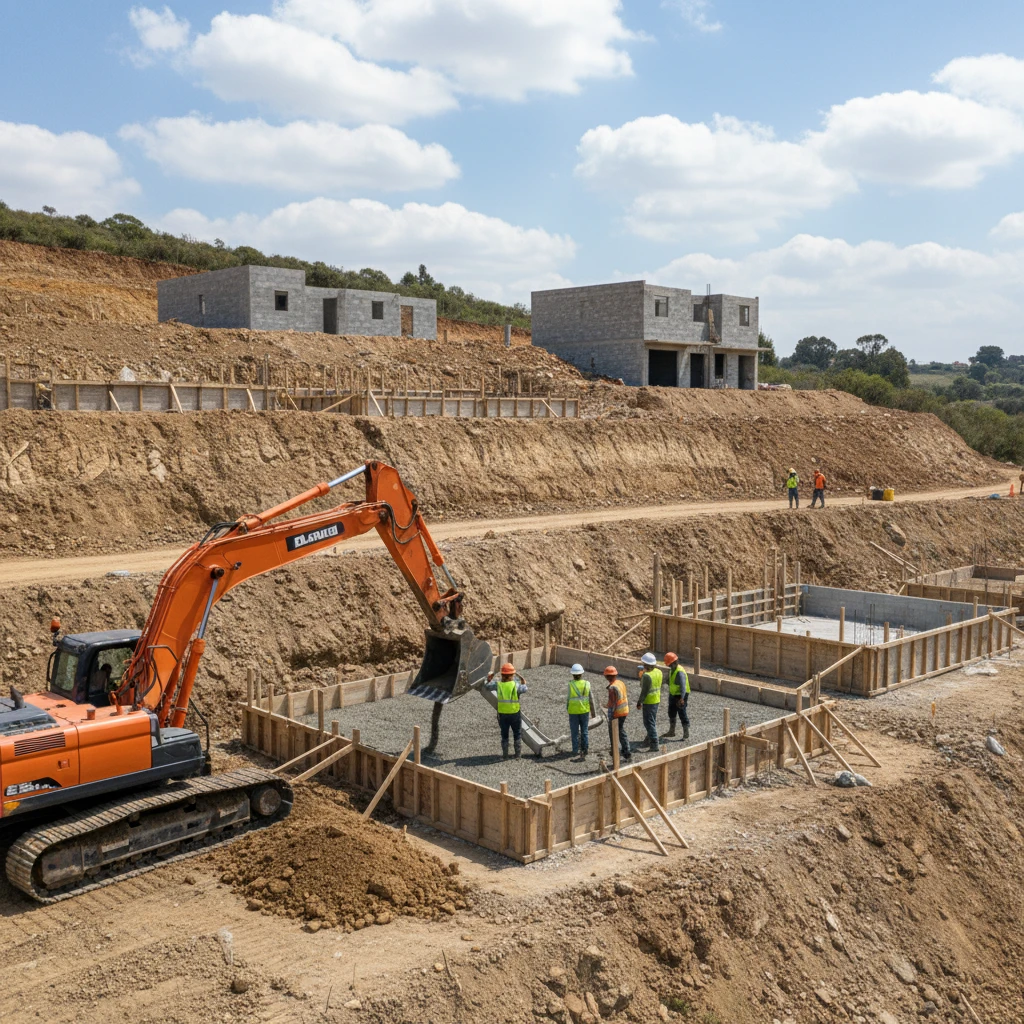
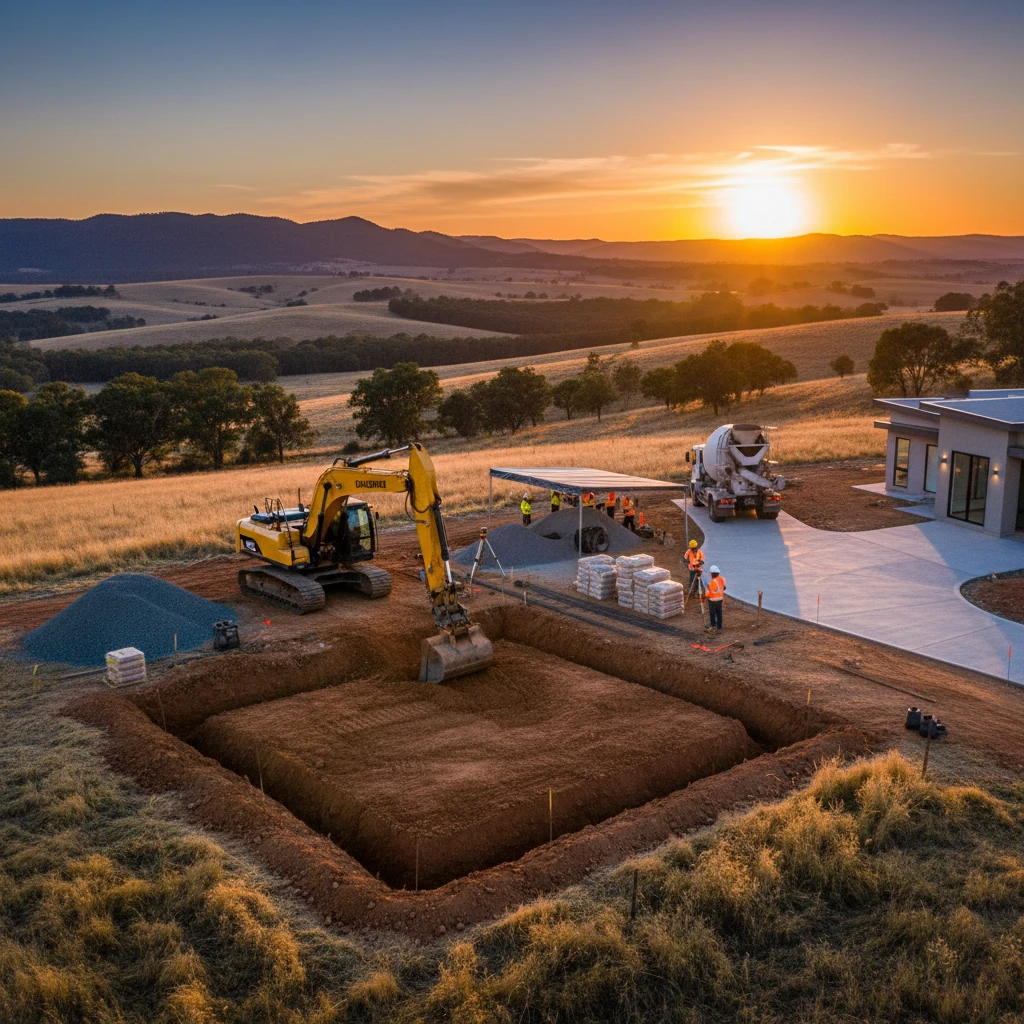
Effective site preparation is paramount for ensuring the longevity of any concrete structure. This begins with thorough excavation to remove any unstable soil, organic matter, or debris that could compromise the concrete’s foundation. Proper grading is then essential to create a slight slope that allows water to drain away from the footpath or stairs, preventing water from pooling and causing erosion or freeze-thaw damage. The excavation process can also identify any existing underground utilities or structures that need to be considered during the construction phase. Failure to properly excavate and grade can lead to significant problems down the line, including cracking, heaving, and complete structural failure.
Choosing the right base materials for stability (even on challenging terrain).
The base layer beneath the concrete plays a crucial role in distributing loads and preventing settlement. The choice of base materials will depend on the soil conditions, the anticipated traffic load, and the local climate. Common base materials include compacted gravel, crushed rock, or a combination of both. For challenging terrain, such as sloped or rocky areas, geogrids or geotextiles may be used to reinforce the base and improve stability. The base material should be compacted in layers to achieve optimal density and prevent movement. For example, on a steep slope in the Blue Mountains, we might use a combination of large crushed rock for drainage and a layer of finer gravel compacted with a plate compactor for a level surface.
Reinforcement strategies: When and why steel mesh is essential.
Steel mesh reinforcement significantly enhances the strength and durability of concrete footpaths and stairs. By embedding steel mesh within the concrete, we can distribute loads more evenly and resist cracking caused by stress, temperature changes, and ground movement. The size and spacing of the steel mesh will depend on the anticipated load and the size of the concrete slab. In areas with heavy foot traffic or expansive soils, heavier gauge mesh and closer spacing may be required. Steel reinforcement is particularly important for stairs, where concentrated loads are common. For example, a standard footpath might use SL72 mesh, while stairs could require SL82 or even SL92 mesh for added strength and safety. You can learn more about steel reinforcement at Steel Reinforcement Mesh.
Concrete Mix Design Matters: Getting the Recipe Right for the Blue Mountains Climate
Understanding concrete slump and its impact on durability.
Concrete slump is a measure of the concrete’s consistency and workability. It is determined by filling a cone with concrete, removing the cone, and measuring how much the concrete “slumps” or settles. The ideal slump will vary depending on the application and the placement method. A slump that is too high (too wet) can result in weak concrete with excessive shrinkage and cracking. A slump that is too low (too dry) can make the concrete difficult to work with and can lead to poor consolidation. For most footpaths and stairs, a slump of between 80mm and 100mm is generally recommended. Careful monitoring of the slump throughout the pouring process is essential to ensure consistent quality.
The role of additives in increasing strength and reducing cracking.
Concrete additives, also known as admixtures, are used to modify the properties of concrete and enhance its performance. Common additives include air-entraining agents, which improve resistance to freeze-thaw damage; water reducers, which increase strength and reduce cracking; and set accelerators, which speed up the hardening process. In the Blue Mountains, where temperatures can fluctuate dramatically, air-entraining agents are particularly important for ensuring durability. Fiber reinforcement can also be added to the concrete mix to further reduce cracking and improve impact resistance. The specific type and dosage of additives will depend on the desired properties and the environmental conditions. Selecting the right additives is critical to creating a concrete mix that will withstand the rigours of the local climate.
Why using a reputable concrete supplier is crucial in Penrith and the Central West.
The quality of the concrete mix is only as good as the supplier who provides it. A reputable concrete supplier will have a consistent supply of high-quality materials, experienced batchers who can accurately mix the concrete to your specifications, and reliable delivery services to ensure the concrete arrives on time and in good condition. They will also be able to provide technical support and advice on mix design and additive selection. Using a non-reputable supplier can result in inconsistent concrete, delayed deliveries, and ultimately, a substandard finished product. Laser Concrete has established long-standing relationships with trusted concrete suppliers in Penrith and the Central West, ensuring that we always receive the highest quality materials for our projects.
Precision Formwork: The Foundation of Flawless Footpaths and Stairs
Ensuring accurate measurements and angles for a professional finish.
Accurate measurements and precise angles are essential for achieving a professional and aesthetically pleasing finish on concrete footpaths and stairs. Before any concrete is poured, meticulous attention must be paid to setting out the formwork according to the design specifications. This includes using surveying equipment to ensure the correct elevations, slopes, and angles are achieved. Any errors in measurement or angle can result in uneven surfaces, misaligned steps, and an overall unprofessional appearance. Laser Concrete employs experienced formwork carpenters who are skilled in using precision tools and techniques to ensure that every footpath and staircase is built to the highest standards of accuracy.
Building sturdy forms that can withstand the pressure of wet concrete.
Formwork is the temporary structure that holds the wet concrete in place until it has hardened. It must be strong enough to withstand the immense pressure exerted by the concrete, which can be several tonnes per square meter. The formwork must also be watertight to prevent leakage of the cement slurry, which can weaken the concrete and create unsightly blemishes. Common formwork materials include timber, plywood, and steel. The choice of material will depend on the size and complexity of the project. Laser Concrete uses only high-quality formwork materials and construction techniques to ensure that our forms are sturdy, watertight, and capable of withstanding the pressure of wet concrete. For complex staircases, we often use custom-built steel forms for added strength and precision.
Form release agents: Preventing concrete from sticking and damaging the surface.
Form release agents are applied to the inside of the formwork to prevent the concrete from sticking to the surface. This makes it easier to remove the formwork without damaging the concrete and ensures a smooth, clean finish. There are various types of form release agents available, including oil-based, water-based, and synthetic products. The choice of release agent will depend on the type of formwork material and the desired finish. It’s crucial to apply the form release agent evenly and in the correct amount. Too little release agent can result in the concrete sticking to the formwork, while too much can leave a residue on the surface. Laser Concrete uses only high-quality form release agents and follows manufacturer’s instructions carefully to ensure a flawless finish every time.
Pouring and Finishing Techniques for Maximum Longevity
Consolidating the concrete to eliminate air pockets and improve strength.
Proper concrete consolidation is crucial for achieving maximum strength and durability in footpaths and stairs. Consolidation removes trapped air, ensuring the concrete flows properly around reinforcement and tightly bonds with the sub-base. This process reduces permeability, which minimises the risk of water ingress and freeze-thaw damage, common causes of concrete deterioration. Several methods can be used, including hand rodding for smaller projects and mechanical vibration for larger pours. Mechanical vibration, using either internal or external vibrators, is generally more effective. Over-vibration can lead to segregation of the aggregate, weakening the mix, while under-vibration leaves voids that compromise strength.
Decision criteria for choosing a consolidation method include the size of the pour, the complexity of the formwork, and the concrete mix design. For example, a small residential footpath repair might only require hand rodding, whereas a large set of concrete stairs would benefit from the consistent consolidation achieved by mechanical vibration. Properly consolidated concrete will have a smooth, dense surface with minimal bug holes, contributing to its long-term resistance to weathering and wear. Poor consolidation, on the other hand, will result in weaker concrete prone to cracking, crumbling, and early failure.
Surface finishing options: Broom finish, exposed aggregate, and more.
The surface finish of a concrete footpath or stairs not only affects its aesthetic appeal but also its slip resistance and durability. A broom finish, created by dragging a stiff-bristled broom across the wet concrete, provides excellent traction, making it a safe and practical choice for walkways and stairs, especially in areas prone to wet conditions. An exposed aggregate finish, achieved by removing the surface layer of cement paste to reveal the decorative aggregate beneath, offers a visually appealing and durable surface that is also slip-resistant. Other options include troweled finishes, stamped concrete, and coloured concrete, each offering different aesthetic and functional characteristics. The American Concrete Institute (ACI) provides detailed guidelines on various concrete finishing techniques.
The choice of finish should consider the intended use of the footpath or stairs, the desired aesthetic, and the level of maintenance required. For example, a high-traffic public footpath might benefit from the durability and slip resistance of an exposed aggregate finish, while a residential patio might favour the decorative appeal of stamped concrete. Proper sealing is essential for protecting the surface finish from staining, wear, and environmental damage, regardless of the chosen finish.
The importance of timely and effective curing.
Concrete curing is arguably the most critical step in ensuring long-term durability. Curing involves maintaining adequate moisture and temperature in the concrete to allow proper hydration of the cement. Without proper curing, the concrete can dry out too quickly, leading to cracking, reduced strength, and increased permeability. Several curing methods can be used, including water curing (ponding, spraying, or covering with wet burlap), membrane curing (applying a liquid curing compound), and steam curing (for precast elements). Water curing is generally considered the most effective, but it requires continuous monitoring and maintenance.
The duration of curing depends on the type of cement, the ambient temperature, and the desired strength. Generally, a minimum of seven days of curing is recommended, but longer curing periods may be necessary in hot or dry climates. Neglecting proper curing can significantly reduce the lifespan of a concrete footpath or stairs, leading to costly repairs or replacements. Membrane curing compounds should be applied uniformly and at the recommended application rate to ensure effective moisture retention. As an example, not curing a concrete footpath during a particularly hot Penrith summer would cause surface cracking, reducing its lifespan to as little as 5 years, compared to a properly cured footpath lasting 20 years or more.
Mastering Concrete Stairs: Safety and Aesthetics Combined
Designing stairs to meet building codes and accessibility requirements.
Designing concrete stairs requires careful attention to building codes and accessibility standards to ensure safety and usability. Building codes typically specify minimum and maximum riser heights, tread depths, and handrail requirements. Accessibility standards, such as those outlined in the Disability Discrimination Act (DDA), mandate specific design features for accessible stairs, including consistent riser heights, tactile ground surface indicators, and appropriate handrail extensions. Stairs that do not meet these requirements can pose safety hazards and may be subject to legal penalties.
It is crucial to consult with a qualified building inspector or engineer to ensure compliance with all applicable codes and standards. For example, riser heights should be consistent throughout the entire flight of stairs to prevent tripping hazards. Handrails should be graspable, continuous, and extend beyond the top and bottom risers. Tactile ground surface indicators should be installed at the top and bottom of stairs to warn visually impaired individuals. Ignoring these details can lead to unsafe stairs and costly rework.
Choosing the right rise and run for comfortable and safe use.
The rise (vertical height of each step) and run (horizontal depth of each step) significantly impact the comfort and safety of concrete stairs. A common rule of thumb is to use the formula 2R + G = 600-650mm, where R is the rise and G is the going (run). This formula helps to determine a comfortable and natural stride length. Smaller rises and longer runs are generally easier to navigate, especially for older adults and individuals with mobility limitations. However, excessively long runs can increase the overall footprint of the stairs, while excessively small rises can make the stairs feel awkward to climb.
The ideal rise and run will depend on the available space and the intended users of the stairs. For example, stairs leading to a basement may have steeper dimensions than stairs in a residential living area. Careful consideration should be given to the potential for slips and falls, especially in wet or icy conditions. A rise of 175mm and a run of 250mm is a common and comfortable dimension for residential stairs. Steeper stairs should be avoided whenever possible, and handrails should always be provided for added safety. Laser Concrete are experts in the Blue Mountains, where sloped blocks necessitate complex staircases built to both code and comfort.
Integrating handrails and other safety features.
Handrails are essential safety features for concrete stairs, providing support and preventing falls. Handrails should be securely mounted, graspable, and continuous along the entire length of the stairs. Building codes typically specify the required height and diameter of handrails, as well as the spacing between handrail supports. Other safety features that can be incorporated into concrete stairs include non-slip surfaces, adequate lighting, and contrasting nosing (the edge of the tread) to improve visibility.
Non-slip surfaces can be achieved by using textured concrete, adding abrasive strips, or applying a non-slip coating. Adequate lighting is crucial for illuminating the stairs, especially at night or in dimly lit areas. Contrasting nosing helps to define the edge of each step, making it easier to see and reducing the risk of missteps. For example, a customer in Katoomba, NSW, chose to integrate LED strip lighting into their new concrete stairs, significantly improving safety and aesthetics. Prioritising these safety features is paramount for creating safe and accessible concrete stairs. For details of standards related to the construction and placement of handrails please refer to Standards Australia.
Dealing with Sloped Sites: Our Expertise in Challenging Terrain
Terracing and retaining walls: Creating stable and usable spaces.
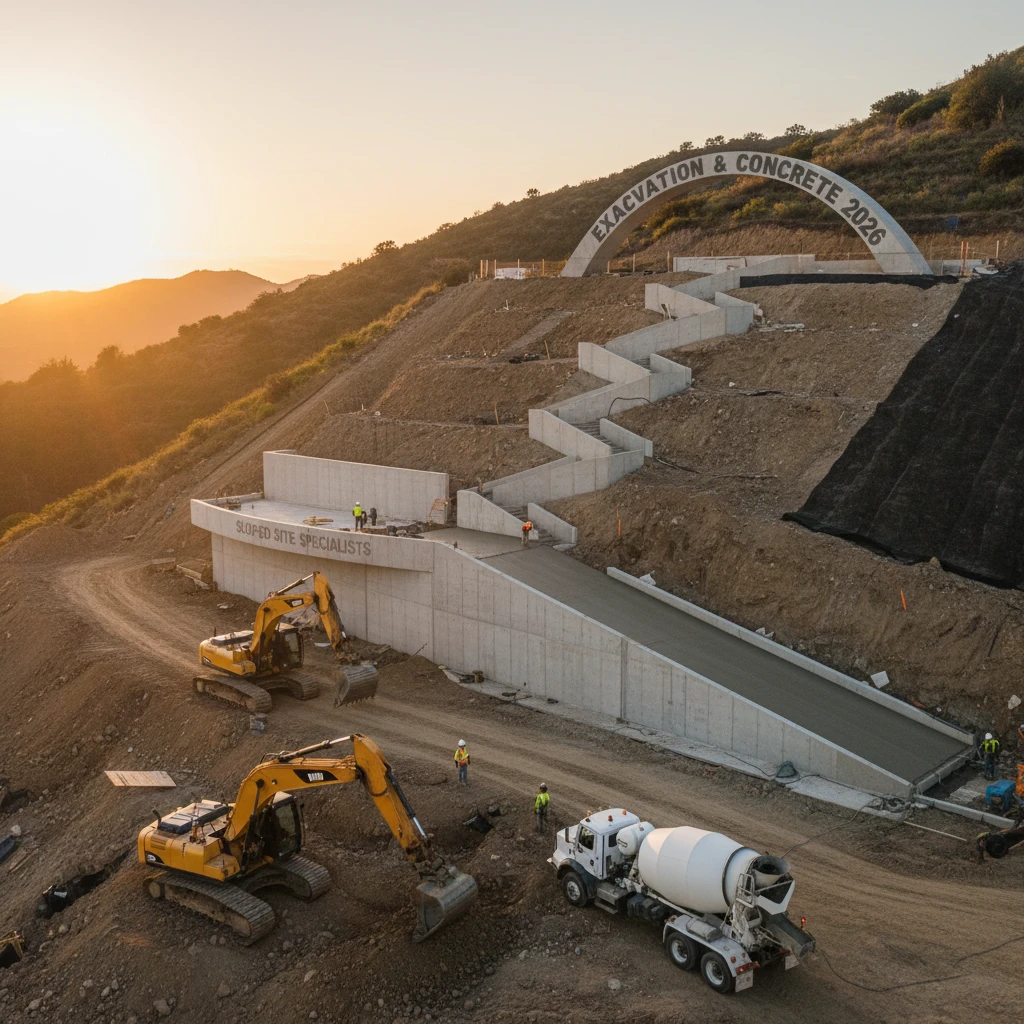
Sloped sites often present challenges for building footpaths and stairs, requiring innovative solutions to create stable and usable spaces. Terracing involves creating a series of level platforms, or terraces, supported by retaining walls. Retaining walls are structures designed to hold back soil and prevent erosion. Together, terracing and retaining walls can transform a sloped site into a series of flat, functional areas suitable for footpaths, gardens, or outdoor living spaces.
The design and construction of retaining walls must consider soil type, slope angle, and water drainage to ensure long-term stability. Common types of retaining walls include gravity walls (relying on their weight for stability), cantilever walls (using a reinforced concrete slab to resist overturning), and piling walls (using steel or concrete piles driven into the ground). Proper drainage is essential to prevent water pressure from building up behind the wall, which can lead to failure. A geogrid may be used as a soil reinforcement layer in retaining walls. Terracing and retaining walls are crucial for maximising the usable space on sloped sites and preventing soil erosion.
Drainage solutions for preventing erosion and water damage.
Effective drainage is critical for protecting concrete footpaths and stairs from erosion and water damage. Water runoff can erode the soil around footpaths and stairs, leading to instability and cracking. Proper drainage systems, such as surface drains, subsurface drains, and French drains, can effectively channel water away from the structure. Surface drains collect water from the surface and direct it to a suitable outlet, while subsurface drains collect water from below the surface. French drains are gravel-filled trenches that allow water to percolate into the ground.
The design of a drainage system should consider the amount of rainfall, the slope of the terrain, and the soil type. Proper grading is essential to ensure that water flows away from the footpath or stairs. Impermeable surfaces, such as concrete, should be sloped to direct water towards drains. Clogged drains can lead to water pooling and damage, so regular maintenance is necessary to keep them clear of debris. Effective drainage is crucial for preventing erosion and extending the lifespan of concrete footpaths and stairs. Careful planning is essential in areas such as the Blue Mountains, where heavy rains are common.
Specialised equipment and techniques for accessing difficult areas.
Constructing concrete footpaths and stairs on steep or rocky sites often requires specialised equipment and techniques to overcome access challenges. Mini excavators, skid steer loaders, and concrete pumps can be used to move materials and equipment to difficult-to-reach areas. Mini excavators are compact and maneuverable, making them ideal for digging and grading in tight spaces. Skid steer loaders can be used to transport materials and equipment over rough terrain. Concrete pumps allow for the efficient placement of concrete in areas that are inaccessible to concrete trucks. Laser Concrete has specialised equipment designed to access blocks that are inaccessible to normal concrete trucks, allowing the client to save money on labor costs for wheelbarrowing in concrete.
In some cases, it may be necessary to use manual labour to transport materials and equipment. Careful planning and coordination are essential to ensure the safety and efficiency of the construction process. Rigging and scaffolding may be required to provide access to elevated areas. Working on steep slopes can be hazardous, so appropriate safety precautions must be taken. Using the right equipment and techniques can significantly reduce the time and cost of constructing concrete footpaths and stairs on difficult sites.
Avoiding Common Concrete Footpath and Stair Pitfalls
Poor drainage leading to cracking and erosion.
One of the most common pitfalls in concrete footpath and stair construction is inadequate drainage. When water is not properly diverted away from the concrete, it can seep into the sub-base, causing erosion and instability. This can lead to cracking, settling, and ultimately, premature failure of the structure. The freeze-thaw cycle can exacerbate the problem, as water expands when it freezes, putting additional stress on the concrete. Proper grading, surface drains, and subsurface drainage systems are essential for preventing water damage.
Ensure the ground slopes away from the footpath or stairs to prevent water from pooling on the surface. Install surface drains to collect runoff and direct it to a suitable outlet. Consider using a permeable sub-base material, such as gravel, to allow water to drain away from the concrete. Regular maintenance, such as clearing debris from drains, is necessary to ensure the drainage system functions effectively. Neglecting drainage can significantly shorten the lifespan of a concrete footpath or stairs. This is even more evident in high-rainfall areas such as the Blue Mountains. Durable Concrete Driveways for Penrith Homes require many of the same techniques for long-term performance.
Inadequate preparation causing settling and instability.
Insufficient sub-base preparation is another common pitfall that can lead to settling and instability of concrete footpaths and stairs. The sub-base is the foundation upon which the concrete is poured, and it must be properly compacted and graded to provide a stable and level surface. If the sub-base is not properly prepared, the concrete can settle unevenly, leading to cracking and structural damage. Remove any organic matter, such as topsoil or vegetation, from the sub-base. Compact the soil using a plate compactor or roller to create a firm and stable surface.
Add a layer of compacted gravel to improve drainage and provide additional support. Ensure the sub-base is properly graded to allow water to drain away from the concrete. Failure to properly prepare the sub-base can result in costly repairs or replacements. For example, if a footpath is built on poorly compacted soil, it may sink and crack within a few years, requiring complete reconstruction. Proper sub-base preparation is a crucial investment in the long-term durability of the concrete structure.
Using the wrong type of concrete for the environment.
Choosing the wrong type of concrete for the environment can also lead to premature failure. Concrete mixes vary in strength, durability, and resistance to environmental factors. For example, concrete exposed to harsh weather conditions, such as freezing temperatures or de-icing salts, requires a different mix than concrete used indoors. Using the wrong type of concrete can result in cracking, scaling, and spalling (surface flaking). Consider the environmental conditions to which the concrete will be exposed. Choose a concrete mix with the appropriate strength and durability for the intended application.
For example, a concrete footpath in a cold climate should be made with an air-entrained mix to resist freeze-thaw damage. Consult with a concrete supplier or engineer to determine the best mix for your specific needs. Using the wrong type of concrete can significantly reduce the lifespan of the structure. For example, a concrete footpath made with a weak mix may crumble within a few years, requiring replacement. Selecting the right concrete mix is essential for ensuring the long-term durability and performance of the concrete structure.
Maintenance Tips to Extend the Life of Your Concrete
Concrete footpaths and stairs, expertly installed, represent a significant investment in your property. To ensure they continue to perform and look their best for years to come, proactive maintenance is essential. Regular care will not only enhance their appearance but also prevent costly repairs down the line. Proper maintenance addresses common issues like staining, weathering, and cracking.
Sealing your concrete to protect against stains and weathering.
Sealing is one of the most effective ways to prolong the life of your concrete. A high-quality concrete sealant acts as a barrier, preventing water, oil, and other substances from penetrating the surface. This protects against staining, cracking caused by freeze-thaw cycles, and surface deterioration from UV exposure. It’s important to choose a sealant appropriate for the specific use and location of your concrete. For example, stairs may benefit from a sealant with added slip resistance. Re-application frequency varies depending on the product and the amount of traffic, but generally, resealing every 1-3 years is recommended. Always follow the manufacturer’s instructions for application. This ensures adequate protection.
Regular cleaning to prevent the buildup of dirt and debris.
Regular cleaning is essential to maintain the appearance and integrity of your concrete surfaces. Dirt, leaves, and other debris can trap moisture and lead to staining and deterioration. Sweep or blow off the surfaces regularly to remove loose debris. For more stubborn dirt, use a stiff brush and a mild detergent solution. Avoid harsh chemicals or abrasive cleaners, as these can damage the sealant and the concrete surface. Pressure washing can be effective, but it’s important to use a low-pressure setting and a wide nozzle to avoid damaging the concrete. Consider using a concrete cleaner specifically designed for removing stains and grime. Address stains as soon as possible. Prompt action will limit permanent discolouration.
Repairing cracks and damage promptly to prevent further deterioration.
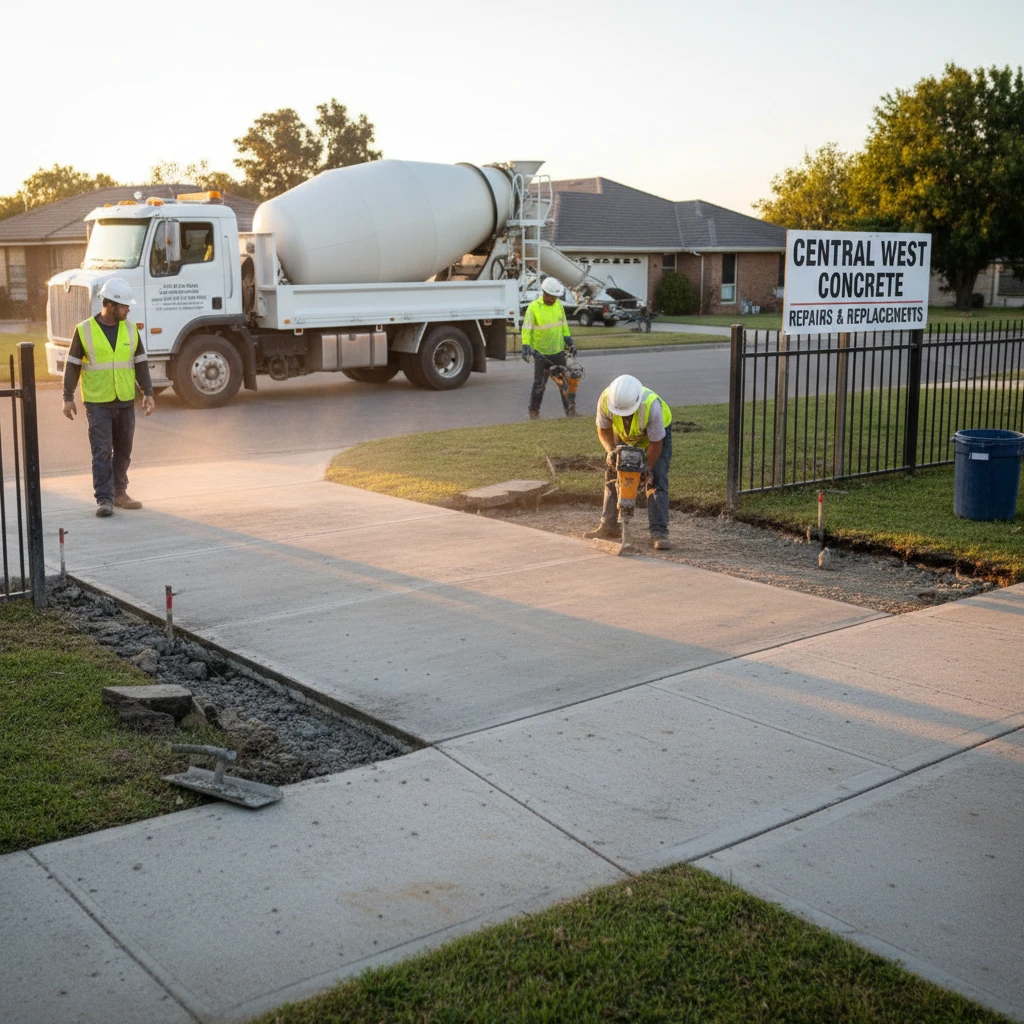
Even with the best maintenance, cracks and damage can occur over time. It’s crucial to address these issues promptly to prevent them from worsening. Small cracks can be filled with a concrete crack filler available at most hardware stores. Larger cracks or significant damage may require professional repair. Ignoring cracks can allow water to penetrate, leading to further deterioration, especially in areas subject to freeze-thaw cycles. Moreover, unchecked cracks can become tripping hazards. When assessing damage, consider the location, depth, and width of cracks. These factors determine the appropriate repair method and materials. Ignoring even minor cracks could mean extensive repairs later. For instance, consider this scenario:
Example: A homeowner in the Blue Mountains neglected a hairline crack in their concrete footpath for two years. Over time, water seeped into the crack, freezing and expanding during winter. Eventually, a small crack became a large, uneven gap, costing $800 to repair instead of the $150 it would have cost to fill the initial hairline crack.
Ready for Footpaths and Concrete Stairs That Stand the Test of Time? Contact Laser Concrete Today
Investing in high-quality materials and expert installation, like those offered at Durable Concrete Driveways for Penrith Homes, is the first step towards long-lasting concrete footpaths and stairs. Coupled with proper maintenance, your concrete features can withstand the elements and provide a safe, attractive addition to your property for years to come. Contact Laser Concrete today to discuss your project and learn how we can help you achieve durable, beautiful results.