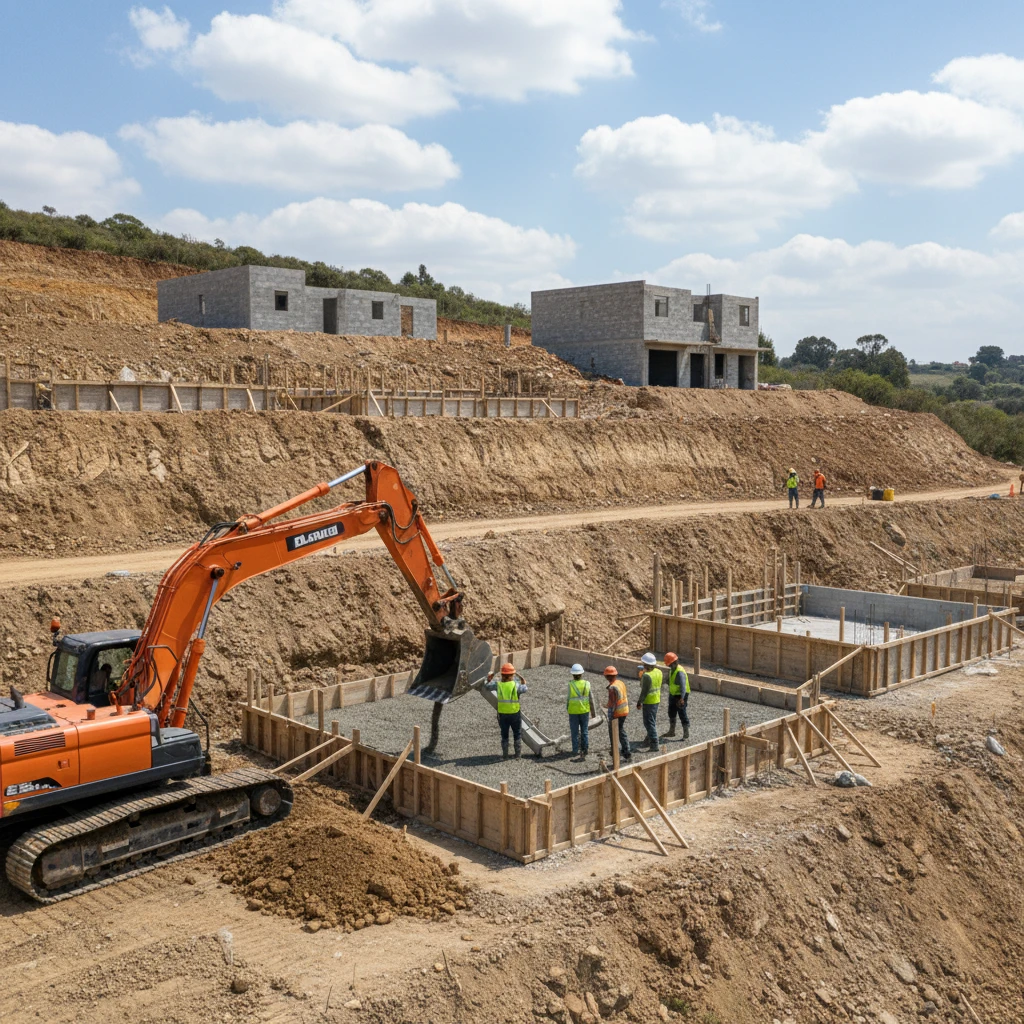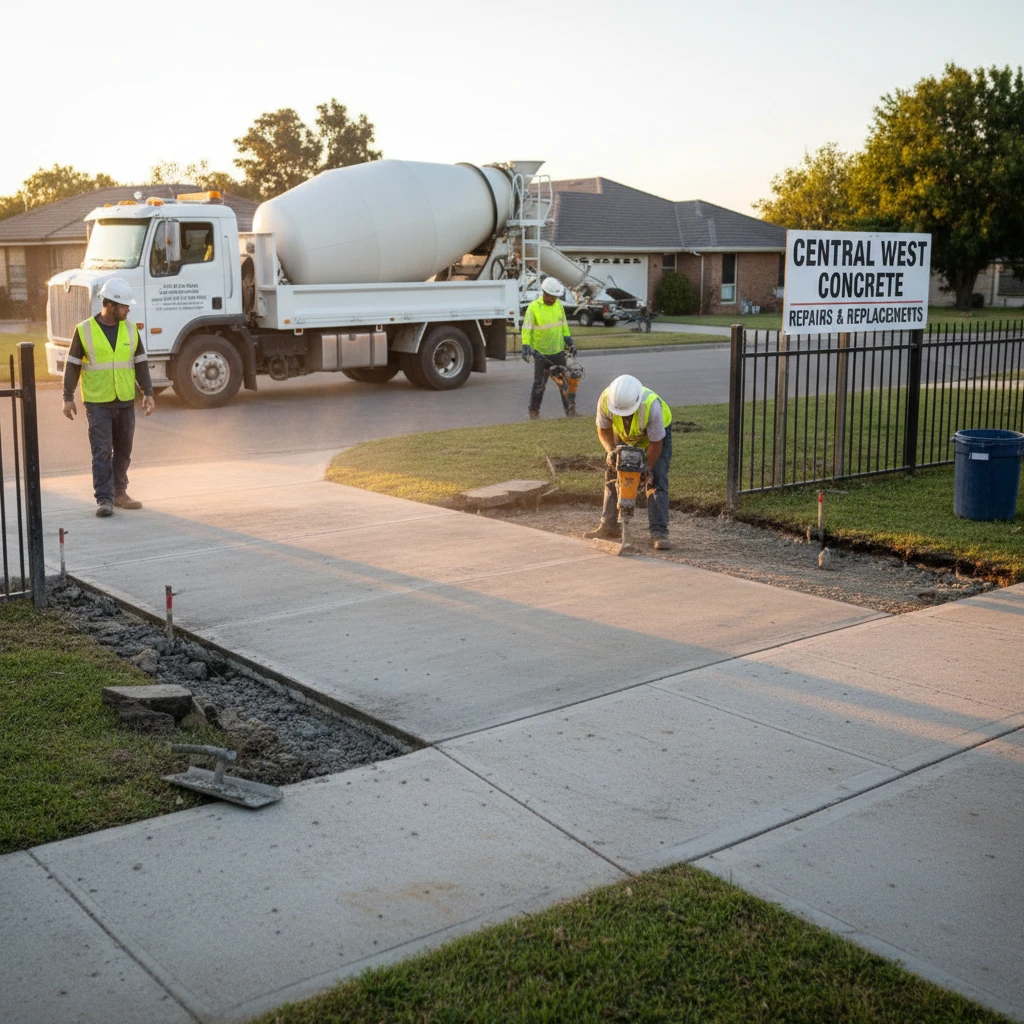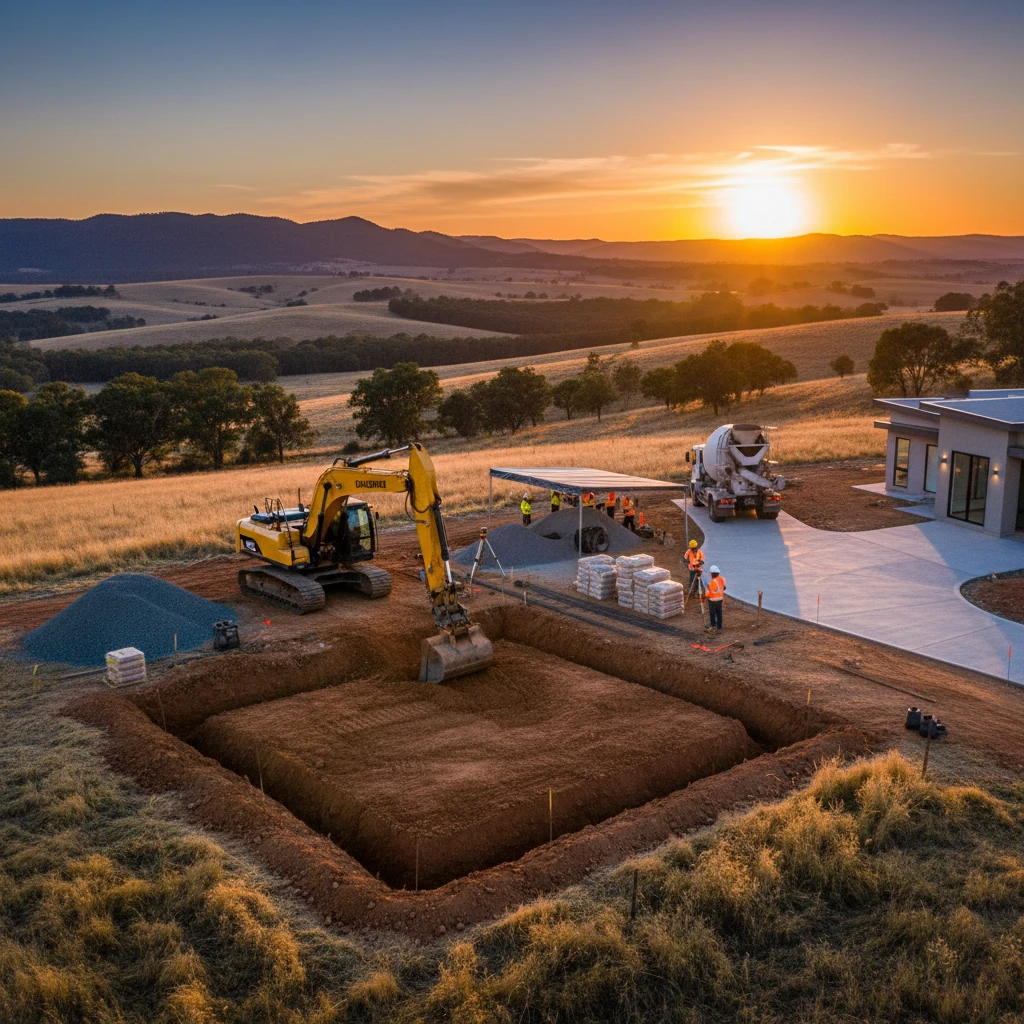
Laying a concrete slab, driveway, or footpath seems simple enough, but the truth is, the quality and longevity of the finished product depend heavily on the preparation work underneath. In Penrith, the Blue Mountains, and the Central West, this often means dealing with challenging sites – slopes, rocky terrain, reactive soils, and tight access are common issues that demand careful planning and execution.
At Laser Concrete, we understand that proper excavation is not just about removing dirt; it’s about creating a stable, well-drained foundation that will support your concrete structure for years to come. Skimping on this crucial step can lead to costly problems down the line, so let’s explore the key aspects of excavation for lasting concrete.
Why Proper Excavation is Critical for Lasting Concrete in Penrith, Blue Mountains & Central West
Preventing future cracking and subsidence
The most significant benefit of thorough excavation is preventing future issues like cracking and subsidence. When concrete is poured onto poorly prepared ground, the ground can shift, settle unevenly, or expand and contract excessively due to moisture changes. This puts stress on the concrete, leading to cracks that compromise its structural integrity and aesthetic appeal. Proper excavation removes unsuitable materials, replaces them with compacted, stable fill, and ensures uniform support across the entire concrete surface. Ignoring these steps can result in a significantly shortened lifespan for your concrete work. To avoid this, engage with a local excavation specialist to ensure that your concrete project stands the test of time. For example, an inadequately compacted fill under a shed slab could lead to settling and cracking within a few years. A well-executed excavation, on the other hand, provides a solid base that resists these forces. A discussion of preventing concrete cracking can be found at STRUCTURE magazine.
Ensuring correct drainage and water management
Effective drainage and water management are crucial for preventing water damage to your concrete. Poor drainage can lead to water pooling around the concrete, which can seep into the sub-base, weakening it and potentially causing frost heave in colder months or expansive soil issues during wetter periods. Proper excavation includes creating a fall away from the concrete surface, installing drainage systems like ag drains or slotted pipes, and using permeable backfill materials to channel water away effectively. A concrete driveway in a low-lying area without adequate drainage may develop cracks and spalling due to water damage. Proper excavation practices are vital to ensure the longevity and structural integrity of your concrete installations. By integrating effective drainage systems, you safeguard against potential water-related issues that can compromise the foundation and surface of your concrete. The Environmental Protection Agency (EPA) offers detailed information on drainage and erosion control.
Achieving a level and stable base for concrete longevity
A level and stable base is the foundation for concrete longevity. Uneven surfaces can cause variations in concrete thickness, leading to stress points and potential cracking. Instability in the sub-base can result in settling, shifting, and ultimately, failure of the concrete structure. Excavation ensures a consistent depth and uniform compaction across the entire area, creating a solid platform for the concrete to rest upon. This even distribution of weight and stress prevents localised weaknesses and ensures that the concrete performs as intended for its entire lifespan. For instance, consider a footpath on a sloped site. Without careful excavation and levelling, the footpath could be prone to cracking and displacement, especially after heavy rain or ground movement. For projects involving shed slabs, achieving a level and stable base is especially important to ensure that the slab can bear the load it is intended to carry; read more about this on our page about Shed Slabs: Precision Concrete for Lasting Foundations.
Assessing Your Site: Key Considerations Before Excavation Begins
Soil type analysis: identifying potential challenges like reactive clay
Understanding your soil type is paramount. Soil type analysis reveals potential challenges that could impact the concrete’s lifespan. Reactive clay soils, common in certain areas of Penrith and the Central West, expand when wet and shrink when dry, exerting significant pressure on the concrete. Sandy soils, while generally stable, may lack sufficient compaction and drainage properties. Loam, a mix of sand, silt, and clay, can offer a balanced foundation if properly prepared. A geotechnical report, while an upfront cost, can save thousands in future repairs by identifying these issues early. Actionable steps include engaging a soil testing company and providing the results to your concreter for tailored excavation strategies. Ignoring soil analysis is a pitfall, potentially leading to significant structural issues down the line. For example, assuming your soil is stable when it’s actually reactive clay could lead to extensive cracking in a new driveway within a few years.
Slope and gradient: planning for appropriate earthworks and retaining solutions
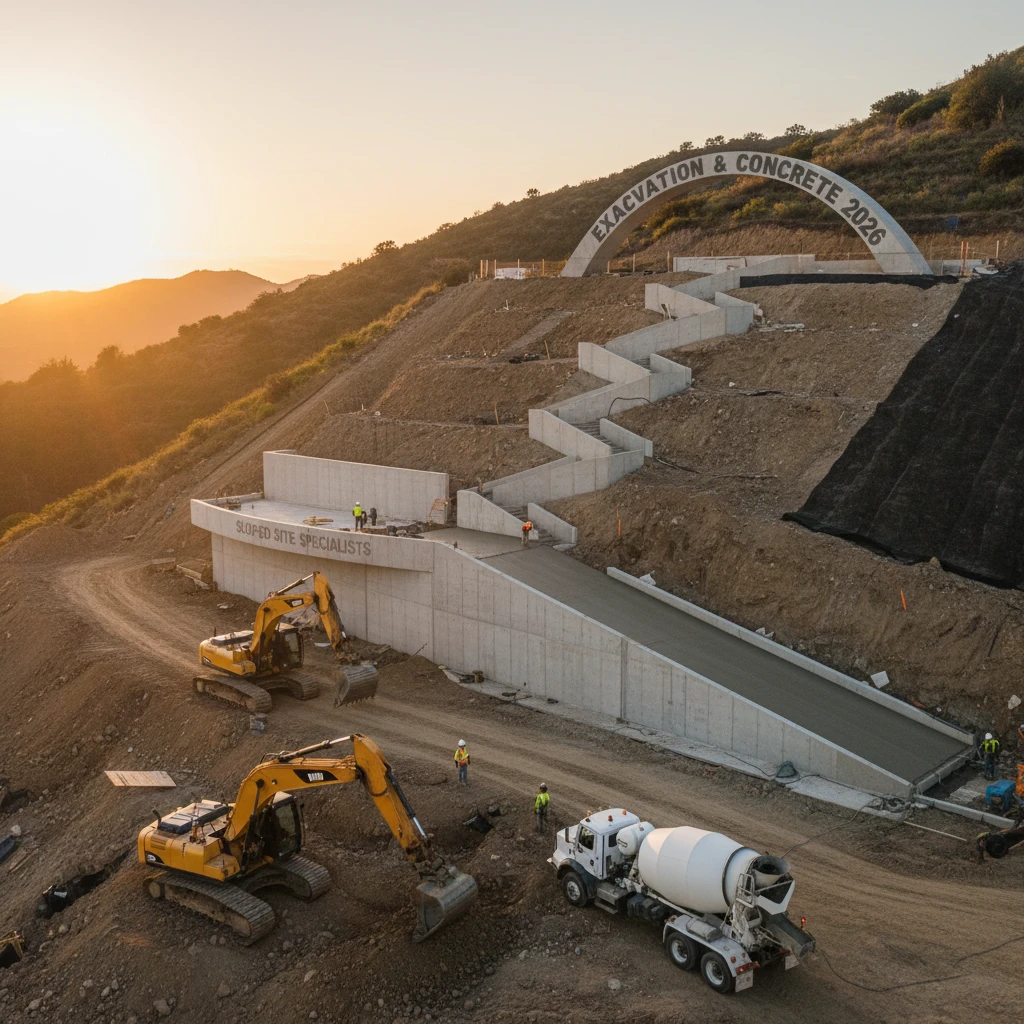
The slope and gradient of your site significantly influence the excavation process. Steep slopes require more extensive earthworks to create a level surface for concrete. Retaining walls may be necessary to prevent soil erosion and maintain stability, especially on sites with significant elevation changes. Planning for appropriate earthworks involves calculating cut and fill volumes, designing retaining structures if needed, and ensuring adequate drainage to manage water runoff. Actionable steps include conducting a site survey to determine the slope and gradient, consulting with an engineer to design retaining solutions, and integrating drainage plans into the overall excavation strategy. Failing to address slope and gradient properly can lead to landslides, soil erosion, and structural instability of the concrete. For solutions regarding excavation and concrete on sloped sites, see more on our excavation and concrete solutions page.
Identifying underground utilities: gas, water, electricity, and communication lines
Before any digging begins, identifying underground utilities is essential for safety and preventing costly damage. Gas lines, water pipes, electricity cables, and communication lines all pose potential hazards if struck during excavation. Damaging these utilities can lead to service disruptions, injuries, and significant repair expenses. Actionable steps include contacting “Dial Before You Dig” (or your local equivalent) to obtain plans of underground services, visually inspecting the site for any above-ground indicators, and using non-destructive digging techniques like hand excavation in areas where utilities are suspected. Ignoring this step is a major pitfall, potentially resulting in severe consequences. For example, accidentally severing a gas line could lead to a dangerous explosion. A detailed scan of the site is a critical step, especially within built-up areas.
Essential Excavation Techniques for Concrete Prep on Challenging Terrain
Cut and fill: balancing excavation and backfilling for optimal levels
Cut and fill is a fundamental excavation technique used to balance the amount of excavated material with the amount needed for backfilling. This technique aims to create a level platform for the concrete by removing soil from high areas (cut) and using it to fill low areas (fill). The key is to compact the filled areas properly to ensure stability and prevent settling. Actionable steps include accurately surveying the site to determine cut and fill volumes, using appropriate compaction equipment to achieve the required density, and ensuring that the fill material is suitable for supporting concrete. Improper compaction is a common pitfall, leading to subsidence and cracking in the concrete over time. For instance, using loose, uncompacted fill under a concrete slab will inevitably lead to settling and structural issues. The precision required is why engaging specialists for precision excavation is often the best course of action. More information on Cut and Fill can be found at the Whole Building Design Guide.
Terracing: creating stable platforms on steep slopes
On steep slopes, terracing is an effective excavation technique for creating stable, level platforms for concrete structures. Terraces are essentially a series of stepped platforms that reduce the overall slope and prevent soil erosion. Each terrace is supported by a retaining wall or batter slope, providing a solid base for the concrete. Actionable steps include designing the terraces to suit the specific slope and soil conditions, constructing robust retaining walls to support the terraces, and ensuring proper drainage to prevent water buildup behind the walls. A common pitfall is inadequate retaining wall design, leading to wall failure and instability of the terraces. For example, a poorly designed retaining wall on a steep slope could collapse under the weight of the soil, jeopardising the entire concrete structure above.
Rock breaking and removal: dealing with rocky ground effectively
Rocky ground poses a significant challenge for excavation. Rock breaking and removal require specialised equipment and techniques to overcome this obstacle. Depending on the size and hardness of the rocks, methods may include using hydraulic rock breakers, jackhammers, or even explosives (in controlled situations). After breaking the rocks, they need to be removed from the site and disposed of properly. Actionable steps include assessing the extent and type of rock on the site, selecting the appropriate rock breaking method, and implementing safe and efficient removal procedures. A common pitfall is underestimating the difficulty of rock removal, leading to delays and cost overruns. For instance, attempting to break large boulders with inadequate equipment can be time-consuming and ineffective. Rock breaking on properties within the Blue Mountains and Central West is not uncommon.
Choosing the Right Equipment for Your Excavation Project
Mini excavators: ideal for tight access and smaller areas
Mini excavators are invaluable for excavation projects with tight access or smaller work areas. Their compact size allows them to manoeuvre easily in confined spaces, making them ideal for residential projects and areas with limited access. Despite their size, mini excavators are powerful enough to handle a variety of excavation tasks, including digging footings, trenches, and small-scale earthmoving. Actionable steps include assessing the access constraints of your site, selecting a mini excavator with the appropriate size and power for your needs, and ensuring that the operator is experienced in operating this type of equipment. A common pitfall is attempting to use larger equipment in areas where a mini excavator would be more efficient, leading to damage and delays. Mini excavators offer great flexibility for projects where space is at a premium.
Bobcats and skid steers: versatile machines for earthmoving and leveling
Bobcats and skid steers are versatile machines used for a wide range of earthmoving and levelling tasks. Their compact size and manoeuvrability make them suitable for various construction and landscaping projects. Bobcats can be equipped with different attachments, such as buckets, blades, and augers, to perform various functions, including grading, backfilling, and material handling. Actionable steps include selecting the appropriate attachments for your specific tasks, ensuring that the operator is skilled in operating the equipment safely and efficiently, and regularly maintaining the machine to prevent breakdowns. A common pitfall is overloading the bobcat or using it for tasks beyond its capabilities, leading to damage and safety hazards. The versatility of bobcats makes them a valuable asset for many excavation projects. The Bobcat website has further information on the capabilities of these machines.
Larger excavators: necessary for substantial earthworks on larger properties
For substantial earthworks projects on larger properties, larger excavators are essential. These powerful machines can move large volumes of soil quickly and efficiently, making them ideal for projects such as site clearing, bulk excavation, and foundation digging. Larger excavators offer greater digging depth, lifting capacity, and reach compared to smaller machines, allowing them to handle more demanding tasks. Actionable steps include assessing the scope of your earthworks project, selecting an excavator with the appropriate size and power for your needs, and ensuring that the operator is highly experienced in operating this type of heavy equipment. A common pitfall is using a smaller excavator for a large-scale project, leading to significant delays and increased costs. For major excavation work, a larger excavator is often the only viable option.
Compaction: Achieving a Solid Base for Concrete Placement
Importance of proper compaction for load bearing
Proper compaction is absolutely crucial for ensuring the longevity and structural integrity of any concrete project. Compaction increases the soil’s density, reducing void spaces and enhancing its ability to bear the considerable weight of the concrete slab and any loads it will support. Without proper compaction, the soil beneath the concrete can settle unevenly over time. This can lead to cracking, sinking, and ultimately, premature failure of the concrete structure. The load-bearing capacity of soil increases significantly with increased density achieved through effective compaction techniques.
Consider, for example, a poorly compacted base under a shed slab. Over time, the weight of the shed and its contents could cause the slab to crack and become uneven, potentially damaging the shed itself and its contents. On the other hand, a properly compacted base, as discussed in our page about shed slabs, provides a stable and level foundation that can withstand the imposed loads for many years. The effects of poor compaction are typically not immediately evident, appearing over months or years, making it a hidden danger if overlooked during the initial stages of the project.
Selecting the correct compaction equipment (plate compactor vs. roller)
Choosing the right compaction equipment is critical for achieving optimal results. A plate compactor is generally suitable for smaller areas and granular materials like sand, gravel, and crushed rock. Plate compactors work by delivering high-frequency vibrations to the soil surface, effectively settling and densifying the particles. Rollers, on the other hand, are better suited for larger areas and cohesive soils like clay. Rollers use static weight and/or vibration to compress the soil. Different types of rollers exist, including smooth drum rollers, sheepsfoot rollers, and pneumatic tyre rollers, each designed for specific soil types and compaction requirements.
The depth of the soil layer also plays a role in equipment selection. For shallow layers, a smaller plate compactor might suffice. However, for deeper layers, a heavier roller will be necessary to achieve adequate compaction throughout the entire depth. Using the wrong equipment can lead to insufficient compaction, wasting time and money while still leaving the project vulnerable to future problems. For instance, attempting to compact a large area of clay with a small plate compactor will only affect the surface layer and leave the underlying soil poorly compacted.
Achieving optimal compaction levels: layer thickness and number of passes
To achieve optimal compaction, it’s essential to compact the soil in layers. The recommended layer thickness depends on the type of soil and the compaction equipment used. Generally, thinner layers (around 100-150mm) are recommended for plate compactors, while thicker layers (up to 300mm) can be used with rollers. Each layer should be compacted thoroughly before adding the next layer.
The number of passes required also depends on the soil type, layer thickness, and equipment. As a general rule, multiple passes are always better than a single pass. Aim for at least 3-4 passes with a plate compactor and 2-3 passes with a roller. Overlapping each pass by about 50% ensures even compaction across the entire area. Testing the soil density with a soil density tester is the only way to definitively confirm the desired compaction level has been achieved. For example, failing to compact correctly for a driveway can cause major issues, as discussed in our page on Penrith concrete driveways.
Drainage Solutions: Preventing Water Damage to Your Concrete
Installing adequate drainage systems (ag pipes, spoon drains)
Effective drainage is critical for protecting concrete from water damage. Water can seep into the soil beneath the concrete, causing erosion, weakening the base, and leading to cracking or movement. Installing adequate drainage systems is the best way to prevent these issues. Two common drainage solutions are agricultural (ag) pipes and spoon drains. Ag pipes are perforated pipes that are buried in the ground to collect subsurface water and direct it away from the concrete. They are typically surrounded by gravel to facilitate water flow into the pipe.
Spoon drains are shallow, open channels that are used to collect surface water and channel it away from the concrete. They are typically lined with concrete or other impervious material to prevent erosion. Spoon drains are particularly effective in areas where there is a lot of surface runoff. Choosing the right drainage solution depends on the specific site conditions and the amount of water that needs to be managed. For larger sites, a combination of ag pipes and spoon drains may be necessary. For example, in areas with significant slope, such as some areas in the Blue Mountains, effective drainage solutions are a must, as addressed in our page about excavation and concrete in the Blue Mountains.
Directing water away from concrete slabs and foundations
Simply installing drainage systems isn’t enough; it’s crucial to ensure that water is effectively directed away from concrete slabs and foundations. This involves careful planning and execution to create a positive drainage slope, meaning the ground slopes away from the concrete structure. Downpipes from roofs should be connected to stormwater drains that carry water away from the foundation. Ag pipes should be installed around the perimeter of the foundation to intercept groundwater and direct it away.
Proper grading can also help to direct surface water away from the concrete. Creating a swale, or a shallow depression, can channel water away from the foundation and prevent it from pooling near the concrete. The goal is to create a clear path for water to flow away from the concrete structure, preventing it from seeping into the soil and causing damage. Failing to properly direct water away from the concrete can negate the benefits of even the best drainage systems. In the Central West region, heavy rains can quickly overwhelm inadequate drainage, as described in our page covering excavation services in the Central West.
Addressing surface runoff with appropriate grading
Surface runoff is a major contributor to water damage in concrete structures. Appropriate grading is essential for managing surface runoff and preventing it from accumulating near the concrete. Grading involves shaping the ground surface to create a slope that directs water away from the concrete. The ideal slope is typically around 2-3%, which is enough to allow water to flow freely without causing erosion. Grading should be done carefully to avoid creating low spots where water can pool.
In addition to grading, other techniques can be used to address surface runoff, such as installing permeable paving or creating rain gardens. Permeable paving allows water to infiltrate into the ground, reducing the amount of surface runoff. Rain gardens are planted areas that are designed to capture and filter rainwater, further reducing runoff. Combining grading with these other techniques can create a comprehensive approach to managing surface runoff and protecting concrete from water damage. Improper grading is a common cause of concrete failure, often leading to costly repairs.
Dealing with Difficult Site Access in the Blue Mountains
Strategies for navigating narrow driveways and steep inclines
The Blue Mountains region often presents unique challenges due to its varied terrain, including narrow driveways and steep inclines. Successfully navigating these challenges requires careful planning and the implementation of appropriate strategies. One approach is to use smaller, more manoeuvrable excavation equipment that can fit into tight spaces. Mini excavators and skid steers are ideal for these situations, as they can navigate narrow driveways and steep slopes with greater ease than larger machines. Another strategy is to break down the excavation process into smaller, more manageable steps. This may involve using manual labour to supplement machine work in areas where access is particularly restricted.
When dealing with steep inclines, it’s important to ensure that equipment is operated safely and stably. This may involve using winches or other specialized equipment to assist with uphill movement. It’s also crucial to consider the soil conditions on steep slopes, as loose or unstable soil can increase the risk of slippage or landslides. Proper site preparation, including the installation of temporary shoring or retaining walls, may be necessary to ensure the safety of the excavation process. For example, a driveway installation on a steep block can be complex, requiring unique approaches, similar to those discussed in our page about excavation and concrete for sloped sites.
Utilising smaller machinery and manual labour where necessary
In situations where site access is severely limited, utilising smaller machinery and manual labour becomes essential. Mini excavators, compact loaders, and even wheelbarrows can prove invaluable for moving materials and excavating in tight spaces. Manual labour may be required for tasks such as digging trenches, removing debris, and preparing the site for concrete placement. While manual labour can be more time-consuming than using larger machinery, it can be the only viable option in certain situations.
Careful coordination between machine operators and manual labourers is crucial to ensure efficiency and safety. Clear communication and well-defined roles are essential for preventing accidents and ensuring that the excavation process progresses smoothly. It’s also important to provide manual labourers with the appropriate tools and equipment, such as shovels, picks, and safety gear. Remember to factor in the extra time required for manual tasks when estimating project timelines. The right tools and expertise can deliver results in difficult locations, similar to excavation work for footpaths on sloped sites.
Careful planning and coordination to minimise disruption
Careful planning and coordination are paramount when dealing with difficult site access. Before starting any excavation work, a thorough site assessment should be conducted to identify potential challenges and develop a detailed excavation plan. This plan should outline the sequence of operations, the equipment to be used, and the measures to be taken to minimize disruption to the surrounding area. Communication with neighbours is crucial to inform them of the project and any potential inconveniences.
Coordinating deliveries of materials and equipment is also essential. Smaller loads may be necessary to navigate narrow driveways, and deliveries should be scheduled to avoid peak traffic times. Keeping the worksite tidy and minimising noise levels can also help to reduce disruption. By taking these precautions, you can minimize the impact of the excavation work on the surrounding community and ensure that the project progresses smoothly. Maintaining a clean and organized worksite not only reduces disruption but also enhances safety and efficiency.
Safety First: Essential Safety Measures During Excavation
Wearing appropriate personal protective equipment (PPE)
Safety on any excavation site is paramount, and wearing appropriate personal protective equipment (PPE) is the first line of defence. PPE is designed to protect workers from potential hazards, and it is essential that all workers wear the correct PPE at all times. This typically includes a hard hat to protect against head injuries from falling objects, safety glasses to protect the eyes from dust and debris, and steel-toed boots to protect the feet from punctures and impacts. High-visibility clothing is also essential to ensure that workers are visible to equipment operators and other workers on the site.
Depending on the specific hazards present on the site, additional PPE may be required. For example, hearing protection may be necessary in areas with high noise levels, and gloves may be required when handling hazardous materials. It is important to ensure that all PPE is properly fitted and maintained. Damaged or ill-fitting PPE will not provide adequate protection and should be replaced immediately. Regular safety briefings should remind workers of the importance of wearing PPE and using it correctly.
Implementing safe excavation practices (shoring, benching)
Safe excavation practices are crucial for preventing cave-ins and other accidents. Two common techniques for ensuring excavation safety are shoring and benching. Shoring involves installing temporary support systems, such as timber or steel beams, to prevent the walls of the excavation from collapsing. Shoring is particularly important in unstable soil conditions or when excavating deep trenches.
Benching involves creating a series of steps or levels in the excavation walls to reduce the risk of cave-ins. Benching is suitable for stable soil conditions, but it may not be appropriate in areas with loose or sandy soil. The specific safety measures required will depend on the depth and slope of the excavation, the soil conditions, and the proximity to nearby structures. A competent person should inspect the excavation daily to ensure that the safety measures are adequate and that the excavation remains safe. OSHA provides guidelines for safe excavation practices [1].
Marking and protecting underground utilities
Before starting any excavation work, it is essential to identify and mark the location of all underground utilities. This includes gas lines, water pipes, sewer lines, and electrical cables. Contacting local utility companies or using a “call before you dig” service, such as Dial Before You Dig, is essential to obtain accurate information about the location of underground utilities. Once the utilities have been located, they should be clearly marked with paint or flags to prevent accidental damage during excavation.
When excavating near underground utilities, it is important to proceed with caution. Hand digging may be necessary to avoid damaging the utilities. If a utility is damaged, it is essential to report the damage immediately to the utility company and to take steps to prevent further damage or injury. Damaging underground utilities can be extremely dangerous, potentially causing explosions, electrocutions, or flooding. Ignoring this step can have severe repercussions, and it’s far better to be safe than sorry. The Australian government provides resources on safely working around underground assets [2]. Before You Dig Australia’s website is a good resource for anyone planning to excavate in Australia [3].
Common Excavation Mistakes and How to Avoid Them
Insufficient soil testing and preparation
One of the most frequent errors is starting excavation without adequate soil testing and site assessment. This can lead to unforeseen problems during construction, such as discovering unstable soil conditions or hidden underground utilities. Before breaking ground, it’s crucial to conduct thorough soil tests to determine its composition, load-bearing capacity, and drainage characteristics. Ignoring this step can result in subsidence or cracking in the concrete later on. Consider engaging a geotechnical engineer to provide a comprehensive report. They can identify potential hazards and recommend appropriate soil stabilisation techniques, such as compaction or the addition of suitable fill material. Example: A homeowner in the Blue Mountains skipped soil testing for a shed slab project. Unexpectedly, they encountered a high water table, leading to delays and increased costs for drainage solutions.
Inadequate compaction leading to settlement
Another prevalent mistake is insufficient soil compaction. Properly compacting the soil before pouring concrete is essential for creating a stable base and preventing settlement over time. If the soil is not adequately compacted, the concrete can shift and crack, compromising its structural integrity. The level of compaction required depends on the type of soil and the intended use of the concrete structure. For example, a driveway will require a higher level of compaction than a garden path. Using the right equipment, such as a plate compactor or a roller, is critical. Employing a professional who understands compaction techniques is essential to avoid future problems. Always check the manufacturer’s recommendations for your compaction equipment. For projects in the Central West, where soil types can vary significantly, thorough compaction is even more critical; for instance, you might want to find out more about our excavation and concreting service in the Central West.
Ignoring drainage requirements and creating water issues
Failing to address drainage issues can create significant problems for concrete structures. Water accumulation around the foundation can weaken the soil, leading to cracks and instability. Before pouring concrete, it is essential to assess the site’s drainage patterns and implement appropriate solutions, such as installing drainage pipes or creating a slope that directs water away from the foundation. Ignoring this step can result in costly repairs down the line. This is especially relevant in areas with high rainfall or poor drainage. Example: A client in Penrith neglected drainage when installing a concrete patio. Rainwater collected around the edge, leading to erosion and eventually causing the patio to crack. Installing a simple drainage system during the excavation phase could have prevented this issue. Remember that proper drainage is an essential part of preparing your site for concrete.
The Laser Concrete Advantage: Expertise in Complex Excavation for Concrete
Experience with challenging sites across Penrith, Blue Mountains and Central West
Laser Concrete brings years of experience working on challenging sites throughout Penrith, the Blue Mountains, and the Central West. Our team is adept at handling difficult terrain, including steep slopes, rocky ground, and areas with limited access. We understand the unique challenges posed by the local environment and have the expertise to overcome them. This experience allows us to provide efficient and effective excavation services, ensuring that your concrete project is built on a solid foundation. We tailor our approach to each site, taking into account its specific characteristics and challenges, to deliver optimal results. Our deep understanding of local soil conditions gives us a distinct advantage; particularly when working in the Blue Mountains, where detailed planning and execution are necessary for excavation and concrete projects.
Our commitment to quality excavation for long-lasting concrete results
At Laser Concrete, we are committed to quality excavation as the foundation for long-lasting concrete results. We understand that a well-prepared site is essential for the success of any concrete project. That’s why we use only the best equipment and techniques to ensure that the soil is properly excavated, compacted, and graded. Our meticulous attention to detail and commitment to excellence ensure that your concrete will stand the test of time. We don’t cut corners or take shortcuts. We focus on doing the job right the first time, saving you time and money in the long run. This approach allows us to confidently deliver projects that exceed expectations. By investing in high-quality excavation, we ensure your concrete project remains structurally sound for years to come.
Providing tailored solutions for even the most difficult projects
We specialise in providing tailored solutions for even the most difficult excavation projects. Whether you have a sloped block requiring extensive earthworks, a rocky site needing specialized equipment, or a tight access area demanding careful planning, we can help. Our team will work closely with you to understand your specific needs and develop a customized excavation plan that meets your requirements and budget. We’re not afraid of a challenge. In fact, we thrive on it. Our experience with difficult sites allows us to come up with creative solutions that other contractors might overlook. We have equipment perfectly suited to difficult excavation, and can help you with your excavation and concrete for sloped sites. Our goal is to provide you with a stress-free experience and a concrete project that you can be proud of.
After Excavation: Preparing for Concrete Pouring & Finishing
Formwork preparation: ensuring correct levels and alignment
Following excavation, formwork preparation is crucial. Formwork acts as a mould, defining the shape and dimensions of the poured concrete. Ensuring correct levels and alignment is paramount to achieve the desired finished appearance and structural integrity. This involves meticulously setting up the formwork using precise measurements and levels, guaranteeing that the concrete is poured to the exact specifications. Any errors in formwork preparation can lead to uneven surfaces, misaligned edges, or structural weaknesses. Therefore, skilled craftsmanship and attention to detail are essential during this stage. Laser levelling equipment is used to guarantee accuracy. For example, a concrete driveway requires precise formwork to ensure proper water runoff and prevent pooling.
Reinforcement placement: adding steel mesh or bars for added strength
Reinforcement placement is an integral part of preparing for the concrete pour, enhancing its tensile strength. Steel mesh or reinforcing bars (rebar) are strategically placed within the formwork before pouring to increase the concrete’s ability to withstand tension and prevent cracking. The type and amount of reinforcement depend on the load-bearing requirements of the concrete structure. Correct placement is crucial; the reinforcement must be properly spaced and secured to ensure that it is fully embedded in the concrete. Failure to adequately reinforce the concrete can lead to premature cracking and structural failure. Reinforcement is always necessary in shed slabs and other heavy duty slabs, and we can advise on the correct placement. See our shed slab services for more information.
Pre-pour inspection checklist: verifying all aspects before concrete delivery
Before the concrete truck arrives, a pre-pour inspection checklist is necessary to ensure everything is in order. This checklist covers all aspects of the preparation process, from the formwork and reinforcement to the site’s overall readiness. Critical items include verifying that the formwork is securely in place and properly aligned, confirming the correct placement and spacing of the reinforcement, checking the subgrade for proper compaction and moisture content, and ensuring that all necessary tools and equipment are readily available. Addressing any issues identified during the inspection prevents potential problems during the concrete pour, leading to a smoother and more successful project. The checklist also serves as a final opportunity to confirm that all safety precautions have been taken. This process can include double checking the site access to ensure there are no issues for the delivery truck.
Is Professional Excavation Worth the Investment? The Long-Term Benefits for Your Concrete Project
Minimising future repair costs due to subsidence or cracking
Investing in professional excavation significantly reduces the risk of future repair costs associated with subsidence or cracking. Poorly prepared sites are prone to soil movement, leading to concrete settlement and subsequent cracking. By hiring experienced excavators, you ensure that the soil is properly compacted, stabilised, and graded, creating a solid foundation for your concrete structure. This preventative measure saves you money in the long run by avoiding costly repairs and extending the lifespan of your concrete. Professional excavation also includes proper drainage solutions, mitigating the risk of water damage and further preventing soil instability. Investing now helps prevent a costly outcome later.
Ensuring the structural integrity and longevity of your concrete
Structural integrity and longevity are directly linked to the quality of the excavation. A well-excavated site provides a stable and level base for the concrete, distributing weight evenly and preventing stress points. This, in turn, minimises the risk of cracking, shifting, or collapsing. Professional excavators understand the importance of proper soil preparation and use appropriate techniques and equipment to ensure the long-term stability of your concrete. Moreover, they can identify and address potential problems, such as unstable soil conditions, before they compromise the integrity of your concrete structure. For instance, our team is prepared for all kinds of soil and site issues encountered across Penrith, the Blue Mountains, and the Central West.
Adding value to your property with a durable and well-finished concrete surface
A durable and well-finished concrete surface not only enhances the aesthetic appeal of your property but also adds significant value. Professional excavation contributes to this value by ensuring that the concrete is properly supported and resistant to damage. A level, well-compacted base prevents unsightly cracks and uneven surfaces, creating a visually appealing and long-lasting result. Furthermore, a professionally excavated site often improves drainage, preventing water damage and extending the lifespan of the concrete. Potential buyers will appreciate the quality of the workmanship and the assurance that the concrete structure is built to last. This is especially true in areas like the Blue Mountains, where properties with well-maintained features hold higher value. Considering a new concrete driveway in Penrith? Investing in good excavation will definitely pay off!
In short, meticulous excavation performed by experienced professionals significantly impacts the success and longevity of any concrete project. By avoiding common mistakes, addressing site-specific challenges, and prioritising quality preparation, you safeguard your investment and ensure a durable, structurally sound,