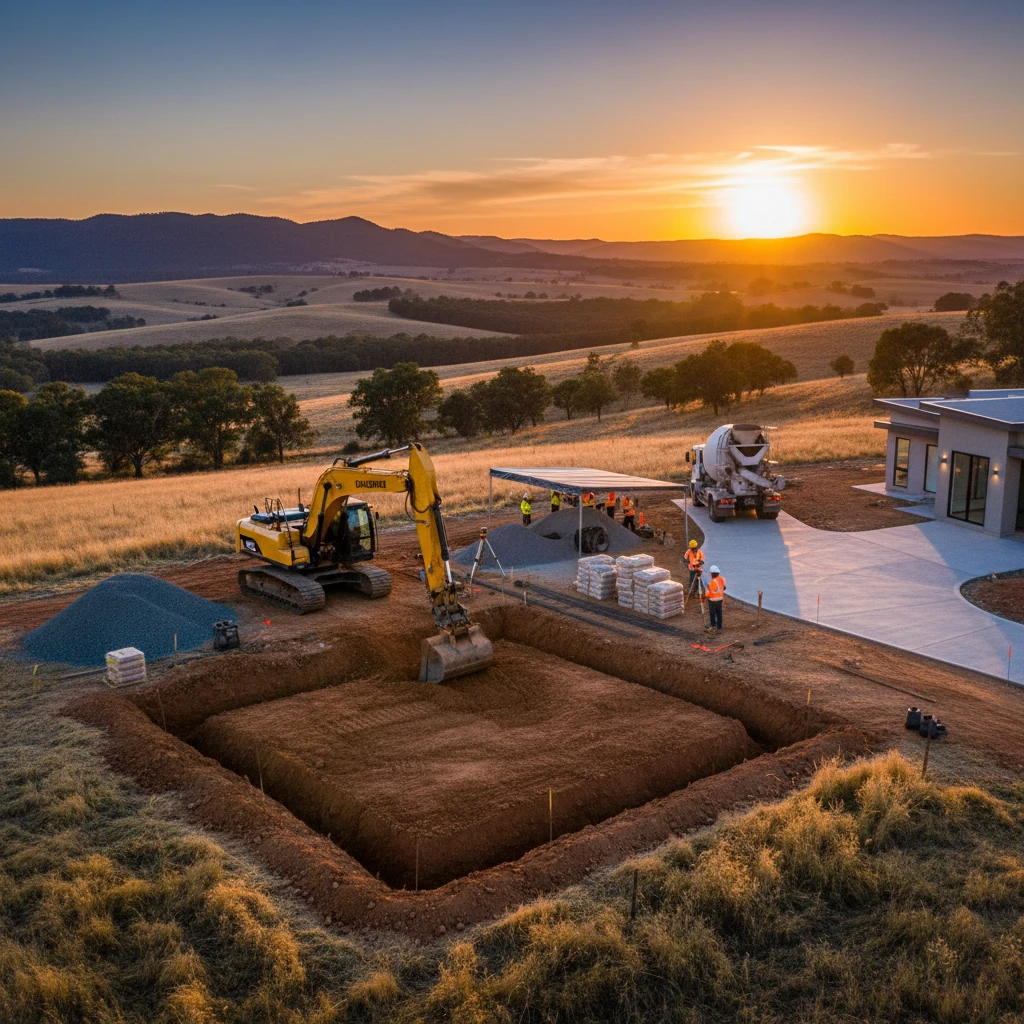
Embarking on a new construction or renovation project in the Central West requires careful planning and execution, especially when it comes to excavation and concreting. These foundational elements directly impact the structural integrity, longevity, and overall success of your build. Choosing the right team with local expertise ensures your project starts on solid ground, literally and figuratively.
This article explores key considerations for excavation and concrete work in Penrith, the Blue Mountains, and the broader Central West region. We’ll cover everything from driveway construction and shed slabs to navigating challenging terrain and ensuring long-term durability.
Building Your Dream in Central West: Start with a Solid Foundation
Why Proper Excavation and Concreting are Crucial
Excavation and concreting form the backbone of any construction project. Proper excavation ensures a level and stable base, while quality concreting provides the strength and durability needed to withstand the elements and the test of time. Skimping on these initial phases can lead to costly repairs and structural issues down the line. Consider them an investment in the future of your property. Good planning incorporates factors such as soil type, drainage requirements, and anticipated loads. Neglecting any of these aspects can compromise the entire structure. For instance, expansive clay soils common in parts of the Central West require specific excavation techniques and concrete mixes to prevent cracking and movement.
The Impact of Poor Foundation Work on Your Project
The consequences of substandard excavation and concreting can be severe. A poorly excavated site might result in uneven settling, leading to cracks in walls and floors. Inadequate concrete mixing or improper curing can weaken the foundation, making it susceptible to water damage and structural failure. This can manifest as sinking driveways, unstable shed slabs, or even compromised building foundations. Rectifying these problems involves extensive and expensive repairs, often exceeding the initial cost savings from using cheaper, less experienced contractors. Therefore, it’s essential to prioritise quality workmanship and materials from the outset. Remember, a compromised foundation jeopardises the entire project.
Long-Term Benefits of Investing in Quality Concrete
Investing in high-quality concrete offers numerous long-term benefits. Durable concrete resists cracking, chipping, and spalling, extending the lifespan of your driveway, shed slab, or foundation. This reduces the need for frequent repairs and replacements, saving you money over time. High-quality concrete also enhances the aesthetic appeal of your property, increasing its value. Moreover, properly installed concrete improves drainage and prevents water damage, protecting your investment from the elements. When assessing the long-term cost, remember to factor in the reduced maintenance and extended lifespan of a quality concrete job. For example, a well-laid concrete driveway, using the correct mix and reinforcement for vehicle weight, can last upwards of 25 years with minimal maintenance, versus a lower-quality job needing significant concrete repairs and replacements after just a few years. It pays to get it right the first time.
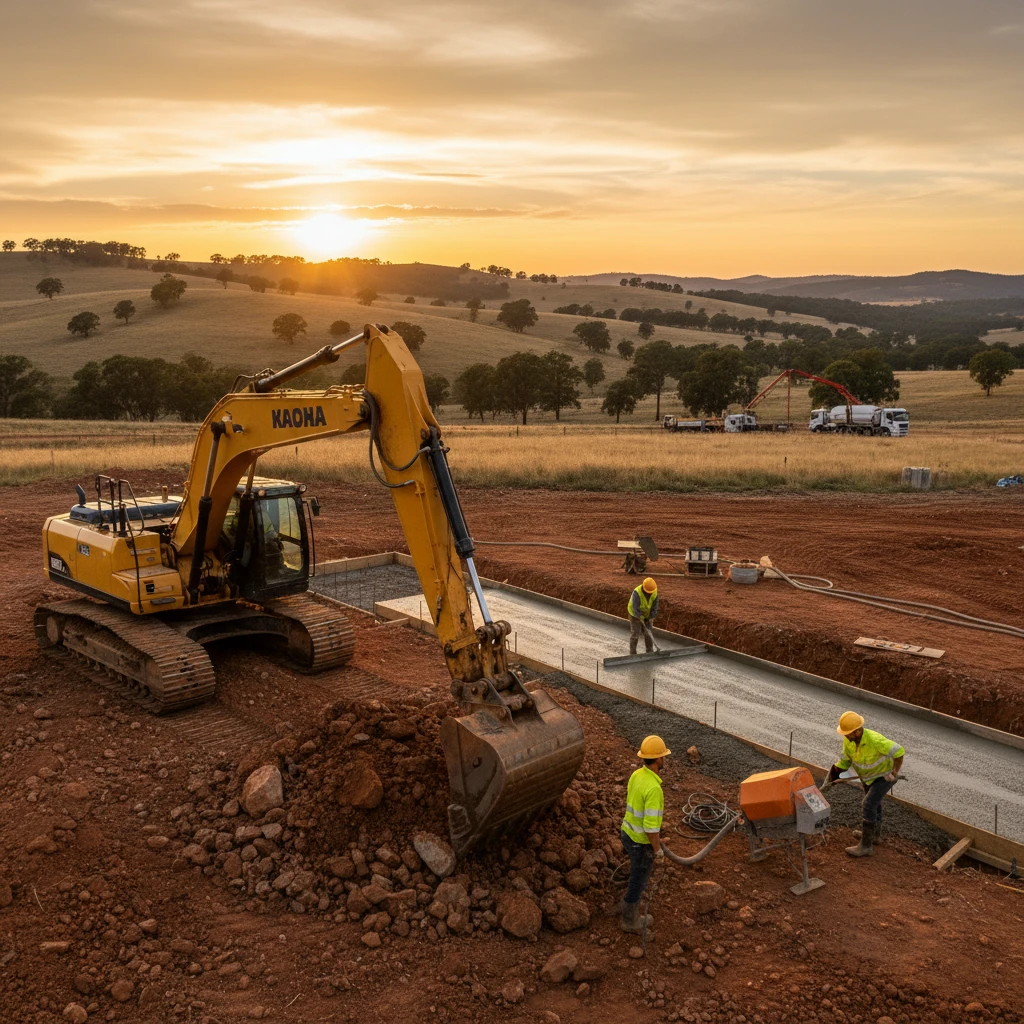
Concrete Driveways: First Impressions That Last in Penrith
Choosing the Right Concrete Mix for Your Driveway
Selecting the appropriate concrete mix is paramount for a durable and long-lasting driveway. Factors to consider include the anticipated vehicle weight, the local climate, and the soil conditions. A higher strength concrete mix is recommended for driveways that will bear heavy vehicles or experience frequent traffic. Adding reinforcing steel or fibre mesh can further enhance the strength and durability of the concrete. It’s also crucial to consider the aggregate size and type, as this affects the concrete’s workability and finish. For example, a mix design incorporating a higher cement content may be preferable in areas prone to freeze-thaw cycles. Consulting with experienced concrete specialists will ensure you select the optimal mix for your specific needs and site conditions. Aim for a concrete mix that is fit for purpose, not just the cheapest option.
Customising Your Driveway with Colours and Finishes
Beyond functionality, concrete driveways offer ample opportunities for customisation. Various colours and finishes can be incorporated to enhance the aesthetic appeal of your property and complement its existing design. Exposed aggregate finishes provide a textured and visually interesting surface, while coloured concrete can add a touch of personality. Stamped concrete allows you to replicate the look of natural stone or brick, adding a touch of elegance to your driveway. When choosing colours, consider the overall style of your home and the surrounding landscape. Darker colours can absorb more heat, while lighter colours can reflect sunlight and reduce surface temperatures. The possibilities are almost endless, and the result can significantly boost kerb appeal.
Maintaining Your Concrete Driveway for Longevity
Proper maintenance is essential for preserving the appearance and extending the lifespan of your concrete driveway. Regular cleaning helps remove dirt, grime, and stains that can detract from its appearance. Sealing the concrete every few years provides a protective barrier against water damage, oil spills, and other contaminants. Promptly repairing any cracks or chips prevents further damage and maintains the structural integrity of the driveway. Avoid using de-icing salts on your driveway during winter, as these can corrode the concrete. With proper care and maintenance, your concrete driveway will continue to look its best for many years to come. Consider pressure washing annually and re-sealing every 2-3 years to protect against the elements and prolong its life.
Shed Slabs and Equipment Pads: Protecting Your Investment in the Blue Mountains
Ensuring Proper Drainage for Shed Slabs
Proper drainage is critical for shed slabs, particularly in the Blue Mountains where rainfall can be significant. Without adequate drainage, water can accumulate around the base of the shed, leading to dampness, mould growth, and structural damage. Sloping the slab slightly away from the shed ensures that water flows away from the building. Installing drainage channels or French drains can further enhance drainage. The soil surrounding the slab should also be properly graded to direct water away from the foundation. It’s important to assess the existing drainage patterns on your property and design the shed slab drainage accordingly. For instance, if the shed is located at the bottom of a slope, additional drainage measures may be necessary. A well-drained shed slab protects your investment from water damage and ensures its long-term stability, much like investing in durable shed slabs in the first place.
Reinforcement Options for Heavy Equipment Pads
Equipment pads designed to support heavy machinery require robust reinforcement to withstand the concentrated loads. Steel reinforcing bars (rebar) are commonly used to provide tensile strength and prevent cracking. The size and spacing of the rebar will depend on the weight and type of equipment being supported. Fibre reinforcement can also be added to the concrete mix to enhance its flexural strength and reduce shrinkage cracking. For extremely heavy loads, a thicker concrete slab with multiple layers of reinforcement may be necessary. Consulting with a structural engineer will ensure that the equipment pad is adequately reinforced to handle the anticipated loads safely and effectively. Consider using a concrete with a higher PSI (pounds per square inch) rating for added strength.
Site Preparation Checklist for Shed Slab Installation
Proper site preparation is essential for a successful shed slab installation. The first step is to clear the area of any vegetation, topsoil, and debris. The soil should then be compacted to provide a stable base for the slab. It’s important to ensure that the site is level and properly graded to facilitate drainage. A layer of gravel or crushed stone can be added to improve drainage and prevent soil erosion. Formwork should be installed to define the perimeter of the slab and ensure its correct dimensions. Before pouring the concrete, inspect the site to ensure that all preparations have been completed correctly. A well-prepared site will contribute to the longevity and stability of your shed slab. Remember to check local council regulations regarding shed size and placement before commencing any work. Also, consider underground utilities before excavating.
Excavation Challenges in the Central West: Expertise Matters
Dealing with Rocky Terrain and Steep Slopes
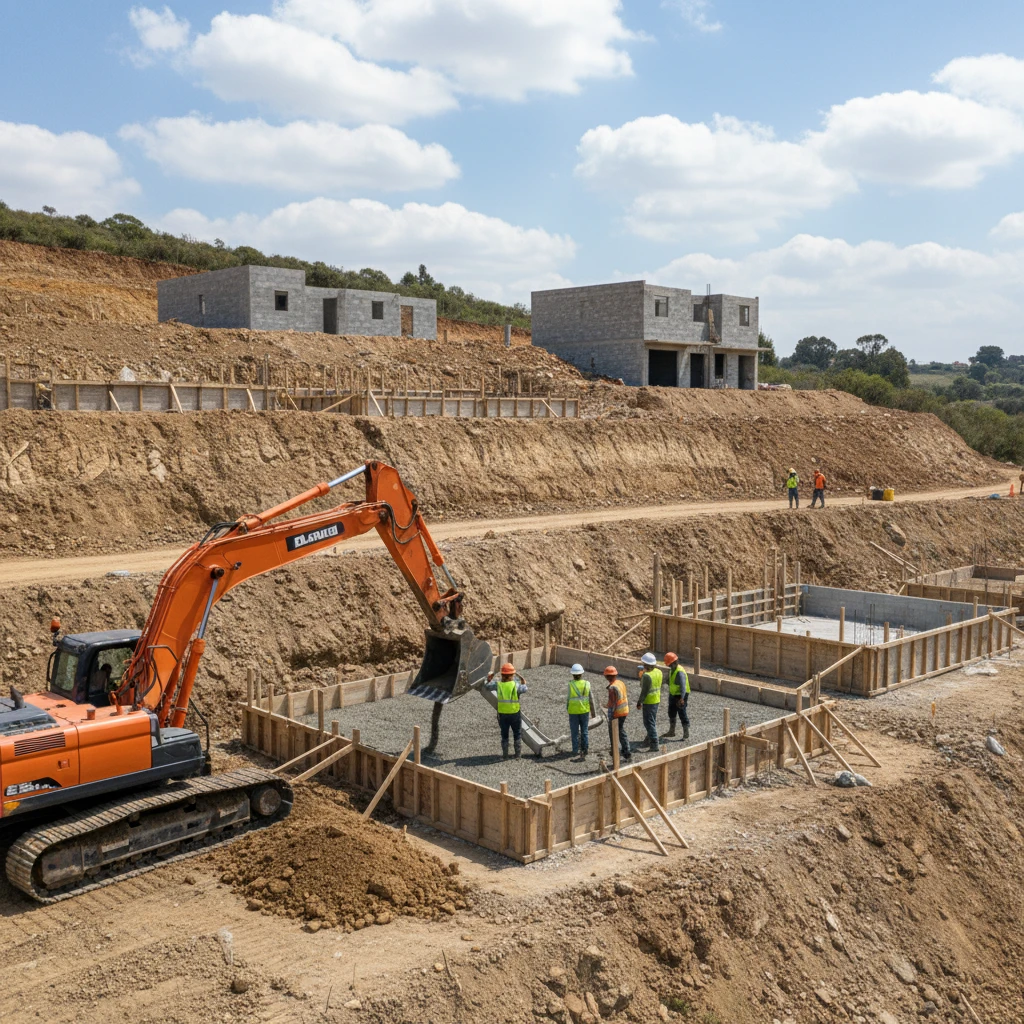
The Central West region is known for its diverse terrain, which often presents excavation challenges. Rocky terrain requires specialised equipment and techniques to break through the hard rock and create a level surface. Steep slopes can make excavation difficult and dangerous, requiring careful planning and execution to prevent landslides and ensure worker safety. Soil stabilisation techniques, such as retaining walls or terracing, may be necessary to create a stable base for construction. Experienced excavation contractors in the Central West understand the local geology and possess the expertise to overcome these challenges safely and effectively. For example, using rock breakers, excavators with specialised attachments, and implementing engineered shoring solutions are common practices. It is crucial to conduct thorough site assessments and soil testing before commencing any excavation work, especially on sites with challenging topography, a task suited to excavation experts.
Tight Access Excavation: Solutions for Tricky Sites
Tight access excavation refers to projects where space is limited, making it difficult to manoeuvre machinery and transport materials. This is a common challenge in urban areas and established residential neighbourhoods. Solutions for tight access excavation include using smaller, more compact excavators, employing manual labour for certain tasks, and carefully planning the logistics of material removal and delivery. It’s crucial to protect existing structures and landscaping during excavation to prevent damage. Open communication with neighbours is also important to minimise disruption and maintain good relations. Experienced contractors specialising in tight access excavation can assess the site and develop a strategy to overcome these limitations safely and efficiently. The use of mini excavators, skid steers, and careful manual digging often becomes essential in these scenarios.
Soil Testing: Why It’s Essential Before You Dig
Soil testing is a crucial step before any excavation project. It provides valuable information about the soil’s composition, stability, and drainage characteristics. This information helps determine the appropriate excavation techniques, the required level of soil stabilisation, and the suitability of the soil for supporting the proposed structure. Soil testing can also identify potential hazards, such as contaminated soil or underground utilities. Ignoring soil testing can lead to unexpected problems during excavation, such as unstable slopes, waterlogged soil, or hidden obstacles. These problems can significantly increase project costs and delay completion. Soil testing is a relatively inexpensive investment that can save you time, money, and headaches in the long run. Engaging a qualified geotechnical engineer to conduct soil testing and interpret the results is highly recommended. The CSIRO Land and Water provides extensive information about Australian soils and their properties, a valuable resource for understanding the importance of soil testing CSIRO Land and Water.
Concrete Repairs and Replacements: Extending the Life of Your Concrete Structures
Identifying Common Concrete Problems: Cracks, Spalling, and More
Concrete, while durable, is susceptible to various issues over time. Cracking is a prevalent problem, ranging from hairline cracks to more significant structural failures. These cracks can be caused by shrinkage during the curing process, overloading, ground movement, or freeze-thaw cycles. Spalling, another common issue, involves the surface of the concrete flaking or crumbling away. This is often caused by water penetration, which can lead to corrosion of the reinforcing steel (rebar) and subsequent expansion, forcing the concrete to break apart. Other problems include surface scaling (thin flakes peeling off), pop-outs (small cone-shaped depressions), and discoloration due to efflorescence (mineral deposits) or staining. Understanding the specific cause of the damage is crucial for selecting the appropriate repair or replacement strategy. Regular inspections can help identify problems early before they escalate into more costly repairs. Early detection and intervention can save you significant money in the long run.
When to Repair vs. Replace Concrete
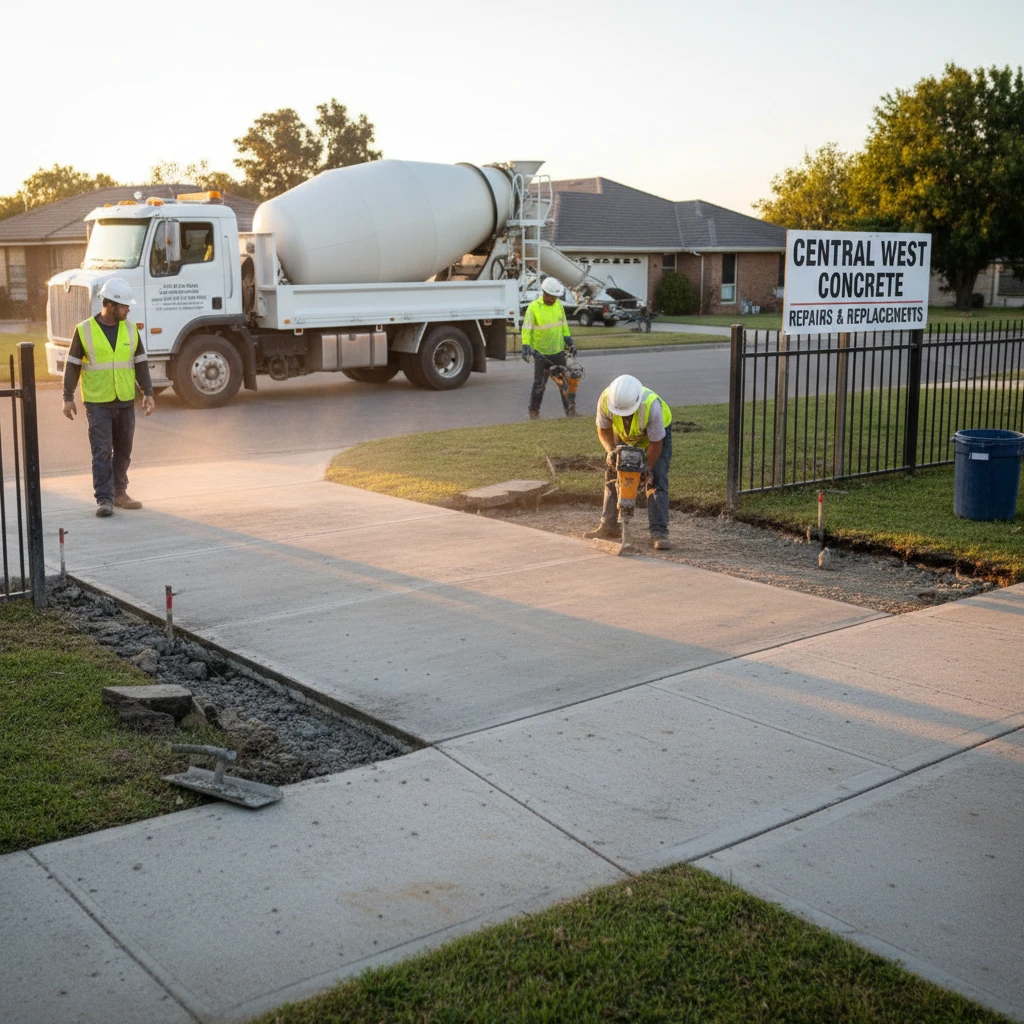
The decision to repair or replace concrete depends on several factors, including the extent and nature of the damage, the age of the concrete, and the cost of each option. Minor cracks (less than 3mm wide) and surface spalling can often be repaired successfully. Repairing minor damage can often be completed with epoxy injection or patching compounds. However, extensive cracking, significant spalling that exposes rebar, or structural damage usually necessitates replacement. If the concrete is old and showing widespread signs of deterioration, replacement might be the more cost-effective long-term solution. Repairing severely damaged concrete might only provide a temporary fix, while replacement offers a fresh start and the opportunity to address any underlying issues, such as poor drainage. Consulting with a qualified concrete contractor is crucial for making an informed decision. They can assess the damage and provide recommendations based on their expertise.
Choosing the Right Repair Mortar for Your Project
Selecting the appropriate repair mortar is critical for ensuring a durable and long-lasting repair. Different mortars are designed for specific types of damage and applications. For example, epoxy mortars are excellent for filling cracks and providing structural strength, while cement-based mortars are suitable for patching spalled areas. Key considerations include the mortar’s compressive strength, bond strength, shrinkage rate, and resistance to water penetration and chemical attack. Ensure the mortar is compatible with the existing concrete and the environmental conditions. For instance, if the concrete is exposed to freeze-thaw cycles, choose a mortar that is specifically formulated for freeze-thaw resistance. Proper surface preparation is also essential for ensuring a good bond between the mortar and the existing concrete. This typically involves cleaning the surface, removing any loose or damaged material, and applying a bonding agent. Always follow the manufacturer’s instructions carefully when mixing and applying the mortar. This will help ensure that the repair is successful and durable. You can read more about this topic in this guide to concrete repair from reputable source, ConcreteNetwork.com. Using suitable mortar, and following the correct procedures are crucial for a successful repair. Find more information on quality concrete repairs on our website.
Footpaths and Concrete Stairs: Safe and Stylish Access for Your Property
Designing Safe and Compliant Concrete Stairs
Concrete stairs provide durable and long-lasting access solutions for your property. However, proper design is paramount to ensure safety and compliance with building codes. Key considerations include rise and run dimensions, handrail requirements, and slip resistance. The rise (vertical height) and run (horizontal depth) of each step should be consistent throughout the staircase to prevent tripping hazards. Building codes typically specify maximum and minimum values for rise and run, so it’s essential to consult the relevant standards. Handrails are required on most staircases and should be positioned at a comfortable height and provide a secure grip. The spacing between handrail supports should also comply with building codes to prevent children from falling through. Adequate lighting is another important safety feature, especially for outdoor stairs. Consider installing motion-activated lights to illuminate the stairs at night. Proper drainage is also essential to prevent water from pooling on the stairs, which can create a slip hazard. We design all our stairs to adhere to safety and regulatory specifications.
Choosing Slip-Resistant Finishes for Footpaths
Slip resistance is a critical consideration for footpaths, especially in wet or icy conditions. Concrete can become slippery when wet, so it’s important to choose a finish that provides adequate traction. Several slip-resistant finishes are available, including broom finishes, exposed aggregate finishes, and textured coatings. A broom finish is a simple and cost-effective option that involves dragging a broom across the surface of the wet concrete to create a textured pattern. An exposed aggregate finish involves removing the surface layer of cement to reveal the aggregate (stones) beneath, which provides a naturally textured surface. Textured coatings are applied to the surface of the cured concrete and can be customized to achieve the desired level of slip resistance. The best choice will depend on the desired aesthetic and the level of slip resistance required. Consider the expected traffic volume and the potential for water or ice accumulation when selecting a finish. Regular cleaning can also help maintain the slip resistance of footpaths by removing dirt and debris. We offer a range of finishes for durable concrete footpaths tailored to your needs.
Integrating Footpaths and Stairs into Your Landscaping
Footpaths and stairs should be seamlessly integrated into your landscaping to create a cohesive and aesthetically pleasing outdoor space. Consider the overall style of your property and choose materials and finishes that complement the existing architecture and landscaping. For example, a rustic stone staircase might be a good choice for a country-style garden, while a sleek concrete footpath might be more appropriate for a modern home. The layout of the footpaths and stairs should also be carefully considered to create a natural and inviting flow through your garden. Avoid creating sharp corners or awkward transitions. Instead, use gentle curves and gradual slopes to guide people through the space. Planting vegetation along the edges of the footpaths and stairs can help soften the hard edges of the concrete and create a more natural look. Consider using native plants that are well-suited to the local climate and soil conditions. You can also use lighting to highlight the footpaths and stairs at night and create a warm and inviting atmosphere. Integrating footpaths and stairs thoughtfully can greatly enhance the beauty and functionality of your outdoor space.
Alternatives to Concrete: Weighing Your Options for Paths and Slabs
Gravel and Pavers: Cost-Effective Solutions for Certain Applications
While concrete offers excellent durability and versatility, alternative materials like gravel and pavers can be cost-effective solutions for specific applications. Gravel is a relatively inexpensive material that is easy to install and provides good drainage. It’s a good option for informal paths, driveways, and parking areas. However, gravel can be difficult to walk on, especially for people with mobility issues, and it requires regular maintenance to prevent weed growth and keep it from spreading. Pavers, on the other hand, offer a more formal and durable alternative to gravel. They are available in a wide range of materials, shapes, and colours, allowing you to create custom designs. Pavers can be used for patios, walkways, driveways, and even pool decks. They are more expensive than gravel to install, but they require less maintenance and offer a longer lifespan. The decision between gravel and pavers depends on your budget, the desired aesthetic, and the level of durability required. These solutions may be more suitable for temporary solutions, or areas with low levels of use.
Asphalt: A Durable Choice for Driveways and Parking Areas
Asphalt is another durable material that is commonly used for driveways and parking areas. It’s less expensive than concrete to install and provides a smooth, even surface. Asphalt is also more flexible than concrete, which makes it less susceptible to cracking in areas with significant temperature fluctuations. However, asphalt requires more maintenance than concrete. It needs to be sealed every few years to prevent water penetration and cracking. Asphalt is also susceptible to softening in hot weather and can be damaged by oil and gasoline spills. Concrete, while initially more costly, often proves to be a better long-term investment in terms of durability and reduced maintenance. Asphalt also has a shorter lifespan than concrete, typically lasting 15-20 years compared to concrete’s 30-50 years. Choosing the appropriate material requires careful consideration of budget, usage, and long-term maintenance costs.
When Concrete is the Best Long-Term Investment
Despite the availability of alternatives, concrete often represents the best long-term investment for paths, driveways, and slabs due to its superior durability, low maintenance requirements, and versatility. Concrete is resistant to weathering, erosion, and chemical attack, making it ideal for areas exposed to harsh environmental conditions. It also requires minimal maintenance, typically only needing occasional cleaning. Concrete can also be customized with a wide range of finishes and colours to complement any architectural style. While the initial cost of concrete may be higher than some alternatives, its longer lifespan and reduced maintenance costs often result in significant savings over time. For projects requiring structural integrity, such as shed slabs or equipment pads, concrete’s strength and stability are unmatched. Concrete is therefore often the preferred choice for homeowners and businesses seeking a durable, long-lasting, and aesthetically pleasing solution that minimises long-term expenses.
The Laser Concrete Difference: Quality Workmanship Across Penrith, Blue Mountains, and Central West
Our Commitment to Precision and Durability
At Laser Concrete, our commitment is to provide clients across Penrith, the Blue Mountains, and the Central West with concrete solutions that are both precise and durable. We understand that concrete is a long-term investment, and we strive to deliver workmanship that stands the test of time. This starts with meticulous site preparation, including accurate excavation and proper compaction of the sub-base. We use only high-quality materials and follow industry best practices for mixing, pouring, and curing concrete. Our team pays close attention to detail, ensuring that every project is completed to the highest standards. We also use advanced laser levelling technology to ensure precise levels and slopes, which is crucial for proper drainage and preventing water damage. Our focus on precision and durability translates into concrete structures that are not only aesthetically pleasing but also structurally sound and long-lasting.
Experienced Team Specialising in Challenging Sites
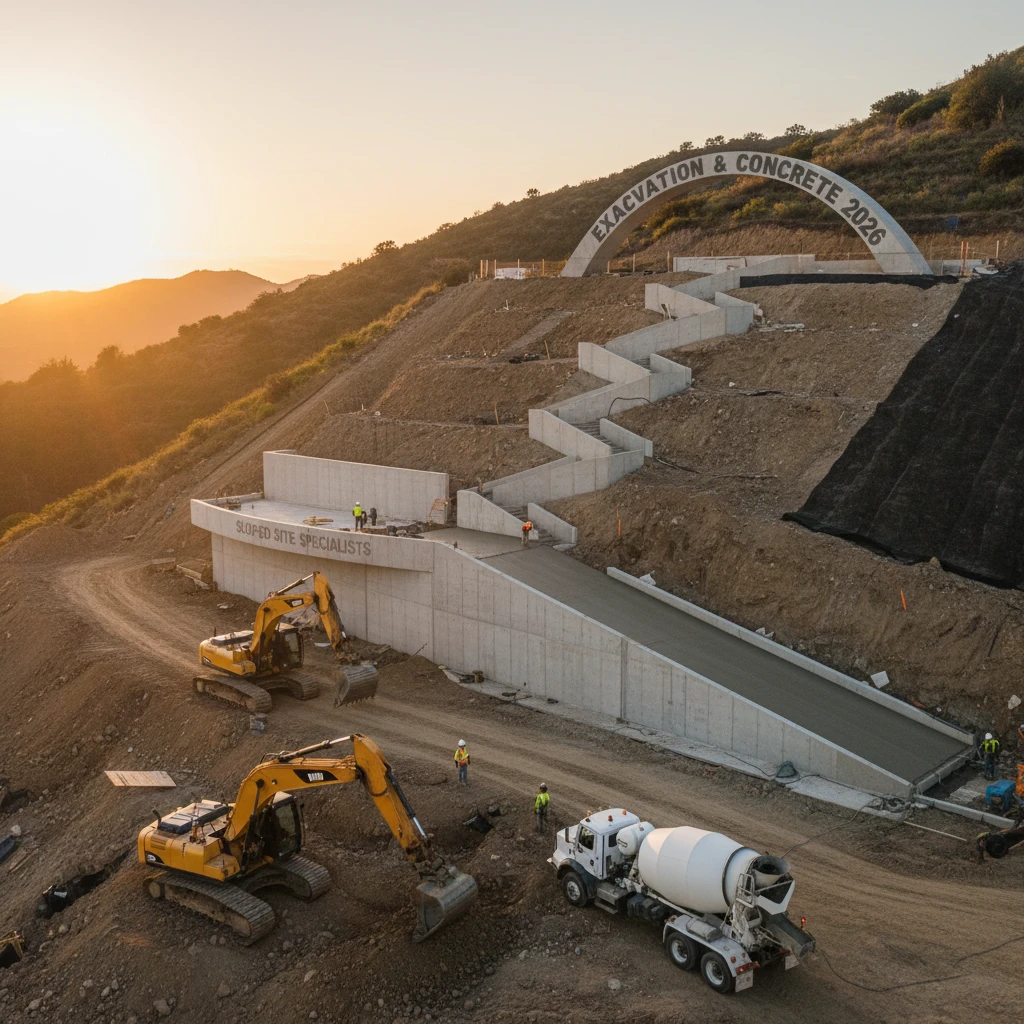
What sets Laser Concrete apart is our experienced team’s ability to handle challenging sites, particularly in the rugged terrain of the Blue Mountains and the diverse landscapes of the Central West. We have extensive experience working on sloped blocks, rocky terrain, and sites with limited access. Our team possesses the necessary skills and equipment to overcome these challenges and deliver high-quality concrete solutions. We understand the importance of proper excavation and earthworks, especially on difficult sites, and we take extra care to ensure that the ground is properly prepared before pouring concrete. We also have experience working with various types of soil and rock, and we know how to adapt our techniques to suit the specific conditions of each site. Our expertise in handling challenging sites allows us to provide clients with concrete solutions that are tailored to their specific needs and circumstances. Expertise in excavation challenges is crucial for our team.
Real-World Examples of Our Successful Projects
Our portfolio showcases our ability to deliver exceptional concrete solutions across a range of projects.
Example: A homeowner in Katoomba needed a new concrete driveway installed on a steep slope with limited access. Laser Concrete successfully excavated the site, installed proper drainage, and poured a durable concrete driveway with a slip-resistant finish. The project was completed on time and within budget, and the homeowner was extremely satisfied with the results.
Example: A property owner in Bathurst required a large concrete shed slab for a new workshop. The site had rocky terrain and required extensive excavation. Laser Concrete successfully excavated the site, removed the rock, and poured a level and durable concrete slab that met the owner’s specifications. The shed slab has been used for several years without issues.
Example: A client in Penrith requested a decorative concrete footpath with exposed aggregate leading to their front door. Laser Concrete designed and installed a custom footpath that complemented the existing landscaping and provided a safe and attractive access to the property. These examples demonstrate our commitment to quality workmanship and our ability to deliver concrete solutions that meet the specific needs of our clients.
Planning Your Concrete Project: Key Considerations and Questions to Ask
Embarking on a concrete project, whether it’s a new driveway, a shed slab, or a set of concrete stairs, requires careful planning to ensure a successful and long-lasting outcome. Don’t rush the preparation phase. Taking the time to properly assess your needs, understand potential challenges, and select the right contractor will save you time, money, and frustration in the long run. It is crucial to consider several factors before even breaking ground.
Understanding Local Council Regulations and Permits
Before starting any excavation or concrete work, it’s imperative to understand and comply with local council regulations. These regulations can vary significantly depending on your location within the Central West, Penrith, or the Blue Mountains. Failing to obtain the necessary permits can result in hefty fines and project delays. Consider factors such as building setbacks, allowable site coverage, and stormwater management requirements. Contact your local council’s planning department to discuss your project and determine if a permit is required. Ask specific questions about excavation depths, vegetation removal restrictions, and any specific environmental considerations in your area. For instance, properties near waterways may have stricter erosion control requirements. A local expert will know the specifics of your area and can help guide you through the process.
Budgeting for Your Concrete and Excavation Needs
Accurately budgeting for your concrete and excavation project is critical to avoid unexpected financial strain. Obtain detailed quotes from multiple contractors, ensuring that each quote includes a breakdown of all costs, including excavation, materials, labour, and any additional services like formwork or finishing. Compare the quotes carefully, paying attention to the quality of materials being used and the level of experience offered. Don’t automatically choose the cheapest quote, as this may indicate lower quality workmanship or materials. Consider potential hidden costs, such as unforeseen excavation challenges (e.g., rock removal or underground utilities) or changes to the scope of work. Factor in a contingency fund of at least 10% to cover any unexpected expenses. Example: A homeowner in Katoomba planned a shed slab assuming $50/m3 for excavation, but hit sandstone; the final bill was nearly double due to rock breaking equipment required.
Choosing the Right Contractor for Your Project
Selecting the right contractor is perhaps the most important decision you’ll make for your concrete project. Look for a contractor with extensive experience in the type of work you require, particularly if your project involves challenging terrain or difficult access. Check their credentials, including their license and insurance, and ask for references from previous clients. Read online reviews and testimonials to get an idea of their reputation and customer service. Ask potential contractors about their approach to safety, their quality control procedures, and their warranty policies. A good contractor will be able to clearly explain their process, answer your questions thoroughly, and provide you with a detailed contract that outlines all aspects of the project. If your project has excavation challenges, consider a specialist like Laser Concrete to ensure its successful completion. Furthermore, a contractor experienced with shed slabs is likely to provide a superior result.
From Initial Consultation to Final Finish: Our Process for Excavation and Concrete Projects
Our approach to excavation and concrete projects is designed to ensure a seamless and stress-free experience for our clients. From the initial consultation to the final finishing touches, we prioritize clear communication, meticulous planning, and high-quality workmanship.
Site Assessment and Planning
The first step in our process is a thorough site assessment. We’ll visit your property to evaluate the existing conditions, including the soil type, topography, access constraints, and any potential obstacles. This assessment allows us to develop a detailed plan that addresses your specific needs and challenges. We’ll discuss your vision for the project, offer expert advice on design and materials, and provide you with a clear and transparent quote. We will also discuss any existing drainage systems, and if they need to be considered during the project. A well-planned project is the foundation for a successful outcome.
Excavation and Preparation
Once the plan is finalised, we’ll begin the excavation and preparation phase. This involves clearing the site, removing any existing structures or vegetation, and excavating to the required depth and dimensions. We use state-of-the-art equipment and techniques to ensure precise and efficient excavation, even in challenging terrain. Our team is highly skilled in managing difficult access situations, minimizing disruption to your property, and maintaining a safe work environment. We will compact the base to ensure that it provides a stable foundation for the concrete. Before pouring concrete, we will install any necessary formwork, reinforcement, and drainage systems. Check out our specialisation in excavation for challenging sites.
Concreting and Finishing Touches
With the site properly prepared, we’ll proceed with the concreting phase. We use only high-quality concrete mixes that are specifically designed for the application. Our experienced concreters will pour, level, and finish the concrete to the highest standards, ensuring a smooth, durable, and aesthetically pleasing surface. We offer a range of finishing options, including exposed aggregate, coloured concrete, and stamped concrete, to customise the look and feel of your project. After the concrete has cured, we’ll remove the formwork, clean the site, and conduct a final inspection to ensure that everything meets our strict quality standards. Our team ensures precision and durability for every project, including concrete driveways.
Future-Proofing Your Concrete: Trends and Innovations to Watch in 2026
The concrete industry is constantly evolving, with new technologies and innovations emerging to improve the performance, durability, and sustainability of concrete structures. Staying informed about these trends can help you make informed decisions about your concrete project and ensure that it stands the test of time. We believe in employing modern techniques.
Sustainable Concrete Options: Reducing Environmental Impact
As environmental awareness grows, sustainable concrete options are becoming increasingly popular. These options include using recycled aggregates, supplementary cementitious materials (SCMs) like fly ash and slag, and pervious concrete. Recycled aggregates reduce the demand for virgin materials and divert waste from landfills. SCMs reduce the amount of cement required in the mix, lowering the carbon footprint of the concrete. Pervious concrete allows rainwater to drain through the surface, reducing runoff and improving water quality. Choosing sustainable concrete options can not only reduce your environmental impact but also improve the long-term performance of your concrete structures.
Self-Healing Concrete: A Glimpse into the Future
Self-healing concrete is a revolutionary technology that has the potential to significantly extend the lifespan of concrete structures. This type of concrete contains encapsulated bacteria or polymers that are released when cracks form. These agents then react with water and calcium hydroxide to produce calcium carbonate, which fills the cracks and prevents further damage. While self-healing concrete is still in its early stages of development, it has shown promising results in laboratory tests and field trials. In the future, this technology could become a standard feature in concrete construction, reducing the need for costly repairs and extending the service life of infrastructure.
Smart Concrete: Integrating Technology into Your Structures
Smart concrete incorporates sensors and other technologies to monitor the condition of concrete structures in real-time. These sensors can measure temperature, stress, strain, and moisture levels, providing valuable data on the performance of the concrete. This data can be used to detect early signs of damage or deterioration, allowing for timely repairs and preventing catastrophic failures. Smart concrete can also be used to optimise the design and construction of concrete structures, ensuring that they are built to withstand the loads and environmental conditions they will be exposed to. For example, sensors embedded in a concrete bridge deck can monitor traffic loads and identify areas”>https://www.smart.eng.cam.ac.uk/”>s that are experiencing excessive stress. This information can be used to prioritise maintenance and prevent structural damage. See research from the University of Cambridge on smart concrete sensors. (replace with real link if available).
By taking the time to carefully plan your concrete project, understand the available options, and choose the right contractor, you can ensure a successful and long-lasting outcome that adds value to your property.
Planning Your Concrete Project: Key Considerations and Questions to Ask
Embarking on a concrete project requires careful planning to ensure a successful outcome. Here are some key considerations and questions to ask yourself before you begin:
Understanding Local Council Regulations and Permits
Before starting any concrete work, it’s crucial to understand and comply with local council regulations and permit requirements. This may include obtaining permits for excavation, concrete placement, and any associated construction activities. Contact your local council to inquire about specific regulations and required documentation. Failing to obtain the necessary permits can result in fines and delays.
Budgeting for Your Concrete and Excavation Needs
Establishing a realistic budget is essential for any concrete project. Consider the cost of materials, labor, equipment rental, permits, and any unforeseen expenses. Obtain quotes from multiple contractors to compare prices and services. Be sure to factor in the cost of excavation, which can vary depending on the scope of the project and site conditions. Remember that the cheapest option is not always the best, and it’s important to balance cost with quality and experience.
Choosing the Right Contractor for Your Project
Selecting a qualified and experienced contractor is critical to the success of your concrete project. Look for contractors with a proven track record, positive reviews, and proper licensing and insurance. Ask for references and examples of their previous work. Discuss your project requirements in detail and ensure that the contractor understands your expectations. A reputable contractor will provide a detailed quote and timeline for the project. Trust your instincts and choose a contractor that you feel comfortable working with.
From Initial Consultation to Final Finish: Our Process for Excavation and Concrete Projects
We are dedicated to providing a seamless and efficient process, from initial consultation to the final finishing touches, for all excavation and concrete projects.
Site Assessment and Planning
Our process begins with a thorough site assessment to evaluate the existing conditions, identify potential challenges, and develop a comprehensive plan for your project. We’ll consider factors such as soil type, drainage, access, and any existing structures or utilities. We’ll work closely with you to understand your specific needs and goals and develop a plan that meets your budget and timeline.
Excavation and Preparation
Once the plan is in place, our experienced team will handle all excavation and preparation work. This includes removing existing vegetation, grading the site to the correct levels, and preparing the sub-base for concrete placement. We use state-of-the-art equipment and techniques to ensure that the site is properly prepared for a durable and long-lasting concrete structure.
Concreting and Finishing Touches
With the site properly prepared, we’ll proceed with concrete placement, using high-quality materials and expert techniques to ensure a smooth and even surface. We’ll carefully monitor the curing process to prevent cracking and ensure optimal strength. Once the concrete has cured, we’ll apply the finishing touches, such as sealing, staining, or stamping, to enhance the appearance and durability of the concrete. Our goal is to deliver a finished product that exceeds your expectations and provides lasting value.
Future-Proofing Your Concrete: Trends and Innovations to Watch in 2026
The concrete industry is constantly evolving, with new technologies and innovations emerging all the time. Staying informed about these trends can help you future-proof your concrete structures and ensure that they remain durable, sustainable, and technologically advanced. Here’s what you should watch for in 2026 and beyond:
Planning Your Concrete Project: Key Considerations and Questions to Ask
Proper planning is essential for a successful concrete project. Careful consideration of various factors will help ensure that your project is completed on time, within budget, and to your satisfaction.
Understanding Local Council Regulations and Permits
Before starting any concrete work, it’s crucial to understand and comply with local council regulations and obtain the necessary permits. Regulations may vary depending on your location and the scope of the project. Contact your local council to inquire about specific requirements for concrete works, including permits for excavation, drainage, and structural integrity. Failure to comply with these regulations can result in costly fines and delays.
Budgeting for Your Concrete and Excavation Needs
Accurate budgeting is crucial for a successful concrete project. Consider all costs involved, including materials, labor, equipment rental, permits, and any unforeseen expenses. Obtain quotes from multiple suppliers and contractors to compare prices and ensure that you’re getting the best value for your money. It’s always wise to add a contingency fund to your budget to cover unexpected issues or changes to the project scope.
Choosing the Right Contractor for Your Project
Selecting the right contractor is essential for ensuring the quality and durability of your concrete project. Look for a contractor with experience in similar projects, positive reviews, and proper licensing and insurance. Ask for references and examples of their previous work. Discuss your project requirements in detail and ensure that the contractor understands your expectations. A reputable contractor will provide a detailed quote and timeline for the project. Trust your instincts and choose a contractor that you feel comfortable working with.
From Initial Consultation to Final Finish: Our Process for Excavation and Concrete Projects
We are dedicated to providing a seamless and efficient process, from initial consultation to the final finishing touches, for all excavation and concrete projects.
Site Assessment and Planning
Our process begins with a thorough site assessment to evaluate the existing conditions, identify potential challenges, and develop a comprehensive plan for your project. We’ll consider factors such as soil type, drainage, access, and any existing structures or utilities. We’ll work closely with you to understand your specific needs and goals and develop a plan that meets your budget and timeline.
Excavation and Preparation
Once the plan is in place, our experienced team will handle all excavation and preparation work. This includes removing existing vegetation, grading the site to the correct levels, and preparing the sub-base for concrete placement. We use state-of-the-art equipment and techniques to ensure that the site is properly prepared for a durable and long-lasting concrete structure.
Concreting and Finishing Touches
With the site properly prepared, we’ll proceed with concrete placement, using high-quality materials and expert techniques to ensure a smooth and even surface. We’ll carefully monitor the curing process to prevent cracking and ensure optimal strength. Once the concrete has cured, we’ll apply the finishing touches, such as sealing, staining, or stamping, to enhance the appearance and durability of the concrete. Our goal is to deliver a finished product that exceeds your expectations and provides lasting value.
Future-Proofing Your Concrete: Trends and Innovations to Watch in 2026
The concrete industry is constantly evolving, with new technologies and innovations emerging all the time. Staying informed about these trends can help you future-proof your concrete structures and ensure that they remain durable, sustainable, and technologically advanced. Here’s what you should watch for in 2026 and beyond:
Sustainable Concrete Options: Reducing Environmental Impact
As environmental concerns grow, the demand for sustainable concrete options is increasing. This includes using recycled aggregates, supplementary cementitious materials (SCMs) like fly ash and slag, and reducing the overall cement content in concrete mixes. These practices can significantly reduce the carbon footprint of concrete production and contribute to a more sustainable built environment. Explore options for eco-friendly concrete that aligns with your sustainability goals.
Self-Healing Concrete: A Glimpse into the Future
Self-healing concrete is an innovative material that can repair cracks and damage automatically, extending the lifespan of concrete structures and reducing maintenance costs. This technology typically involves incorporating bacteria or chemical agents into the concrete mix that are activated when cracks appear, triggering a healing process. While still in its early stages of development, self-healing concrete holds immense potential for future infrastructure projects.
Smart Concrete: Integrating Technology into Your Structures
Smart concrete incorporates sensors and other technologies to monitor the structural health and performance of concrete structures in real-time. These sensors can measure parameters such as temperature, strain, and moisture content, providing valuable data for proactive maintenance and early detection of potential problems. Integrating smart concrete into your projects can improve safety, reduce lifecycle costs, and optimize the performance of your structures.
Planning Your Concrete Project: Key Considerations and Questions to Ask
Before embarking on any concrete project, careful planning is essential to ensure a successful outcome. Here are some key considerations and questions to ask yourself, as well as any potential contractors.
Understanding Local Council Regulations and Permits
Many concrete projects require permits from your local council. It’s crucial to understand the regulations in your area regarding setbacks, drainage, and environmental impact. Contact your local council or building department to determine if your project requires a permit and what the application process entails. Ignoring these regulations can lead to costly fines and delays. Check your council’s website for local building regulations.
Budgeting for Your Concrete and Excavation Needs
Creating a realistic budget is a critical step in planning your concrete project. Consider all costs, including materials (concrete, reinforcement, formwork), excavation, labor, permits, and potential unforeseen expenses. Obtain quotes from multiple contractors to compare prices and ensure you’re getting a fair deal. Don’t solely focus on the lowest price; consider the contractor’s experience, reputation, and the quality of their work. Plan for potential cost overruns by adding a contingency to your budget. Use online calculators to estimate concrete costs.
Choosing the Right Contractor for Your Project
Selecting a qualified and experienced contractor is crucial for a successful concrete project. Look for contractors with a proven track record, positive reviews, and proper licensing and insurance. Ask for references and check their previous work to assess the quality of their craftsmanship. Discuss your project in detail, ask questions, and ensure the contractor understands your vision and requirements. A reputable contractor will provide a detailed quote and a clear timeline for the project. Look for contractors with positive online reviews.
From Initial Consultation to Final Finish: Our Process for Excavation and Concrete Projects
We follow a structured process to ensure every excavation and concrete project is completed to the highest standards of quality and customer satisfaction. Here’s an overview of our approach:
Site Assessment and Planning
Our process begins with a thorough site assessment to understand the specific requirements of your project. We’ll evaluate the site conditions, including soil type, drainage, and access, to determine the best approach for excavation and concrete placement. We’ll also discuss your design preferences, budget, and timeline to develop a comprehensive plan that meets your needs. We can discuss your site assessment requirements when you call us.
Excavation and Preparation
Proper excavation and preparation are essential for a stable and long-lasting concrete foundation. Our experienced team will carefully excavate the site to the required depth, ensuring proper grading and compaction. We’ll install any necessary drainage systems and prepare the sub-base to provide a solid foundation for the concrete. Accurate excavation ensures structural integrity.
Concreting and Finishing Touches
Once the site is prepared, we’ll pour and finish the concrete according to industry best practices. We use high-quality concrete mixes and employ skilled finishers to ensure a smooth, level, and durable surface. We’ll carefully monitor the curing process to prevent cracking and ensure optimal strength. Once the concrete has cured, we’ll apply the finishing touches, such as sealing, staining, or stamping, to enhance the appearance and durability of the concrete. Our goal is to deliver a finished product that exceeds your expectations and provides lasting value.
Future-Proofing Your Concrete: Trends and Innovations to Watch in 2026
The concrete industry is constantly evolving, with new technologies and materials emerging to improve the performance, durability, and sustainability of concrete structures. Staying informed about these trends can help you make informed decisions about your concrete project and ensure it remains functional and aesthetically pleasing for years to come.
Sustainable Concrete Options: Reducing Environmental Impact
As environmental awareness grows, sustainable concrete options are becoming increasingly popular. These options include using recycled aggregates, supplementary cementitious materials (SCMs) such as fly ash and slag, and pervious concrete for stormwater management. By choosing sustainable concrete options, you can reduce the environmental impact of your project and contribute to a more sustainable future. Consider the environmental impact of your project.
Self-Healing Concrete: A Glimpse into the Future
Self-healing concrete is an innovative material that can automatically repair cracks and damage, extending the lifespan of concrete structures and reducing maintenance costs. This technology typically involves incorporating bacteria or chemical agents into the concrete mix that are activated when cracks occur, sealing the cracks and preventing further damage. Self-healing concrete minimizes long-term maintenance.
Smart Concrete: Integrating Technology into Your Structures
Smart concrete integrates sensors and other technologies into concrete structures to monitor their performance, detect potential problems, and provide real-time data for maintenance and management. These sensors can measure temperature, strain, moisture, and other parameters, allowing for proactive maintenance and preventing costly repairs. Smart concrete enables real-time performance data.