Working with concrete on a sloping block presents unique challenges that require a specialist approach. From complex excavation to ensuring structural integrity, understanding the nuances of these sites is paramount. Selecting the right team with proven experience can make the difference between a successful project and costly complications.
Laser Concrete brings a wealth of expertise to your sloping block project in Penrith, the Blue Mountains, and the Central West. We understand the specific considerations involved, from drainage to soil stability, ensuring a durable and aesthetically pleasing result. Our commitment to quality workmanship and long-term solutions ensures your peace of mind.
Concreting Challenges on Sloping Blocks: Why Experience Matters in 2026
The unique drainage considerations of sloped sites.
Sloping sites demand careful attention to drainage management to prevent water damage and soil erosion. Poor drainage can lead to hydrostatic pressure against retaining walls and foundations, potentially causing cracks and structural failures. Effective drainage solutions involve designing systems that efficiently divert water away from the building and surrounding areas. Factors to consider include the slope’s gradient, the permeability of the soil, and the expected rainfall intensity. Proper grading, the installation of surface drains (such as swales or channels), and subsurface drains (like French drains) are all crucial components. Ignoring these considerations can lead to significant remediation costs down the line. An example would be a property in the Blue Mountains where heavy rainfall, coupled with inadequate drainage, caused a retaining wall to collapse, requiring extensive and expensive repairs. Addressing drainage proactively is always a smart investment. For example, a well-designed drainage system can extend the lifespan of your concrete structures by preventing water damage. Effective water diversion techniques are crucial on any sloped building site.
Foundation and structural stability in varying terrains.
The foundation is the most critical element of any construction project, and on a sloped site, its design and construction are significantly more complex. Variations in soil density and stability across the slope can lead to differential settlement, where parts of the foundation sink at different rates, causing cracks and structural damage. Proper site preparation, including soil testing and compaction, is essential to ensure a uniform bearing capacity. Deep foundations, such as piers or piles, may be necessary to reach stable soil layers below the surface. Retaining walls may also be required to provide lateral support and prevent soil slippage. Foundation design must account for the specific characteristics of the site, including the slope angle, soil type, and groundwater levels. For instance, a property owner near Penrith was facing issues because their shed slab foundation, due to improper soil compaction, had begun to crack. A professional assessment revealed the necessity of additional support piers. As experts in excavation for quality concrete in Central West, we can help with soil stabilization.
Minimising soil erosion during excavation and construction.
Excavation on sloping sites can significantly increase the risk of soil erosion, particularly during periods of heavy rainfall. Soil erosion not only damages the surrounding environment but can also undermine the stability of the construction site itself. Implementing erosion control measures is therefore paramount. These measures may include the installation of silt fences, sediment basins, and erosion control blankets. Staging the excavation process to minimise the amount of exposed soil and re-vegetating disturbed areas as soon as possible are also effective strategies. Proper stormwater management is another critical aspect of erosion control. Diverting stormwater away from exposed soil and preventing runoff from entering waterways can significantly reduce the risk of erosion. Ignoring these precautions can result in costly fines and delays, as well as long-term environmental damage. Laser Concrete understand the importance of environmental responsibility and implement the most appropriate erosion control techniques for each site. It’s crucial to consult with local authorities and adhere to all relevant regulations regarding erosion control. Failing to do so is a potential legal liability.
Laser Concrete: Your Sloped Site Excavation Specialists in Penrith, Blue Mountains & Central West
Our proven track record in challenging terrain.
Laser Concrete has established a strong reputation for successfully completing challenging concrete and excavation projects on sloping sites across Penrith, the Blue Mountains, and the Central West. Our experience spans a wide range of projects, from residential driveways and retaining walls to light commercial shed slabs and foundations. We have consistently delivered high-quality results that meet and exceed our clients’ expectations. This proven track record is a testament to our expertise, attention to detail, and commitment to customer satisfaction. One Example: A client in the Blue Mountains had a severely sloping block that other contractors deemed too difficult. Laser Concrete successfully excavated and constructed a stable and aesthetically pleasing driveway, dramatically improving the property’s access and value. We’ve honed our skills over years of working in this region. Check out some of our excavation solutions, preparing difficult sites for concrete.
Local knowledge and understanding of regional soil types.
Our deep understanding of the local terrain and soil conditions in Penrith, the Blue Mountains, and the Central West is a key differentiator. We know that the region’s soil types can vary significantly, from shale to clay, and that each soil type presents unique challenges for excavation and concreting. This local knowledge allows us to select the most appropriate techniques and materials for each project, ensuring a durable and long-lasting result. We understand the specific challenges posed by reactive clay soils, which can expand and contract with changes in moisture content, potentially damaging concrete structures. We also have experience working with rocky terrain, which requires specialised excavation equipment and techniques. Because we know the challenges that the Central West presents, we are able to provide expert excavation for quality concrete.
Commitment to quality workmanship and long-term solutions.
At Laser Concrete, we are committed to delivering quality workmanship and long-term solutions that stand the test of time. We use only the highest quality materials and employ skilled tradespeople who take pride in their work. We believe that concrete work is a long-term investment, and we strive to provide our clients with the best possible value for their money. We don’t cut corners or compromise on quality. We stand behind our work and offer guarantees to ensure our clients’ peace of mind. Our focus is on providing durable, reliable, and aesthetically pleasing concrete solutions that enhance the value and functionality of our clients’ properties. We are the sloped site specialists in excavation and concrete Blue Mountains.
Excavation for Concrete on Slopes: A Step-by-Step Guide
Initial site assessment and contour mapping.
The first step in any excavation project on a sloped site is a thorough site assessment. This involves a detailed inspection of the property to identify potential challenges, such as steep slopes, unstable soil, and existing utilities. Contour mapping is then used to create a precise representation of the site’s topography. This contour map helps to visualise the slope and identify areas that require special attention during excavation. The site assessment also includes soil testing to determine the soil’s composition and bearing capacity. This information is crucial for designing a foundation that can withstand the loads imposed by the structure. The assessment should also consider drainage patterns and identify any potential erosion hazards. A comprehensive site assessment is essential for developing a safe and effective excavation plan. We can provide precision excavation, preparing for your Penrith concrete project.
Proper soil removal and compaction techniques.
Once the site assessment is complete, the excavation process can begin. Proper soil removal techniques are essential to minimise soil erosion and maintain the stability of the surrounding area. This may involve using terracing or benching techniques to create level platforms for excavation. Soil should be removed in layers to prevent landslides and ensure the safety of workers. Compaction is another critical aspect of excavation. Compacting the soil after removal helps to increase its density and bearing capacity, providing a stable base for the concrete structure. The appropriate compaction method will depend on the type of soil and the project’s requirements. For example, a vibrating plate compactor may be used for granular soils, while a sheepsfoot roller may be used for clay soils. It is important to achieve the required compaction level to ensure the long-term stability of the foundation. We focus on expert concrete repairs & replacements, Central West service.
Creating level pads for concrete slabs and foundations.
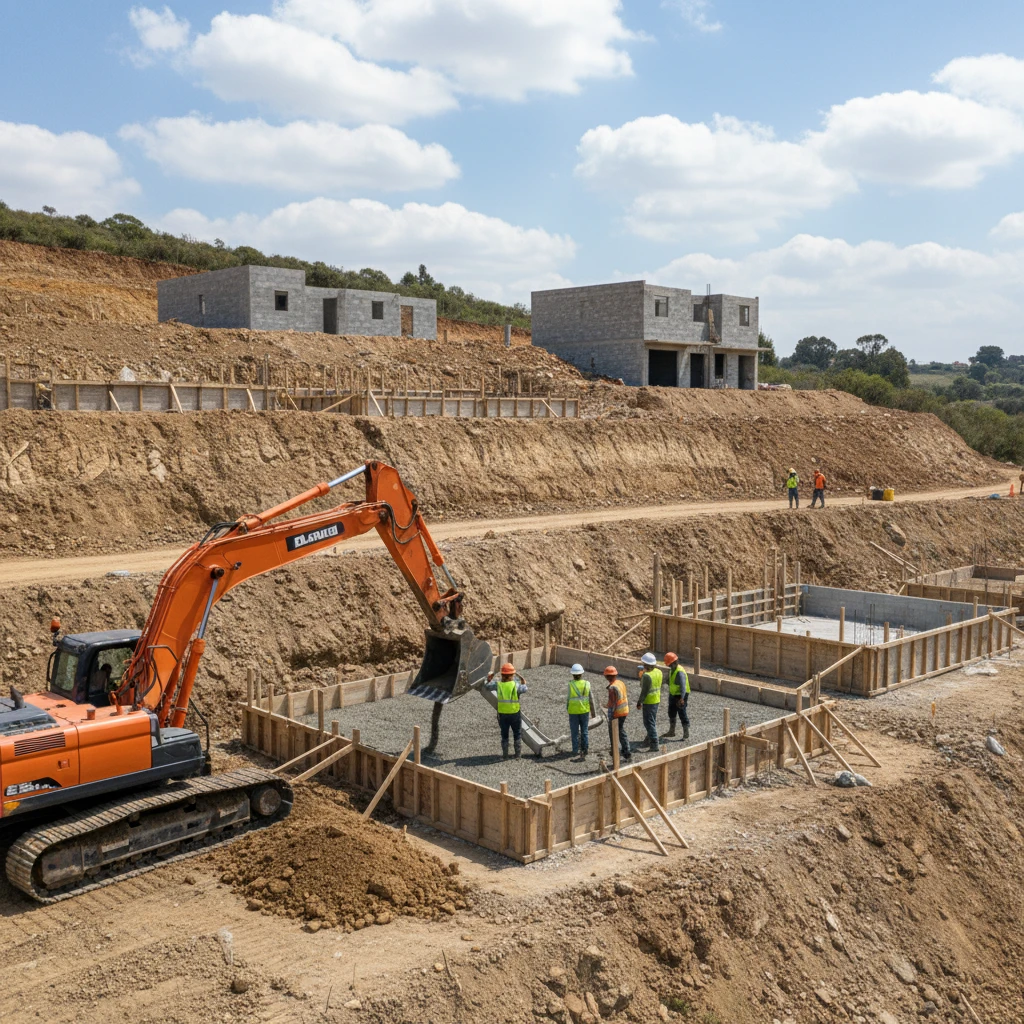
Creating level pads is essential for constructing concrete slabs and foundations on sloped sites. This involves excavating the soil to create a level surface and then compacting the soil to provide a stable base. The size and shape of the level pad will depend on the dimensions of the slab or foundation. Accurate grading is essential to ensure that the pad is perfectly level. This can be achieved using laser levelling equipment. Once the level pad is prepared, formwork can be installed to contain the concrete. The formwork should be properly aligned and braced to prevent it from shifting during the concrete pour. Careful attention to detail is essential to ensure that the concrete slab or foundation is level, smooth, and structurally sound. Creating level pads for concrete is key to achieving quality foundations and shed slabs.
Concrete Solutions for Sloping Properties: What We Offer
Sloping driveways and access roads: Design and construction.
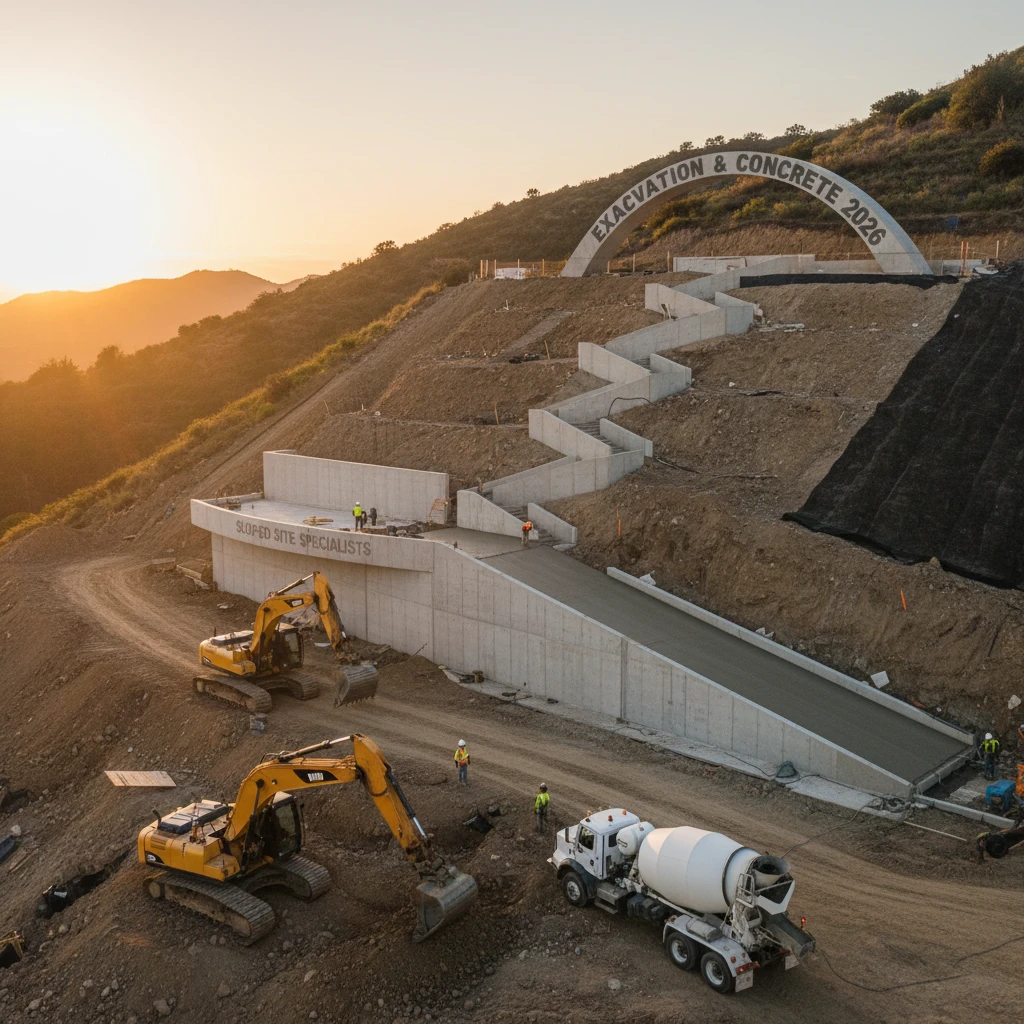
Sloping driveways and access roads present unique design and construction challenges. The gradient of the slope must be carefully considered to ensure that vehicles can safely navigate the driveway without bottoming out or losing traction. Proper drainage is also essential to prevent water from pooling on the driveway surface and causing erosion. Various construction techniques can be used to address these challenges, including terracing, retaining walls, and permeable paving. Terracing involves creating a series of level platforms connected by short ramps or steps. Retaining walls can be used to provide lateral support and prevent soil slippage. Permeable paving allows water to drain through the surface, reducing runoff and improving traction. The choice of construction technique will depend on the specific site conditions and the client’s preferences. Laser Concrete has the experience and expertise to design and construct sloping driveways and access roads that are both functional and aesthetically pleasing. We are Penrith’s trusted concreters when it comes to concrete driveways.
Retaining walls integrated with concrete structures.
Retaining walls are often necessary on sloping properties to provide lateral support and prevent soil slippage. These walls can be integrated with concrete structures, such as foundations, patios, and walkways, to create a cohesive and visually appealing design. There are several types of retaining walls that can be used, including gravity walls, cantilever walls, and sheet pile walls. Gravity walls rely on their own weight to resist the pressure of the soil. Cantilever walls use a horizontal footing to provide additional stability. Sheet pile walls are made of interlocking steel sheets that are driven into the ground. The choice of retaining wall type will depend on the height of the wall, the soil conditions, and the aesthetic requirements. Proper design and construction are essential to ensure that the retaining wall is structurally sound and can withstand the forces imposed by the soil. Integration of the retaining wall with other concrete features on site is critical.
Concrete steps and staircases tailored to the landscape.
Concrete steps and staircases can provide safe and convenient access to different levels of a sloping property. They can be tailored to the landscape to create a natural and aesthetically pleasing design. The design of the steps should consider the slope of the terrain, the desired rise and run of the steps, and any accessibility requirements. The steps can be constructed using a variety of techniques, including poured-in-place concrete, precast concrete, and concrete pavers. Poured-in-place concrete allows for maximum customisation and can be used to create curved or irregularly shaped steps. Precast concrete steps are manufactured off-site and can be installed quickly and easily. Concrete pavers offer a wide range of colours and textures and can be used to create a more decorative look. Proper drainage is essential to prevent water from pooling on the steps and creating a slipping hazard. We are excavation and concreting Central West service 2026.
Shed Slabs on Sloping Land: Ensuring a Solid Foundation
Proper site levelling and preparation for shed slabs.
When constructing a shed slab on a sloping block, proper site levelling is paramount. This process involves cutting and filling the land to create a level platform for the concrete slab. Neglecting this step can lead to structural instability and premature failure. Before any concrete is poured, a thorough assessment of the site’s soil composition is necessary. This assessment helps determine the load-bearing capacity and informs the choice of levelling and compaction methods. For example, loose soil may require more extensive compaction using a vibrating plate compactor or even soil replacement with a more stable material like crushed rock. A properly prepared site guarantees the long-term integrity of the shed slab. We often find that sites that were poorly prepared initially require significant excavation work later on to remedy the problem.
The levelling process itself should follow a precise plan, typically involving laser levels or other surveying equipment to ensure accuracy. Consider the planned shed size and location carefully. Over-excavation is preferable to under-excavation, allowing room for a well-compacted sub-base. The sub-base, usually consisting of compacted gravel or crushed rock, provides a stable and well-drained foundation for the concrete. It is also vital to consider the existing natural features like trees and rocks when planning site leveling. Finally, proper disposal of excavated material is essential, complying with local environmental regulations.
Reinforcement strategies for stability on uneven ground.
Sloping sites introduce unique challenges to shed slab reinforcement. Standard reinforcement methods may not suffice when dealing with significant grade changes. Consider using a thicker concrete slab with increased steel reinforcement to compensate for the added stress. Reinforcement should be designed to resist both tensile and compressive forces, particularly at the edges of the slab where it transitions from the higher to lower ground level. The reinforcement design also needs to take into account the loads that the shed will be supporting. For example, a shed used for storing heavy machinery will require more substantial reinforcement than a shed used for gardening tools.
Reinforcement strategies can include using thicker rebar, increasing the density of the rebar grid, or incorporating fibre reinforcement into the concrete mix. Fibre reinforcement helps distribute stress evenly throughout the slab, reducing the risk of cracking. Another approach involves using a stepped footing design, where the slab is poured in multiple sections, each at a different elevation, with the reinforcement overlapping between sections. This technique is particularly useful for sites with steep slopes. Always consult with a structural engineer to determine the optimal reinforcement strategy for your specific site conditions. The use of steel mesh, for example, can significantly improve the structural integrity of the slab by providing tensile strength and preventing cracking due to soil movement. According to the Concrete Reinforcing Steel Institute, proper reinforcement detailing is crucial for concrete durability CRSI.
Drainage solutions to protect the shed and concrete slab.
Effective drainage is critical to prevent water damage to both the shed and the concrete slab, particularly on sloping sites. Water pooling around the base of the shed can lead to wood rot, corrosion, and foundation problems. Water accumulating beneath the concrete slab can cause heaving, cracking, and ultimately, failure. The goal is to divert water away from the structure as quickly and efficiently as possible. Surface drainage solutions include grading the land around the shed to create a positive slope away from the foundation, installing drainage channels to collect and redirect runoff, and using permeable paving materials to allow water to infiltrate the ground.
Subsurface drainage systems, such as French drains, can be used to intercept groundwater and prevent it from saturating the soil beneath the slab. A French drain consists of a perforated pipe buried in a trench filled with gravel, which allows water to flow freely and drain away from the foundation. Consider installing a sump pump to remove excess water if the site has poor natural drainage or is prone to flooding. The importance of proper drainage cannot be overstated. Neglecting this aspect can lead to costly repairs and significantly reduce the lifespan of the shed and concrete slab. We have experience with this, particularly in the Blue Mountains, so if you require excavation and concrete work in the area, call us.
The Importance of Correct Drainage on Sloped Concrete Surfaces
Surface drainage: Channels, falls, and outlets.
On sloped concrete surfaces, surface drainage is your first line of defense against water damage. The principle is simple: ensure water flows *away* from the concrete, not towards it. Channels and drains are installed strategically to intercept water runoff and redirect it to designated outlets. These channels can be pre-formed concrete, polymer concrete, or even custom-built using cast-in-place concrete. The key is to select materials that are durable, resistant to corrosion, and capable of handling the expected volume of water. The placement of these channels is crucial, as they should be positioned to capture water before it has a chance to pool or penetrate the concrete surface.
Falls, or slopes, are designed into the concrete surface to encourage water flow towards the drainage channels. A general rule of thumb is to provide a minimum fall of 1% to 2% (approximately 1/8 to 1/4 inch per foot). However, the ideal slope will depend on the size and shape of the concrete surface, the expected rainfall intensity, and the type of surface finish. Rougher surfaces, such as exposed aggregate, may require a steeper slope to ensure adequate drainage. Outlets are the final destination for the water collected by the channels and falls. These outlets can be connected to a storm sewer system, a drainage ditch, or a designated discharge point away from the building. Proper outlet design is essential to prevent backflow and ensure that the water is discharged safely and effectively.
Subsurface drainage: Preventing water build-up.
While surface drainage manages water flowing *over* the concrete, subsurface drainage deals with water accumulating *beneath* the concrete. This is particularly important on sloped sites where groundwater can seep into the soil and create hydrostatic pressure. This pressure can cause the concrete to crack, heave, or even fail completely. Subsurface drainage systems typically consist of perforated pipes buried in a gravel-filled trench around the perimeter of the concrete surface. These pipes collect groundwater and direct it to a designated outlet, preventing it from building up beneath the concrete.
The selection of materials for the subsurface drainage system is critical. The pipes should be made of durable, corrosion-resistant materials such as PVC or HDPE. The gravel should be clean and well-graded to allow for efficient water flow. A filter fabric should be placed between the gravel and the surrounding soil to prevent clogging. The depth and spacing of the subsurface drainage pipes will depend on the soil conditions, the groundwater table, and the expected rainfall intensity. Consulting with a geotechnical engineer is recommended to determine the optimal design for your specific site. The use of a drainage membrane beneath the slab is also very important to prevent moisture issues. If you’re in the Central West, we can help you with excavation and concreting services.
Choosing the right drainage materials for longevity.
Selecting the appropriate drainage materials is crucial for ensuring the long-term performance and durability of your concrete surfaces. The materials must be able to withstand the harsh environmental conditions, including temperature fluctuations, exposure to sunlight, and contact with chemicals. For surface drainage channels, consider using polymer concrete or pre-cast concrete, which are resistant to corrosion and abrasion. The grates covering the channels should be made of materials such as stainless steel or cast iron, which are strong and durable. For subsurface drainage pipes, PVC or HDPE pipes are commonly used due to their affordability and resistance to corrosion.
The gravel used in subsurface drainage systems should be clean, well-graded, and free of organic matter. A filter fabric should be used to prevent soil particles from clogging the drainage pipes. When selecting drainage materials, consider the long-term cost-effectiveness. While cheaper materials may save money upfront, they may require more frequent repairs or replacements, ultimately costing more in the long run. Investing in high-quality drainage materials will ensure the longevity of your concrete surfaces and protect your investment. Regular maintenance, such as cleaning out debris from drainage channels and inspecting subsurface drainage pipes, is also essential for ensuring optimal performance. Proper concrete drainage also prevents issues requiring concrete repairs later on.
Concrete Mix Designs for Sloped Sites: Durability Considerations
Selecting the appropriate concrete mix for specific applications.
Choosing the right concrete mix is paramount for ensuring the long-term durability and performance of concrete structures on sloped sites. The ideal mix will depend on various factors, including the intended use of the concrete, the environmental conditions, and the specific site characteristics. For example, a concrete driveway subjected to heavy traffic and harsh weather will require a different mix than a concrete patio in a sheltered location. High-strength concrete is generally recommended for applications requiring high load-bearing capacity, such as foundations and retaining walls. This type of concrete typically contains a higher proportion of cement and a lower water-to-cement ratio, resulting in a denser, stronger material.
For applications where workability is a key concern, such as pouring concrete on steep slopes or in confined spaces, a concrete mix with a higher slump may be more suitable. Slump refers to the consistency or fluidity of the concrete, with a higher slump indicating a more workable mix. However, it’s important to note that increasing the slump can also reduce the strength of the concrete, so it’s essential to strike a balance between workability and strength. Consider using specialty concrete mixes, such as self-consolidating concrete (SCC), for complex or challenging applications. SCC is designed to flow easily and fill voids without the need for vibration, making it ideal for intricate formwork or areas with limited access. For example, we can help you get the right mix for your shed slab project.
Adjusting the mix for strength, workability, and weather conditions.
Concrete mix designs are not one-size-fits-all solutions. They often need to be adjusted to account for specific site conditions and weather patterns. For example, in hot weather, concrete can set too quickly, leading to cracking and reduced strength. To mitigate this, consider using a retarding admixture to slow down the setting process. Adding ice to the mix water can also help lower the temperature of the concrete and prevent premature setting. In cold weather, concrete can freeze before it has a chance to properly cure, leading to reduced strength and durability. To prevent this, consider using an accelerating admixture to speed up the setting process and protect the concrete from freezing.
The water-to-cement ratio is a crucial factor influencing concrete strength and workability. A lower water-to-cement ratio generally results in a stronger, more durable concrete. However, it can also make the mix less workable. Adding a water-reducing admixture can help improve workability without increasing the water-to-cement ratio. When working on sloped sites, consider using a concrete mix with a higher cement content to improve its cohesiveness and prevent it from slumping or sliding down the slope. Always consult with a concrete supplier or engineer to determine the optimal mix design for your specific site conditions and weather patterns.
The role of admixtures in improving concrete performance.
Admixtures are chemical compounds added to concrete mixes to modify their properties and enhance their performance. They play a crucial role in tailoring concrete to specific applications and site conditions. Air-entraining admixtures are used to create microscopic air bubbles within the concrete, improving its resistance to freeze-thaw damage and scaling. These are particularly important in regions with cold winters where concrete is exposed to repeated cycles of freezing and thawing. Water-reducing admixtures, as mentioned earlier, improve the workability of concrete without increasing the water-to-cement ratio. This allows for the production of stronger, more durable concrete mixes that are easier to place and finish.
Superplasticizers are a type of water-reducing admixture that can significantly increase the slump of concrete, making it ideal for self-consolidating concrete or applications where high workability is required. Retarding admixtures slow down the setting process of concrete, allowing for more time to place and finish the concrete, especially in hot weather. Accelerating admixtures, conversely, speed up the setting process, which is beneficial in cold weather or when rapid strength gain is required. Corrosion inhibitors are used to protect reinforcing steel from corrosion, particularly in environments with high levels of chlorides or sulfates. Selecting the appropriate admixture requires careful consideration of the specific requirements of the project and the environmental conditions.
Avoiding Common Mistakes in Sloped Site Concreting
Inadequate site preparation and compaction.
One of the most common mistakes in sloped site concreting is inadequate site preparation and compaction. This can lead to a range of problems, including uneven settling, cracking, and premature failure of the concrete. Before pouring any concrete, it’s essential to thoroughly prepare the site by removing all vegetation, topsoil, and debris. The underlying soil should be properly graded to ensure a uniform slope and prevent water from pooling. Compaction is the process of densifying the soil to increase its load-bearing capacity and reduce the risk of settling. This is typically achieved using a plate compactor or a roller, depending on the size and type of site.
Proper compaction is crucial for creating a stable foundation for the concrete slab. Inadequate compaction can result in voids and weak spots in the soil, which can cause the concrete to crack and settle over time. It’s essential to compact the soil in layers, typically 4 to 6 inches thick, to ensure uniform density throughout the entire site. On sloped sites, special attention should be paid to compacting the soil around the edges of the excavation, as this area is particularly vulnerable to erosion and settling. Failing to properly compact the soil can result in costly repairs and replacements down the line. As we mentioned before, excavation solutions such as site levelling, are critical.
Poor drainage design and implementation.
Poor drainage design and implementation is another common mistake that can lead to significant problems in sloped site concreting. Without proper drainage, water can accumulate around the concrete slab, leading to erosion, cracking, and water damage. It’s essential to design a comprehensive drainage system that effectively manages surface water runoff and groundwater infiltration. This may involve installing drainage channels, French drains, or other drainage structures to divert water away from the concrete. The drainage system should be designed to handle the expected rainfall intensity and prevent water from pooling around the foundation.
Proper implementation of the drainage design is just as important as the design itself. The drainage channels should be properly graded to ensure that water flows freely and doesn’t back up. French drains should be installed with a perforated pipe surrounded by gravel and wrapped in filter fabric to prevent clogging. The outlets of the drainage system should be located away from the building to prevent water from re-entering the site. Regular maintenance of the drainage system is also crucial to ensure its continued effectiveness. This may involve cleaning out debris from drainage channels, inspecting French drains for clogs, and repairing any damage to the drainage structures.
Ignoring soil type and its impact on concrete.
Ignoring the soil type and its impact on concrete is a critical mistake that can compromise the structural integrity of the concrete slab. Different soil types have different properties that can affect the performance of concrete. For example, expansive soils, such as clay, can swell and shrink with changes in moisture content, causing the concrete to crack and heave. Sandy soils, on the other hand, are well-drained but may not provide adequate support for the concrete. It’s essential to conduct a soil test to determine the soil type and its properties before pouring any concrete.
Based on the soil test results, you can select the appropriate concrete mix and reinforcement strategies to mitigate any potential problems. For example, if the soil is expansive, you may need to use a concrete mix with a higher strength and a more robust reinforcement design to resist cracking. You may also need to install a vapor barrier to prevent moisture from penetrating the concrete. Understanding soil properties is crucial for ensuring the long-term durability and stability of concrete structures on sloped sites. For instance, you may need to incorporate additional reinforcement or use a specialized concrete mix to compensate for soil conditions, or as we cover in preparing for your Penrith concrete project, it may involve soil replacement.
Why Choose Laser Concrete for Your Sloped Site Project?
Our commitment to quality and precision.
At Laser Concrete, we understand that sloped sites present unique challenges. Our commitment to quality and precision sets us apart. We utilise advanced techniques like laser levelling and detailed site analysis to ensure that your concrete project is not only aesthetically pleasing but also structurally sound. This begins with a thorough assessment of the soil composition, drainage patterns, and potential erosion risks. We then meticulously plan the excavation and formwork, employing reinforced steel and high-quality concrete mixes tailored to the specific demands of your site. This precision extends to every detail, from accurate measurements to careful finishing, guaranteeing a result that exceeds expectations and provides lasting value.
Experienced team of excavation and concreting professionals.
Our team boasts a wealth of experience in tackling even the most challenging sloped site projects. With years of operation across Penrith, the Blue Mountains, and the Central West, we’ve encountered and overcome a wide array of obstacles. This extensive experience translates into efficient project management, reduced risks, and superior results. We also understand the importance of expert excavation. For example, we are specialists at preparing difficult sites for concrete, as discussed on another page. Our professionals are trained in the latest safety protocols and equipped with state-of-the-art machinery to ensure that your project is completed safely, on time, and within budget. Choose a business with deep expertise and knowledge of excavation and concreting to help ensure that your project is completed successfully.
Focus on long-term value and customer satisfaction.
We believe that concrete work is an investment, not an expense. That’s why we prioritise long-term value and customer satisfaction above all else. We use only the highest-quality materials and employ proven construction techniques to ensure that your concrete structures withstand the test of time. This commitment extends beyond the initial installation. We provide comprehensive after-sales support and guidance to help you maintain the integrity and appearance of your concrete surfaces for years to come. Our reputation is built on delivering exceptional results and building lasting relationships with our clients. We see customer service and satisfaction as core drivers of our work ethic and company success.
Maintenance Tips for Concrete on Sloping Blocks
Regular cleaning and sealing for protection.
Maintaining concrete on a sloped block is crucial for its longevity. Regular cleaning removes dirt, debris, and stains that can penetrate the surface and cause damage over time. Use a mild detergent and a pressure washer (at a low setting) to clean the concrete thoroughly. After cleaning, apply a high-quality concrete sealer to protect the surface from water penetration, chemical spills, and UV damage. Sealing should be repeated every one to two years, depending on the level of exposure to the elements and foot traffic. Consider the sealing requirements of concrete driveways, a common feature on sloped blocks.
Inspecting and repairing cracks promptly.
Cracks in concrete, even small ones, can lead to significant problems if left unaddressed. Water can seep into the cracks, freeze and expand during colder months, and exacerbate the damage. Regularly inspect your concrete surfaces for cracks and repair them promptly. Small cracks can be filled with a concrete patching compound, while larger cracks may require professional attention. Ignoring cracks can lead to structural instability and costly repairs down the line. If the damage is significant, you may consider expert concrete repairs and replacements, as we describe on another page.
Maintaining drainage systems to prevent water damage.
Proper drainage is essential for preventing water damage to concrete on sloping blocks. Ensure that your drainage systems are functioning effectively to divert water away from the concrete surfaces. Clear any obstructions from gutters, downpipes, and drains to ensure that water flows freely. Consider installing additional drainage solutions, such as French drains or swales, to manage excess water runoff. Effective drainage will prevent water from pooling on the concrete, which can lead to erosion, cracking, and other forms of damage. Consider also the impact of tree roots on your drainage systems, and undertake preventative measures as required.
Sloped Site Concrete: A Long-Term Investment for Your Property
Increasing property value through durable concrete solutions.
Investing in quality concrete solutions for your sloped site can significantly increase your property value. Durable concrete structures, such as retaining walls, driveways, and patios, add visual appeal and functionality to your outdoor space. Potential buyers will be impressed by the well-maintained and structurally sound concrete features, making your property more attractive and desirable. Strategic concrete work can also enhance the usability of your sloped site, creating level areas for outdoor living and entertainment. Properly installed and maintained concrete demonstrates a commitment to quality and attention to detail, which can translate into a higher selling price.
Minimising future repair costs with quality workmanship.
While a cheap quote might seem attractive, skimping on quality workmanship can lead to costly repairs in the future. Investing in Laser Concrete’s expertise ensures that your concrete structures are built to last. We use high-quality materials, proven construction techniques, and pay meticulous attention to detail to minimise the risk of cracking, erosion, and other forms of damage. Preventative care can also help to minimise future repair costs, ensuring that your concrete surfaces remain in good condition for years to come. Choosing a reputable and experienced concreter like Laser Concrete will save you money in the long run.
Creating a safe and functional outdoor space.
Sloped sites can be challenging to navigate and utilise effectively. Well-designed concrete solutions can transform your outdoor space into a safe and functional area for relaxation, recreation, and entertainment. Concrete steps, pathways, and retaining walls can create level surfaces, prevent erosion, and improve accessibility. Proper grading and drainage can prevent water from pooling and creating hazardous conditions. A well-designed outdoor space not only enhances the value of your property but also improves your quality of life. Furthermore, consider how excavation solutions can prepare difficult sites for concrete.
Get a Quote for Excavation and Concreting on Your Sloping Property
Discuss your project requirements with our team.
The first step in transforming your sloped property with concrete is to discuss your specific needs and goals with our experienced team. We’ll take the time to understand your vision, assess your site conditions, and provide expert advice on the best concrete solutions for your project. Initial consultations allow us to identify potential challenges, explore creative design options, and develop a comprehensive plan that meets your requirements and budget. Contact us today to schedule a consultation and let us help you bring your vision to life.
Receive a detailed and transparent quote.
Once we have a clear understanding of your project requirements, we’ll provide you with a detailed and transparent quote. Our quotes outline all the costs involved, including materials, labour, excavation, and any other relevant expenses. We believe in honesty and transparency, so you can be confident that there will be no hidden fees or unexpected surprises. Our pricing is competitive and reflects the quality of our workmanship and materials. We also specialise in excavation and concreting for shed slabs, which may be relevant to your project.
Let us help you transform your sloped site.
Laser Concrete is dedicated to providing top-quality excavation and concreting solutions that transform sloped sites into beautiful, functional, and valuable spaces. Our team of experienced professionals is committed to delivering exceptional results and exceeding your expectations. Let us help you unlock the full potential of your sloped property. With our expertise and dedication, we can create an outdoor space that you’ll enjoy for years to come. We bring quality workmanship to every project, as demonstrated by our Central West concrete experts. Contact us to start your sloped site transformation today.
Ultimately, when dealing with the complexities of sloped site concrete work, choosing experienced professionals like Laser Concrete can make all the difference. From meticulous planning and preparation to careful execution and ongoing maintenance, our approach prioritises quality, durability, and customer satisfaction, ensuring your project is a resounding success.